The German Subjunctive (Konjunktiv): When and How to Use It
By LangPodTools Team, Language Learning Content Specialist

The German subjunctive (Konjunktiv) lets you talk about things that are not real — wishes, hypothetical situations, polite requests, and reported speech. It sounds advanced, but the everyday forms are simpler than you think. Most German conversations use only a handful of subjunctive forms.
This guide focuses on Konjunktiv II — the form you actually need for daily communication. We cover the most useful forms, when to use them, and how to avoid common mistakes.
What Is the Subjunctive?
The subjunctive mood expresses unreality. It covers:
- Wishes: Ich wünschte, ich wäre reich. (I wish I were rich.)
- Hypotheticals: Wenn ich Zeit hätte, würde ich kommen. (If I had time, I would come.)
- Polite requests: Könnten Sie mir helfen? (Could you help me?)
- Reported speech: Er sagte, er sei krank. (He said he was sick.) — Konjunktiv I
German has two subjunctive forms:
- Konjunktiv I — used mainly for reported speech in formal writing (news, academic texts)
- Konjunktiv II — used for everything else (wishes, conditions, politeness)
Konjunktiv II is what you need. Konjunktiv I is for journalists and lawyers. Focus your energy on Konjunktiv II.
The Four Essential Konjunktiv II Forms
You can handle 90% of subjunctive situations with just four words: würde, hätte, wäre, and könnte.
Würde (Would)
Würde + infinitive is the universal Konjunktiv II pattern. It works like English "would."
| Person | Würde Form |
|---|---|
| ich | würde |
| du | würdest |
| er/sie/es | würde |
| wir | würden |
| ihr | würdet |
| sie/Sie | würden |
Examples:
- Ich würde gerne kommen. — I would like to come.
- Was würdest du machen? — What would you do?
- Er würde lieber zu Hause bleiben. — He would rather stay home.
- Wir würden das nie tun. — We would never do that.
Study Tip: When in doubt, use würde + infinitive. It is always understood and always grammatically correct for Konjunktiv II. Native speakers use it constantly. You do not need to learn the old-fashioned subjunctive forms of every verb.
Hätte (Would Have / Had)
Hätte is the Konjunktiv II of haben (to have). It means "would have" or "had" (hypothetical).
| Person | Hätte Form |
|---|---|
| ich | hätte |
| du | hättest |
| er/sie/es | hätte |
| wir | hätten |
| ihr | hättet |
| sie/Sie | hätten |
Examples:
- Ich hätte gerne einen Kaffee. — I would like a coffee. (ordering)
- Hätten Sie einen Moment Zeit? — Would you have a moment?
- Wenn ich mehr Geld hätte, würde ich reisen. — If I had more money, I would travel.
- Ich hätte das nicht gemacht. — I would not have done that.
Hätte is the most useful subjunctive form for everyday life. Use it to order in restaurants, make polite requests, and express wishes.
Wäre (Would Be)
Wäre is the Konjunktiv II of sein (to be). It means "would be" or "were" (hypothetical).
| Person | Wäre Form |
|---|---|
| ich | wäre |
| du | wärst / wärest |
| er/sie/es | wäre |
| wir | wären |
| ihr | wärt / wäret |
| sie/Sie | wären |
Examples:
- Das wäre schön. — That would be nice.
- Ich wäre gerne dabei. — I would like to be there.
- Wäre es möglich, einen Tisch zu reservieren? — Would it be possible to reserve a table?
- Wenn ich du wäre, würde ich sofort gehen. — If I were you, I would leave immediately.
Könnte (Could)
Könnte is the Konjunktiv II of können (can). It means "could."
| Person | Könnte Form |
|---|---|
| ich | könnte |
| du | könntest |
| er/sie/es | könnte |
| wir | könnten |
| ihr | könntet |
| sie/Sie | könnten |
Examples:
- Könnten Sie das wiederholen? — Could you repeat that?
- Ich könnte morgen kommen. — I could come tomorrow.
- Das könnte schwierig sein. — That could be difficult.
- Könntest du mir helfen? — Could you help me?
Study Tip: Memorize these four words — würde, hätte, wäre, könnte — and their conjugations. With just these four, you can express wishes, make polite requests, discuss hypotheticals, and sound natural in German. Practice them with our conjugation tool.
Other Useful Subjunctive Forms
Beyond the big four, a few more modal verbs have common Konjunktiv II forms.
| Verb | Konjunktiv II | English |
|---|---|---|
| müssen | müsste | would have to / should |
| sollen | sollte | should (advice) |
| dürfen | dürfte | might / may (polite) |
| wollen | wollte | would want |
| mögen | möchte | would like |
Examples:
- Du solltest mehr schlafen. — You should sleep more.
- Ich müsste eigentlich arbeiten. — I should actually be working.
- Es dürfte etwa 20 Euro kosten. — It might cost about 20 euros.
- Ich möchte einen Tee, bitte. — I would like a tea, please.
Sollte (should) and möchte (would like) are so common that many learners do not even realize they are subjunctive forms.
When to Use the Subjunctive
1. Polite Requests
The subjunctive makes requests softer and more polite. This is its most common everyday use.
- Könnten Sie mir bitte helfen? — Could you please help me?
- Hätten Sie einen Moment? — Would you have a moment?
- Ich hätte gerne ein Bier. — I would like a beer.
- Würden Sie bitte das Fenster öffnen? — Would you please open the window?
- Dürfte ich Sie etwas fragen? — Might I ask you something?
Compare with the direct forms:
- Helfen Sie mir! (Help me!) — imperative, blunt
- Könnten Sie mir helfen? (Could you help me?) — subjunctive, polite
For more on polite vs. direct forms, see the German imperative.
2. Hypothetical Situations (If-Clauses)
The classic "if ... would" structure uses Konjunktiv II.
Pattern: Wenn + Konjunktiv II, ... würde/hätte/wäre ...
- Wenn ich reich wäre, würde ich eine Weltreise machen. — If I were rich, I would travel the world.
- Wenn es nicht regnen würde, würden wir spazieren gehen. — If it weren't raining, we would go for a walk.
- Wenn ich mehr Zeit hätte, würde ich ein Buch schreiben. — If I had more time, I would write a book.
For more on wenn-clauses and word order, see German conjunctions.
3. Wishes
Expressing wishes with Ich wünschte or Wenn ... nur/doch:
- Ich wünschte, ich könnte fliegen. — I wish I could fly.
- Wenn ich doch mehr Zeit hätte! — If only I had more time!
- Hätte ich nur besser aufgepasst! — If only I had paid more attention!
4. Giving Advice
Sollte and würde are natural for giving advice.
- Du solltest zum Arzt gehen. — You should go to the doctor.
- An deiner Stelle würde ich sofort anrufen. — In your place, I would call immediately.
- Ich würde das nicht empfehlen. — I would not recommend that.
Past Subjunctive (Konjunktiv II der Vergangenheit)
To talk about unreal situations in the past, use hätte/wäre + past participle.
- Ich hätte das nicht gesagt. — I would not have said that.
- Wenn ich es gewusst hätte, wäre ich gekommen. — If I had known, I would have come.
- Er hätte anrufen sollen. — He should have called.
- Das wäre nicht passiert, wenn du aufgepasst hättest. — That would not have happened if you had paid attention.
The rule: verbs that use haben in the Perfekt → hätte + Partizip. Verbs that use sein → wäre + Partizip. Same split as German tenses.
Konjunktiv I (Briefly)
Konjunktiv I is used for indirect speech (reported speech) in formal writing — news articles, academic papers, and legal texts.
- Direct: Er sagt: "Ich bin krank." — He says: "I am sick."
- Indirect (Konj. I): Er sagt, er sei krank. — He says he is sick.
You will encounter it when reading German news but rarely need to produce it yourself. Focus on Konjunktiv II for speaking.
Common Mistakes
Mistake 1: Using Würde With Haben/Sein
Avoid "würde haben" and "würde sein" — use hätte and wäre instead.
-
Wrong: Ich würde gerne ein Auto haben. ✗
-
Right: Ich hätte gerne ein Auto. ✓
-
Wrong: Das würde schön sein. ✗
-
Right: Das wäre schön. ✓
Mistake 2: Forgetting Subjunctive in Polite Requests
Using the indicative instead of subjunctive sounds demanding.
- Blunt: Können Sie mir helfen? (Can you help me?)
- Polite: Könnten Sie mir helfen? (Could you help me?)
Both are grammatically correct, but the subjunctive version is noticeably more polite.
Mistake 3: Wrong Word Order in Wenn-Clauses
- Wrong: Wenn ich wäre reich, würde ich reisen. ✗
- Right: Wenn ich reich wäre, würde ich reisen. ✓
In wenn-clauses, the verb goes to the end (subordinate clause word order). See German word order rules.
Study Tip: Practice these ten phrases until they are automatic: "Ich hätte gerne...", "Könnten Sie bitte...", "Das wäre schön", "Ich würde gerne...", "Wenn ich ... hätte/wäre". These cover most real-life subjunctive situations.
Frequently Asked Questions
Conclusion
The German subjunctive is simpler than its reputation. For everyday use, you need just four forms: würde (would), hätte (would have), wäre (would be), and könnte (could). Add sollte (should) and möchte (would like), and you have the full toolkit.
Use the subjunctive for polite requests, hypothetical situations, wishes, and giving advice. In conversation, würde + infinitive is always a safe fallback.
For more grammar topics, explore German tenses, German cases explained, or German conjunctions. Practice verb forms with our conjugation tool.
Frequently Asked Questions
What is the difference between Konjunktiv I and Konjunktiv II?▾
What are the most important Konjunktiv II forms to learn?▾
How do you make polite requests in German?▾
How do you form if-clauses in German?▾
Should I use würde haben or hätte?▾
Recommended Study Material
The Complete German Grammar Cheat Sheet
A1–B2 Reference PDF
27 pages of color-coded tables, mnemonics, and shortcuts — every rule you need from Cases to Subjunctive.
Recommended German Books
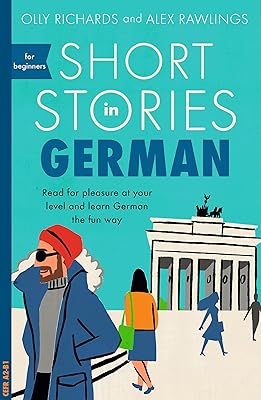
Short Stories in German for Beginners
Olly Richards
Learn German with 8 captivating stories. Perfect for A2-B1 learners who want to build vocabulary naturally.
Check Price on Amazon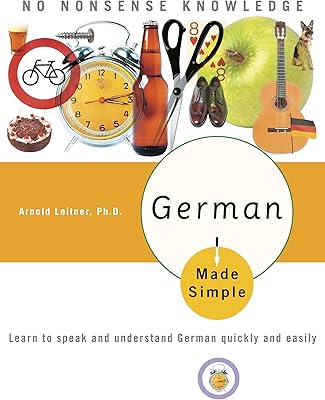
German Made Simple
Eugene Jackson
A complete beginner's guide covering grammar, vocabulary, and conversation essentials.
Check Price on Amazon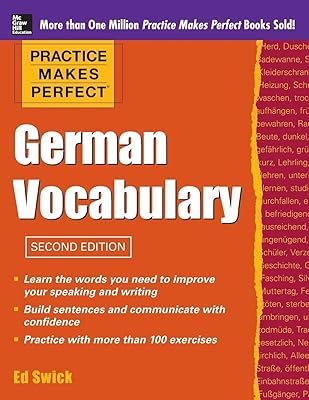
Practice Makes Perfect: German Vocabulary
Ed Swick
Targeted exercises and drills for mastering essential German words and phrases.
Check Price on AmazonAs an Amazon Associate, we earn from qualifying purchases.