All 6 German Tenses Explained: A Complete Guide for Beginners
By LangPodTools Team, Language Learning Content Specialist

German has six tenses, but here is the good news: two of them cover about 90% of everyday conversation. This guide walks you through all six, shows you how each one works, and tells you exactly where to focus your energy.
How German Tenses Work
Every German tense describes when something happens — past, present, or future. Unlike English, German builds most of its tenses by combining a helping verb (Hilfsverb) with the main verb. Only the present tense and simple past stand alone.
Here is a quick overview before we dive in:
| Tense | German Name | Example (machen) | Used For |
|---|---|---|---|
| Present | Präsens | ich mache | Now, habits, future |
| Conversational past | Perfekt | ich habe gemacht | Spoken past |
| Simple past | Präteritum | ich machte | Written past |
| Past perfect | Plusquamperfekt | ich hatte gemacht | Before another past |
| Future | Futur I | ich werde machen | Future, predictions |
| Future perfect | Futur II | ich werde gemacht haben | Assumptions |
Präsens (Present Tense) — The Workhorse
The Präsens is the first tense you learn, and it never stops being useful. It covers what is happening right now, habitual actions, and even future events when combined with a time word.
Regular Conjugation Pattern
Most German verbs follow this pattern. Take the stem (drop the -en ending) and add these endings:
| Pronoun | machen (to do/make) | lernen (to learn) |
|---|---|---|
| ich | mache | lerne |
| du | machst | lernst |
| er/sie/es | macht | lernt |
| wir | machen | lernen |
| ihr | macht | lernt |
| sie/Sie | machen | lernen |
Präsens for the Future
German speakers often skip the formal future tense and use the present with a time word instead. This sounds completely natural.
- Ich gehe morgen ins Kino. (I'm going to the cinema tomorrow.)
- Nächste Woche fliegen wir nach Berlin. (Next week we fly to Berlin.)
Study Tip: Master the Präsens conjugation patterns thoroughly. German uses the present tense far more broadly than English — for current actions, habits, general truths, and future plans. It is your single most important tense.
Perfekt (Conversational Past) — The Spoken Past Tense
The Perfekt is the past tense you will hear in almost every German conversation. Whenever someone tells you what they did yesterday, last weekend, or five minutes ago, they use the Perfekt.
How to Build It
The Perfekt has two parts: a helping verb (haben or sein in the present tense) plus the past participle (Partizip II) of the main verb.
haben + Partizip II (most verbs):
- Ich habe Deutsch gelernt. (I learned German.)
- Sie hat einen Kuchen gebacken. (She baked a cake.)
sein + Partizip II (verbs of movement or state change):
- Ich bin nach Berlin gefahren. (I drove to Berlin.)
- Er ist gestern angekommen. (He arrived yesterday.)
Haben or Sein? The Rule
Use sein when the verb describes movement from A to B (gehen, fahren, fliegen, kommen) or a change of state (werden, sterben, aufwachen). Also: sein and bleiben always use sein as their helper. Everything else uses haben.
Regular vs. Irregular Past Participles
Regular verbs form the past participle with ge- + stem + -t:
- machen → gemacht
- lernen → gelernt
- kaufen → gekauft
Irregular verbs use ge- + changed stem + -en:
- gehen → gegangen
- schreiben → geschrieben
- trinken → getrunken
Verbs starting with be-, ver-, er-, ent-, ge-, zer- skip the ge- prefix:
- besuchen → besucht
- verstehen → verstanden
- erzählen → erzählt
Study Tip: Build a list of the 30 most common irregular past participles and drill them with flashcards. Knowing these by heart makes spoken German feel effortless.
Präteritum (Simple Past) — The Written Past
The Präteritum is the past tense of books, news articles, and formal writing. In everyday speech, Germans almost always prefer the Perfekt — with three important exceptions.
When You Always Use Präteritum (Even in Speech)
Three verbs are always used in Präteritum, even in casual conversation, because their Perfekt forms sound clumsy:
- sein → ich war (not "ich bin gewesen" in speech)
- haben → ich hatte (not "ich habe gehabt" in speech)
- werden → ich wurde (not "ich bin geworden" in speech)
Modal verbs (können, müssen, wollen, sollen, dürfen, mögen) also strongly prefer Präteritum in spoken German:
- Ich konnte nicht kommen. (I couldn't come.)
- Er musste arbeiten. (He had to work.)
Regular Conjugation (Weak Verbs)
| Pronoun | machen | lernen |
|---|---|---|
| ich | machte | lernte |
| du | machtest | lerntest |
| er/sie/es | machte | lernte |
| wir | machten | lernten |
| ihr | machtet | lerntet |
| sie/Sie | machten | lernten |
Irregular Conjugation (Strong Verbs)
Strong verbs change their stem vowel in the Präteritum. There is no shortcut — you have to memorize them.
| Infinitive | Präteritum (ich) | Meaning |
|---|---|---|
| gehen | ging | went |
| kommen | kam | came |
| sehen | sah | saw |
| essen | aß | ate |
| fahren | fuhr | drove |
| schreiben | schrieb | wrote |
Plusquamperfekt (Past Perfect) — Before Another Past Event
The Plusquamperfekt works exactly like the English past perfect ("had done"). It describes something that happened before another past event.
How to Build It
Use haben or sein in the Präteritum plus the past participle:
- Ich hatte schon gegessen, als sie ankam. (I had already eaten when she arrived.)
- Er war schon gegangen, bevor der Film anfing. (He had already left before the movie started.)
- Wir hatten alles vorbereitet, bevor die Gäste kamen. (We had prepared everything before the guests came.)
The Plusquamperfekt always appears alongside another past-tense clause. You never use it in isolation — it always sets the scene for something else that happened afterward.
Haben or Sein?
The same rule applies as in the Perfekt. If the main verb uses sein in the Perfekt, it uses war in the Plusquamperfekt. If it uses haben, it uses hatte.
Futur I (Future Tense) — Predictions and Intentions
Futur I is built with the present tense of werden plus the infinitive. Germans use it less than English speakers use "will" because the Präsens + time word already covers most future situations.
Conjugation of Werden
| Pronoun | werden |
|---|---|
| ich | werde |
| du | wirst |
| er/sie/es | wird |
| wir | werden |
| ihr | werdet |
| sie/Sie | werden |
When You Actually Need Futur I
Use Futur I when you want to emphasize intention, prediction, or promise — or when there is no time word to clarify the future meaning:
- Ich werde dich anrufen. (I will call you. — a promise)
- Es wird morgen regnen. (It will rain tomorrow. — a prediction)
- Wir werden das schaffen. (We will manage this. — determination)
Futur I for Assumptions About the Present
German also uses Futur I to express a guess about what is probably true right now:
- Er wird wohl noch schlafen. (He is probably still sleeping.)
- Sie wird das schon wissen. (She probably knows that already.)
Futur II (Future Perfect) — Rare but Useful
The Futur II is the rarest German tense. It is built with werden + past participle + haben/sein and expresses an action that will be completed by a future point — or, more commonly, an assumption about the past.
Structure
werden + Partizip II + haben/sein
- Bis morgen werde ich das Buch gelesen haben. (By tomorrow I will have read the book.)
- Sie wird schon angekommen sein. (She will have arrived by now. / She has probably arrived.)
Assumptions About the Past
In practice, Futur II is most often used to speculate about something that probably already happened:
- Er wird den Zug verpasst haben. (He probably missed the train.)
- Sie werden das vergessen haben. (They probably forgot that.)
You can get by without Futur II for a long time. Understand it when you see it, but do not worry about producing it early on.
Common Irregular Verbs: All 6 Tenses
These are the verbs you will encounter most often. Knowing their forms across tenses saves you constant dictionary lookups.
sein (to be)
| Tense | ich | du | er/sie/es |
|---|---|---|---|
| Präsens | bin | bist | ist |
| Perfekt | bin gewesen | bist gewesen | ist gewesen |
| Präteritum | war | warst | war |
| Plusquamperfekt | war gewesen | warst gewesen | war gewesen |
| Futur I | werde sein | wirst sein | wird sein |
haben (to have)
| Tense | ich | du | er/sie/es |
|---|---|---|---|
| Präsens | habe | hast | hat |
| Perfekt | habe gehabt | hast gehabt | hat gehabt |
| Präteritum | hatte | hattest | hatte |
| Plusquamperfekt | hatte gehabt | hattest gehabt | hatte gehabt |
| Futur I | werde haben | wirst haben | wird haben |
gehen (to go), kommen (to come), sehen (to see), essen (to eat)
| Verb | Präsens (ich) | Perfekt (ich) | Präteritum (ich) |
|---|---|---|---|
| gehen | gehe | bin gegangen | ging |
| kommen | komme | bin gekommen | kam |
| sehen | sehe | habe gesehen | sah |
| essen | esse | habe gegessen | aß |
For full conjugation tables, try the conjugation tool — it shows every form at a glance.
Which Tenses Do Beginners Actually Need?
If you are just starting out, here is where to focus your energy:
- Präsens — Learn it perfectly. It handles the present and often the future.
- Perfekt — This is how Germans talk about the past. Nail the haben/sein choice and the 30 most common past participles.
- Präteritum of sein, haben, werden, and modals — These come up constantly even in casual speech.
Everything else — full Präteritum, Plusquamperfekt, Futur I, Futur II — can wait until you hit B1 level. Understanding them when you hear them is enough at the start.
Study Tip: Listen to real German conversations in our episode library. Pay attention to which tenses native speakers actually use — you will notice Präsens and Perfekt dominate, with Präteritum popping up only for war, hatte, and konnte.
Quick Practice Sentences
Translate these into German to test your tense knowledge:
- I learn German every day. → Ich lerne jeden Tag Deutsch. (Präsens)
- Yesterday I went to Berlin. → Gestern bin ich nach Berlin gefahren. (Perfekt)
- She was tired. → Sie war müde. (Präteritum)
- He had already eaten. → Er hatte schon gegessen. (Plusquamperfekt)
- We will visit you tomorrow. → Wir werden dich morgen besuchen. (Futur I)
Next Steps
Tenses do not exist in a vacuum. How you arrange words in a sentence matters just as much — check out German Word Order Rules for the patterns that hold everything together. If articles and cases still confuse you, German Cases Explained breaks them down step by step.
For practical vocabulary to use with your new tense skills, browse Common German Phrases or explore our full German learning hub for episodes, tools, and more.
Ready to drill verb forms? The conjugation tool lets you practice any verb across all six tenses, and the flashcard tool helps you memorize irregular past participles through spaced repetition.
And if you have ever wondered whether all this grammar is worth the effort — yes, it is. Read Is German Hard to Learn? for an honest look at what makes German challenging and what makes it surprisingly learnable.
Frequently Asked Questions
How many tenses does German have?▾
What is the difference between Perfekt and Präteritum?▾
When do I use haben vs. sein in the Perfekt?▾
Do Germans actually use the future tense?▾
Which German tenses should a beginner focus on?▾
Recommended Study Material
The Complete German Grammar Cheat Sheet
A1–B2 Reference PDF
27 pages of color-coded tables, mnemonics, and shortcuts — every rule you need from Cases to Subjunctive.
Recommended German Books
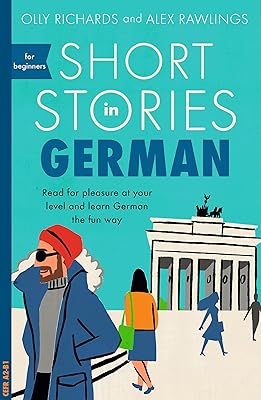
Short Stories in German for Beginners
Olly Richards
Learn German with 8 captivating stories. Perfect for A2-B1 learners who want to build vocabulary naturally.
Check Price on Amazon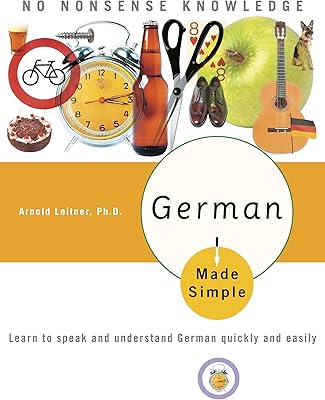
German Made Simple
Eugene Jackson
A complete beginner's guide covering grammar, vocabulary, and conversation essentials.
Check Price on Amazon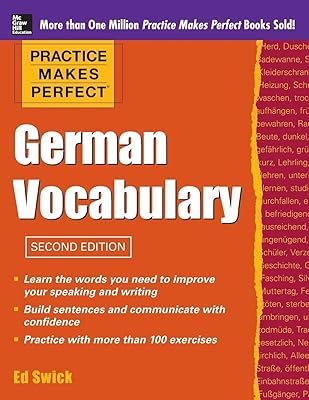
Practice Makes Perfect: German Vocabulary
Ed Swick
Targeted exercises and drills for mastering essential German words and phrases.
Check Price on AmazonAs an Amazon Associate, we earn from qualifying purchases.