Is German Hard to Learn? Honest Assessment with Timeline
By LangPodTools Team, Language Learning Content Specialist

German is a Category II language according to the U.S. Foreign Service Institute. That means it takes roughly 750 class hours for an English speaker to reach professional proficiency.
But that number doesn't tell the whole story. German shares deep roots with English, and many parts of it are surprisingly straightforward.
How Hard Is German Really?
The FSI difficulty ranking places German in Category II out of four categories. This means it's slightly harder than Spanish or French, but far easier than Mandarin, Arabic, or Japanese.
What the FSI Rating Means
Category II languages require about 30 weeks (750 hours) of intensive classroom study. Compare that to Category I languages like Spanish at 24 weeks (600 hours), or Category IV languages like Mandarin at 88 weeks (2,200 hours).
For self-learners, the timeline stretches longer. Most people study 1-2 hours per day, not 6-8 hours like FSI students.
The Honest Verdict
German is moderately challenging for English speakers. It's harder than Dutch or Norwegian. It's easier than Russian, Arabic, or any Asian language.
The difficulty is frontloaded. Grammar rules feel overwhelming at first. But once you internalize the patterns, progress accelerates fast.
Study Tip: Don't judge German by the first month. The grammar curve is steep early on, but it flattens dramatically after A2 level.
What Makes German Easier Than You Think
English and German are Germanic siblings. They split from the same language family roughly 1,500 years ago. This gives you a massive head start.
Thousands of Shared Words
English borrowed heavily from German — and vice versa. You already know more German than you realize.
| English | German | Pronunciation |
|---|---|---|
| House | Haus | Nearly identical |
| Water | Wasser | Very close |
| Finger | Finger | Exactly the same |
| Garden | Garten | Swap one letter |
| Butter | Butter | Identical |
| Father | Vater | Easy swap |
Researchers estimate English and German share over 60% of basic vocabulary through Germanic roots.
Phonetic Spelling
German is pronounced almost exactly as it's spelled. Once you learn the rules for German umlauts (ä, ö, ü) and a few letter combinations, you can read any German word aloud correctly.
English is far worse in this regard. Think about "though," "through," "tough," and "thought" — four different pronunciations for "-ough."
Logical Compound Words
German builds new words by combining existing ones. This makes vocabulary expansion intuitive.
- Handschuh = Hand + Schuh (hand shoe = glove)
- Kühlschrank = kühl + Schrank (cool cabinet = refrigerator)
- Staubsauger = Staub + Sauger (dust sucker = vacuum cleaner)
Once you know the essential German words, compound words unlock thousands more for free.
Study Tip: When you encounter a long German word, break it into parts. Each part is usually a simple word you already know.
The Genuinely Hard Parts of German
Let's be honest about what trips learners up. Knowing the hard parts in advance helps you prepare.
Grammatical Gender
Every German noun is masculine (der), feminine (die), or neuter (das). There are some patterns, but many assignments feel arbitrary.
- der Tisch (the table — masculine)
- die Lampe (the lamp — feminine)
- das Buch (the book — neuter)
The fix? Always learn nouns with their article. Never learn "Tisch" alone — learn "der Tisch."
Four Grammatical Cases
German has four cases: Nominativ, Akkusativ, Dativ, and Genitiv. Each one changes the article and sometimes the noun ending.
This is the single biggest grammar challenge. But here's good news: German cases follow clear rules. Once you learn the patterns, they click.
Word Order Rules
German word order differs from English in important ways:
- Verb-second rule: The conjugated verb always sits in second position.
- Verb kicks: In subordinate clauses, the verb jumps to the end.
- Separable verbs: Prefixes detach and move to the sentence end.
Example: "Ich rufe dich morgen an." (I'll call you tomorrow.) The verb "anrufen" splits apart.
Adjective Endings
German adjectives change their endings based on gender, case, and whether you use a definite or indefinite article. That's up to 48 possible combinations.
In practice, a handful of patterns cover most situations. But it takes time to internalize them.
Study Tip: Focus on speaking first, grammar second. Native speakers will understand you even with wrong endings. Perfection comes with exposure over months.
How Long Does It Take to Learn German?
Timelines depend on your study intensity, method, and goals. Here's a realistic breakdown based on the CEFR framework.
Timeline by CEFR Level
| CEFR Level | What You Can Do | Hours Needed | Self-Study Timeline |
|---|---|---|---|
| A1 | Order food, introduce yourself, basic small talk | 80-100 hours | 2-3 months (1 hr/day) |
| A2 | Handle everyday situations, describe routines, simple conversations | 200-250 hours | 4-6 months (1 hr/day) |
| B1 | Travel independently, discuss opinions, understand main points | 400-500 hours | 8-12 months (1 hr/day) |
| B2 | Work in German, understand complex texts, argue fluently | 600-750 hours | 14-20 months (1 hr/day) |
| C1 | Use German flexibly, understand demanding texts, express nuance | 800-1,000 hours | 2-3 years (1 hr/day) |
These estimates assume consistent daily practice. Missing days adds up fast.
Factors That Speed Up Your Timeline
- Prior language experience: Knowing Dutch, Swedish, or even French helps.
- Immersion: Living in a German-speaking country cuts timelines by 30-50%.
- Consistent daily practice: 30 minutes every day beats 3 hours on weekends.
- Active learning: Speaking and writing beat passive reading.
German vs. Other Languages
How does German compare to other popular languages for English speakers?
Difficulty Comparison Table
| Language | FSI Category | Hours to Proficiency | Difficulty for English Speakers |
|---|---|---|---|
| Dutch | Category I | ~600 hours | Easier than German |
| Spanish | Category I | ~600 hours | Easier than German |
| French | Category I | ~600 hours | Slightly easier |
| German | Category II | ~750 hours | Moderate |
| Russian | Category III | ~1,100 hours | Significantly harder |
| Mandarin | Category IV | ~2,200 hours | Much harder |
| Arabic | Category IV | ~2,200 hours | Much harder |
| Japanese | Category IV | ~2,200 hours | Much harder |
What This Means for You
German sits in the middle of the difficulty spectrum. It takes about 25% more time than Spanish or French. But it requires less than half the time of Mandarin, Arabic, or Japanese.
If you already speak another Germanic language like Dutch or Swedish, German becomes significantly easier. Shared grammar structures and vocabulary cut your learning time.
Why German Is Worth the Extra Effort
German is the most spoken native language in the EU. Over 100 million people speak it as their first language across Germany, Austria, Switzerland, and beyond.
The career benefits are significant. Germany has Europe's largest economy. German-speaking countries consistently rank among the top 10 for salaries worldwide.
Tips to Learn German Faster
These strategies are backed by research and real learner experience.
Listen Every Day with Podcasts
Podcasts designed for learners are one of the fastest ways to build listening skills and internalize grammar naturally.
Start with A1-level episodes that include transcripts. Read along while you listen. This dual-input method accelerates comprehension.
Explore our German episodes hub for free podcast content at every level.
Use the Right Tools
Combine multiple free tools for a complete study routine:
- CEFR Analyzer: Check your reading level on any German text.
- Flashcards: Build active recall with spaced repetition.
- Podcast transcripts: Read and listen simultaneously.
Study Smart, Not Just Hard
- Learn the 1,000 most common words first. They cover 85% of everyday speech.
- Practice speaking from day one. Even if it's just reading sentences aloud.
- Study grammar in context, not from tables. See how cases work in real sentences.
Study Tip: Set a minimum daily goal of 15 minutes. On busy days, even a short podcast episode keeps your brain in German mode.
Immerse Yourself at Home
You don't need to move to Germany. Create immersion at home:
- Switch your phone language to German.
- Watch German YouTube channels with subtitles.
- Label household objects with sticky notes ("der Kühlschrank," "die Tür").
- Follow German accounts on social media.
Debunk the Myths Early
Many learners quit because of myths about German difficulty. Here are the biggest ones:
- "German words are impossibly long." They're just compound words. Break them into parts and they make perfect sense.
- "You need perfect grammar to communicate." False. Germans understand you with imperfect grammar.
- "German sounds angry." It doesn't. That's a movie stereotype. Everyday German is melodic and varied.
Don't let myths stop you before you start.
Study Tip: Join a German language community online. Accountability partners keep you motivated past the first difficult weeks.
Frequently Asked Questions
Is German harder than French?
German grammar is harder due to cases and three grammatical genders. But German pronunciation is more predictable. French has silent letters and nasal vowels that take time to master. Overall, the FSI rates French slightly easier at 600 hours versus German's 750 hours.
Can I learn German in 3 months?
You can reach A1 level in 3 months with daily study. That means basic greetings, ordering food, and simple conversations. Fluency takes significantly longer — plan for 12+ months to reach a comfortable conversational level.
Is German useful to learn?
Absolutely. German is the most spoken native language in the EU with over 100 million speakers. Germany has Europe's largest economy. Speaking German opens doors in engineering, science, automotive, and finance careers.
What's the hardest part of learning German?
Most learners agree that grammatical gender (der/die/das) and the four cases are the biggest challenges. Word order and adjective endings also take time. The good news: these are learnable patterns, not random rules.
Is German easier than Spanish?
For English speakers, Spanish is generally easier. Spanish has simpler grammar, no cases, and more phonetic consistency. German has harder grammar but shares more vocabulary with English. The FSI ranks Spanish at 600 hours versus German's 750.
Do I need to learn German grammar perfectly?
No. Native speakers will understand you even with grammar mistakes. Focus on communication first, accuracy second. Grammar improves naturally with exposure through podcasts, reading, and conversation practice.
Conclusion
German is not as hard as its reputation suggests. Yes, the grammar has a learning curve. Cases, genders, and word order take practice.
But English speakers have a huge advantage. Shared vocabulary, phonetic spelling, and logical word-building make German more approachable than most languages on earth.
The key is consistency over intensity. Fifteen minutes every day will take you further than marathon weekend sessions.
Ready to start? Browse our German podcast episodes with full transcripts and vocabulary. Hearing real German from day one is the fastest path to progress.
Frequently Asked Questions
Is German harder than French?▾
Can I learn German in 3 months?▾
Is German useful to learn?▾
What's the hardest part of learning German?▾
Is German easier than Spanish?▾
Do I need to learn German grammar perfectly?▾
Recommended Study Material
The Complete German Grammar Cheat Sheet
A1–B2 Reference PDF
27 pages of color-coded tables, mnemonics, and shortcuts — every rule you need from Cases to Subjunctive.
Recommended German Books

Short Stories in German for Beginners
Olly Richards
Learn German with 8 captivating stories. Perfect for A2-B1 learners who want to build vocabulary naturally.
Check Price on Amazon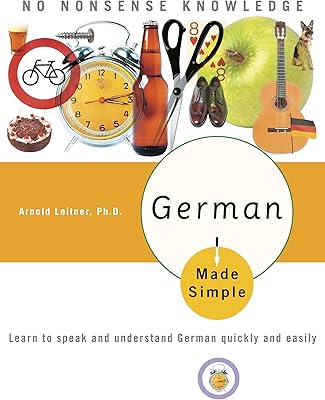
German Made Simple
Eugene Jackson
A complete beginner's guide covering grammar, vocabulary, and conversation essentials.
Check Price on Amazon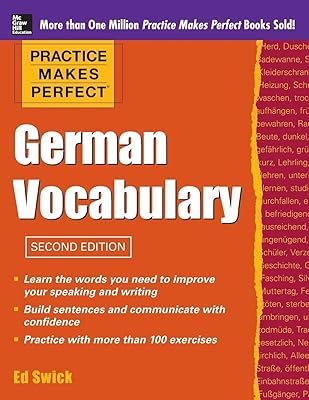
Practice Makes Perfect: German Vocabulary
Ed Swick
Targeted exercises and drills for mastering essential German words and phrases.
Check Price on AmazonAs an Amazon Associate, we earn from qualifying purchases.