How to Learn German with Podcasts (Even as a Complete Beginner)
By LangPodTools Team, Language Learning Content Specialist

Podcasts are one of the most underused tools in language learning — and for German, they're especially powerful. You get real pronunciation, natural rhythm, and native vocabulary, all without sitting in a classroom.
The catch? Most beginners give up because they can't understand anything at first. This guide will show you exactly how to fix that.
Why Podcasts Work for Learning German
Listening to spoken German trains your ear in ways textbooks simply can't. You absorb sentence rhythm, word stress, and connected speech — the way words blur together in real conversations.
Research from the Goethe Institut consistently shows that comprehensible input is one of the most effective paths to fluency. Podcasts designed for learners deliver exactly that.
The "Input Hypothesis" in Plain English
Linguist Stephen Krashen popularized the idea that we acquire language best when we understand messages slightly above our current level. Podcasts let you control that level — you can start with slow, simple content and work up gradually.
Why German Specifically Benefits from Audio
- Word order sounds unnatural on the page but clicks naturally when you hear it in rhythm
- Compound words like Handschuh (glove, literally "hand shoe") are easier to parse when spoken
- Umlauts (ä, ö, ü) and the ch sound require ear training, not just reading
Study Tip: Don't wait until you feel "ready" to listen. Starting at A1 with slow, clear speech is exactly the right move.
Choosing the Right Podcast for Your Level
Not every German podcast is appropriate for every learner. Picking content too far above your level leads to frustration, not fluency.
Beginner (A1–A2): Slow and Structured
At this stage, you need slow speech, simple vocabulary, and ideally a transcript. The best options:
- Slow German by Annik Rubens — short episodes on everyday topics, spoken slowly and clearly
- Deutsch – Warum Nicht? by Deutsche Welle — free, structured, with audio scripts
- Coffee Break German — lesson-style episodes with English explanations
Browse our German episodes hub to find curated podcast content organized by level.
Intermediate (B1–B2): Real Conversations, Controlled
Once you can follow simple sentences, push into real discussions:
- Auf Wiedersehen — conversational German with transcripts
- Slow German mit Annik Rubens (advanced episodes) — still clear, more complex topics
- Mission Berlin — interactive story-driven audio by Deutsche Welle
Advanced: Native Speaker Content
- Bayern 2 radio (current events)
- WDR Podcast (news and culture)
- Any German true-crime podcast — fast, engaging, authentic
Study Tip: If you understand fewer than 50% of words, the episode is too hard. Drop down a level. Comprehension builds confidence.
The Active Listening Method: Don't Just Press Play
Passive listening — podcast on in the background while you do dishes — has limited learning value. Active listening is where real progress happens.
Here's a three-pass method that works at any level:
Pass 1: First Listen (No Pausing)
Play the episode straight through. Don't look up words. Just absorb the overall meaning, tone, and any words you catch. Note how much you understood — even roughly.
Pass 2: Transcript Listen
Open the transcript and follow along word by word. Use our Transcript Reader tool to read and listen simultaneously. Pause and look up any word you've heard three or more times.
Pass 3: Shadowing
Play a short 30-second clip and repeat exactly what you hear — same speed, same intonation, same rhythm. This is called shadowing, and it trains your pronunciation faster than any app.
Study Tip: Shadowing feels awkward at first. That's normal. After two weeks, you'll notice your German sounds dramatically more natural.
Tools That Make Podcast Learning 10x More Effective
Raw listening is a start. But pairing podcasts with the right tools accelerates everything.
Adjust Playback Speed
Slowing down a native-speed episode from 1.0x to 0.75x can turn incomprehensible audio into something you can follow. Our Speed Player tool lets you fine-tune playback without distorting pitch.
Once an episode feels easy at 0.75x, push it to 0.85x, then 1.0x. This progressive speed training is exactly how professional language coaches teach listening.
Build Vocabulary from What You Hear
Anytime you look up a word from a podcast, add it to a study deck. Our Flashcard tool lets you create decks from podcast vocabulary so you review words in context — not random lists.
Analyze Word Frequency
Not all German words are equal. The 1,000 most common words cover roughly 85% of everyday speech. Use our Word Frequency Analyzer to find which words appear most in your target content and prioritize those.
Combine this with our German vocabulary page to see core words organized by frequency and topic.
Building a Weekly Podcast Routine
Consistency beats intensity. Thirty minutes every day beats three hours on Sunday.
Here's a realistic weekly structure for a beginner:
| Day | Activity | Time |
|---|---|---|
| Monday | New episode — first listen | 20 min |
| Tuesday | Same episode — transcript listen | 25 min |
| Wednesday | Shadowing + flashcard review | 20 min |
| Thursday | New short episode — first listen | 15 min |
| Friday | Vocabulary review + word frequency check | 20 min |
| Saturday | Full active listen of the week's episodes | 30 min |
| Sunday | Rest or casual listening (no pressure) | — |
This schedule gives you roughly 130 minutes of focused practice per week — enough to make genuine progress at A1–A2.
Tracking Progress
Every four weeks, go back to an episode you struggled with at the start of the month. You'll be surprised how much more you catch. That contrast is your proof of progress.
Common Mistakes That Slow German Podcast Learning
Even dedicated learners make these errors. Avoid them.
Mistake 1: Listening Without a Transcript
Listening to audio you can't understand 80%+ of — without a transcript — is mostly wasted time. Your brain needs anchor points. Always use transcripts for new content.
Mistake 2: Studying Grammar Only
German grammar (especially the four cases) matters, but over-studying grammar at the expense of listening creates a "textbook learner" who freezes in real conversation. Podcasts fix this.
Mistake 3: Skipping the Beginner Phase
Jumping to native content at A1 level feels ambitious but produces little. You need a foundation of 500–1,000 core words before native-speed content becomes useful.
Mistake 4: Inconsistency
Two weeks of daily practice, then two weeks off, then back again. This stop-start pattern is the number one reason learners plateau. Even 15 minutes a day beats 3-hour weekend binges.
Study Tip: Set a non-negotiable minimum. Even on busy days, listen to 10 minutes of German. Streaks build habit.
Free German Podcast Resources Worth Bookmarking
You don't need to spend money to get started. These are genuinely excellent and free:
- Deutsche Welle Learn German — structured courses, transcripts, exercises, all levels
- Goethe Institut Online Exercises — vocabulary and grammar paired with audio
- ARD Audiothek — German public radio, native content with a wide variety of topics
For structured listening practice paired with vocabulary tools, start on our German hub — episodes are tagged by difficulty level.
Conclusion
Learning German with podcasts works — but only when you listen actively, match content to your level, and use the right tools alongside raw audio. Start with one slow episode this week. Follow the three-pass method. Add new words to your flashcard deck.
Small, consistent sessions compound into real fluency. And the moment you catch a joke in a native-speed German podcast without thinking — that moment is worth every repetition.
Frequently Asked Questions
Can I learn German just from podcasts?▾
How many hours of podcast listening to reach B1?▾
What's the best German podcast for beginners?▾
Should I use transcripts while listening?▾
Recommended Study Material
The Complete German Grammar Cheat Sheet
A1–B2 Reference PDF
27 pages of color-coded tables, mnemonics, and shortcuts — every rule you need from Cases to Subjunctive.
Recommended German Books

Short Stories in German for Beginners
Olly Richards
Learn German with 8 captivating stories. Perfect for A2-B1 learners who want to build vocabulary naturally.
Check Price on Amazon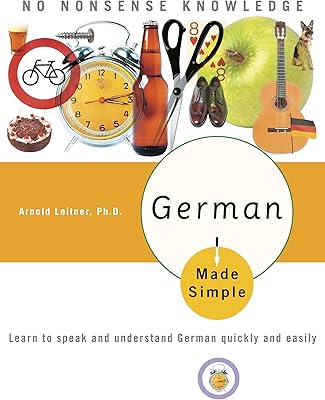
German Made Simple
Eugene Jackson
A complete beginner's guide covering grammar, vocabulary, and conversation essentials.
Check Price on Amazon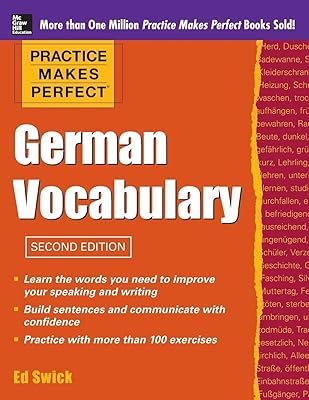
Practice Makes Perfect: German Vocabulary
Ed Swick
Targeted exercises and drills for mastering essential German words and phrases.
Check Price on AmazonAs an Amazon Associate, we earn from qualifying purchases.