50 Common German Phrases for Everyday Conversations
By LangPodTools Team, Language Learning Content Specialist

You don't need perfect grammar to have a real conversation in German. You need the right phrases, said at the right time, with enough confidence that people respond naturally.
This guide gives you 50 of the most useful German phrases, organized by situation. Each one includes a pronunciation hint and English translation. Bookmark this page and come back to it often.
Greetings and Farewells
Every interaction in German starts with a greeting. Skipping it is considered rude. Even a quick Hallo before asking a question makes a noticeable difference.
Saying Hello
| German | Pronunciation | English |
|---|---|---|
| Hallo | HAH-lo | Hello (universal) |
| Guten Morgen | GOO-ten MOR-gen | Good morning |
| Guten Tag | GOO-ten TAHK | Good day / Hello |
| Guten Abend | GOO-ten AH-bent | Good evening |
| Hi | HEE | Hi (casual) |
Hallo works in almost every situation. It is the safest default. For a deeper look at when to use each greeting, see our full guide on how to say hello in German.
The formal greetings follow a simple pattern: Guten + time of day. Use Guten Tag in shops, offices, and with strangers during daytime hours.
Saying Goodbye
| German | Pronunciation | English |
|---|---|---|
| Tschüss | CHOOS | Bye (informal) |
| Auf Wiedersehen | owf VEE-der-zayn | Goodbye (formal) |
| Bis bald | bis BAHLT | See you soon |
| Bis morgen | bis MOR-gen | See you tomorrow |
| Gute Nacht | GOO-teh NAKHT | Good night |
Tschüss is the everyday goodbye. Use Auf Wiedersehen in formal settings. For bedtime farewells, check our goodnight in German guide.
Want the full breakdown of every German farewell? Read our dedicated German goodbye phrases article.
Study Tip: Greetings and goodbyes are the easiest phrases to practice daily. Say Guten Morgen out loud every morning and Gute Nacht every evening. Within a week, they will feel automatic.
Polite Expressions
Politeness goes a long way in German-speaking countries. These five phrases cover 90% of polite interactions.
The Core Five
| German | Pronunciation | English |
|---|---|---|
| Bitte | BIT-teh | Please / You're welcome |
| Danke | DAHN-keh | Thank you |
| Danke schön | DAHN-keh SHERN | Thank you very much |
| Entschuldigung | ent-SHOOL-dee-goong | Excuse me / Sorry |
| Es tut mir leid | es toot meer LYTE | I'm sorry |
Bitte is a two-in-one word. It means "please" when asking for something and "you're welcome" when responding to thanks. You will hear it dozens of times a day in Germany.
Entschuldigung is the Swiss Army knife of German politeness. Use it to get someone's attention, apologize for bumping into them, or politely interrupt a conversation.
Polite Responses
- Kein Problem (kyne pro-BLAYM) — No problem
- Gern geschehen (gairn geh-SHAY-en) — You're welcome (formal)
- Nichts zu danken (nikhts tsoo DAHN-ken) — Don't mention it
Study Tip: Practice Entschuldigung until you can say it without hesitation. It is the single most useful polite phrase in German. Record yourself saying it five times in a row. Speed matters here — in real life, you need it instantly.
Asking for Help and Directions
Getting lost is part of traveling. These phrases turn confusion into a quick conversation.
Essential Questions
| German | Pronunciation | English |
|---|---|---|
| Sprechen Sie Englisch? | SHPREH-khen zee ENG-lish | Do you speak English? |
| Können Sie mir helfen? | KER-nen zee meer HEL-fen | Can you help me? |
| Wo ist...? | voh ist | Where is...? |
| Wie komme ich zu...? | vee KOM-eh ikh tsoo | How do I get to...? |
| Ich verstehe nicht. | ikh fair-SHTAY-eh nikht | I don't understand. |
Start with Entschuldigung before any question. A typical exchange: "Entschuldigung, wo ist der Bahnhof?" — Excuse me, where is the train station?
Direction Words
- Links (LINKS) — Left
- Rechts (REKHTS) — Right
- Geradeaus (geh-RAH-deh-owss) — Straight ahead
- In der Nähe (in dair NAY-eh) — Nearby
For a complete guide to navigating German-speaking countries, see our German travel phrases article. Understanding German numbers also helps when locals give directions with street numbers or distances.
Shopping and Restaurant Phrases
Ordering food and buying things are daily activities. These phrases make both smoother.
At the Restaurant
| German | Pronunciation | English |
|---|---|---|
| Ich hätte gern... | ikh HET-teh gairn | I would like... |
| Die Speisekarte, bitte. | dee SHPY-zeh-kar-teh BIT-teh | The menu, please. |
| Die Rechnung, bitte. | dee REKH-noong BIT-teh | The bill, please. |
| Was empfehlen Sie? | vahs emp-FAY-len zee | What do you recommend? |
| Ein Wasser, bitte. | ayn VAH-ser BIT-teh | A water, please. |
"Ich hätte gern" is the polite way to order anything. Follow it with whatever you want: Ich hätte gern einen Kaffee — I would like a coffee.
Here is a typical restaurant dialogue:
Kellner: Was darf es sein? (What would you like?) You: Ich hätte gern die Suppe und ein Bier, bitte. Kellner: Kommt sofort! (Coming right up!)
At Shops
- Wie viel kostet das? (vee feel KOS-tet dahs) — How much does this cost?
- Ich schaue nur. (ikh SHOW-eh noor) — I'm just looking.
- Kann ich mit Karte zahlen? (kahn ikh mit KAR-teh TSAH-len) — Can I pay by card?
- Haben Sie das in einer anderen Größe? (HAH-ben zee dahs in EYE-ner AHN-der-en GRUR-seh) — Do you have this in another size?
Study Tip: "Ich schaue nur" saves you from awkward moments in shops. German sales staff often approach customers directly. This polite phrase lets you browse in peace.
Getting to Know Someone
Meeting new people is one of the best parts of learning a language. These phrases cover basic introductions.
Introduction Phrases
| German | Pronunciation | English |
|---|---|---|
| Wie heißen Sie? | vee HY-sen zee | What is your name? (formal) |
| Ich heiße... | ikh HY-seh | My name is... |
| Woher kommen Sie? | voh-HAIR KOM-en zee | Where are you from? (formal) |
| Ich komme aus... | ikh KOM-eh owss | I come from... |
| Wie alt sind Sie? | vee ahlt zint zee | How old are you? (formal) |
| Freut mich! | froyt mikh | Nice to meet you! |
A sample introduction:
You: Hallo! Ich heiße Anna. Ich komme aus den USA. Und Sie? Them: Freut mich! Ich bin Thomas, aus Berlin.
Follow-Up Questions
- Was machen Sie beruflich? (vahs MAHKH-en zee beh-ROOF-likh) — What do you do for work?
- Wie lange sind Sie schon hier? (vee LAHNG-eh zint zee shohn heer) — How long have you been here?
- Sprechen Sie andere Sprachen? (SHPREH-khen zee AHN-der-eh SHPRAH-khen) — Do you speak other languages?
Notice the Sie form in all these phrases. Use it with anyone you have just met. Switch to du only after the other person invites you to. For more on this distinction, see our hello in German guide, which covers the du/Sie culture in depth.
Emergency Phrases
You hope you never need these, but knowing them turns a crisis into a manageable situation.
Critical Emergency Phrases
| German | Pronunciation | English |
|---|---|---|
| Hilfe! | HIL-feh | Help! |
| Rufen Sie die Polizei! | ROO-fen zee dee po-lee-TSYE | Call the police! |
| Rufen Sie einen Arzt! | ROO-fen zee EYE-nen ARTST | Call a doctor! |
| Ich brauche einen Krankenwagen. | ikh BROW-kheh EYE-nen KRAHN-ken-vah-gen | I need an ambulance. |
| Wo ist das nächste Krankenhaus? | voh ist dahs NEKH-steh KRAHN-ken-howss | Where is the nearest hospital? |
Other Important Safety Phrases
- Ich bin krank. (ikh bin krahnk) — I am sick.
- Ich habe meine Tasche verloren. (ikh HAH-beh MY-neh TAH-sheh fair-LOR-en) — I lost my bag.
- Es gibt einen Notfall. (es gipt EYE-nen NOHT-fahl) — There is an emergency.
- Ich bin allergisch gegen... (ikh bin ah-LAIR-gish GAY-gen) — I am allergic to...
The emergency number in Germany, Austria, and Switzerland is 112. It works from any phone, even without a SIM card.
Daily Conversation Phrases
These are the phrases you will use most often in casual, everyday interactions.
Everyday Essentials
- Wie geht es Ihnen? (vee gayt es EE-nen) — How are you? (formal)
- Mir geht es gut, danke. (meer gayt es goot DAHN-keh) — I'm fine, thanks.
- Was machst du heute? (vahs mahkhst doo HOY-teh) — What are you doing today?
- Ich weiß nicht. (ikh vyce nikht) — I don't know.
- Natürlich! (nah-TOOR-likh) — Of course!
- Genau! (geh-NOW) — Exactly!
Genau is one of the most-used words in spoken German. Native speakers say it constantly to show agreement. Think of it as the German "exactly" or "right."
Asking for Repetition
| German | English |
|---|---|
| Wie bitte? | Pardon? / What did you say? |
| Können Sie das wiederholen? | Can you repeat that? |
| Langsamer, bitte. | Slower, please. |
| Wie schreibt man das? | How do you spell that? |
"Wie bitte?" is the polite way to ask someone to repeat themselves. It is much more natural than saying "Was?" (What?), which sounds abrupt.
Study Tip: Use the LangPodTools flashcard tool to drill daily conversation phrases. Create a deck of 10 phrases and review them every morning. Spaced repetition makes them stick permanently.
Expressing Opinions and Feelings
Once you move past basic survival phrases, expressing what you think and feel is the next step.
Sharing Your Opinion
- Ich finde das gut. (ikh FIN-deh dahs goot) — I think that's good.
- Ich finde das nicht so gut. (ikh FIN-deh dahs nikht zo goot) — I don't think that's great.
- Ich stimme zu. (ikh SHTIM-eh tsoo) — I agree.
- Ich bin nicht sicher. (ikh bin nikht ZIKH-er) — I'm not sure.
- Meiner Meinung nach... (MY-ner MY-noong nahkh) — In my opinion...
Expressing Feelings
| German | Pronunciation | English |
|---|---|---|
| Ich bin müde. | ikh bin MOO-deh | I am tired. |
| Ich bin hungrig. | ikh bin HOONG-rikh | I am hungry. |
| Ich freue mich! | ikh FROY-eh mikh | I'm happy / excited! |
| Das ist toll! | dahs ist TOHL | That's great! |
| Das gefällt mir. | dahs geh-FELT meer | I like that. |
| Mir ist langweilig. | meer ist LAHNG-vy-likh | I'm bored. |
"Das gefällt mir" is how Germans say "I like that." The structure is different from English — literally it means "that pleases me." You will hear it constantly.
For learning to decline politely or express disagreement, our guide on how to say no in German covers every level from soft refusal to firm boundary.
Quick Reference: Your Top 20 Phrases Card
Print this or screenshot it for quick access:
| # | German | English |
|---|---|---|
| 1 | Hallo | Hello |
| 2 | Tschüss | Bye |
| 3 | Bitte | Please / You're welcome |
| 4 | Danke | Thank you |
| 5 | Entschuldigung | Excuse me |
| 6 | Ja / Nein | Yes / No |
| 7 | Ich hätte gern... | I would like... |
| 8 | Wie viel kostet das? | How much? |
| 9 | Wo ist...? | Where is...? |
| 10 | Die Rechnung, bitte. | The bill, please. |
| 11 | Sprechen Sie Englisch? | Do you speak English? |
| 12 | Ich verstehe nicht. | I don't understand. |
| 13 | Wie heißen Sie? | What's your name? |
| 14 | Ich heiße... | My name is... |
| 15 | Hilfe! | Help! |
| 16 | Wie geht es Ihnen? | How are you? |
| 17 | Mir geht es gut. | I'm fine. |
| 18 | Genau! | Exactly! |
| 19 | Ich weiß nicht. | I don't know. |
| 20 | Auf Wiedersehen | Goodbye |
How to Practice These Phrases
Reading a list is step one. Making phrases automatic requires active practice.
A 7-Day Practice Plan
- Days 1–2: Memorize greetings and polite expressions. Say them out loud.
- Days 3–4: Add shopping and restaurant phrases. Practice ordering food in German at home.
- Days 5–6: Learn introduction and direction phrases. Role-play meeting someone new.
- Day 7: Review all 50 phrases with the LangPodTools flashcard tool.
Listening to native speakers use these phrases in context accelerates learning dramatically. Browse our German episodes hub to hear real conversations at beginner-friendly levels.
For a broader vocabulary foundation beyond phrases, our essential German words guide covers the 50 highest-frequency individual words.
Recommended Tools
- Flashcard Tool — Create custom decks and drill with spaced repetition
- Verb Conjugation Tool — Practice conjugating common verbs from these phrases
- DW Learn German — Free structured courses from beginner to advanced
- Goethe-Institut Exercises — Official practice materials from Germany's cultural institute
Frequently Asked Questions
What are the 10 most important German phrases to learn first?
Start with these ten: Hallo (hello), Tschüss (bye), Bitte (please), Danke (thank you), Entschuldigung (excuse me), Ja/Nein (yes/no), Ich hätte gern... (I would like...), Wo ist...? (where is...?), Sprechen Sie Englisch? (do you speak English?), and Wie viel kostet das? (how much?). These cover greetings, politeness, ordering, navigation, and basic communication.
How do I pronounce German phrases correctly?
German pronunciation is more consistent than English. The key rules: W sounds like English "V" (Wie = VEE), V sounds like English "F" (viel = FEEL), ei sounds like "eye" (nein = NINE), ie sounds like "ee" (wie = VEE), and ch varies by context. Practice with audio resources like the Goethe-Institut's online exercises and listen to native speakers in our German episodes.
Is it okay to speak English in Germany?
Most Germans in cities speak English well. However, starting a conversation in German — even just with Guten Tag or Entschuldigung — shows respect and is always appreciated. Germans respond much more warmly when you make the effort, even if you switch to English afterward.
How long does it take to learn basic German phrases?
Most learners can memorize 20-30 useful phrases within one week of daily practice. The key is active recall: say phrases out loud, use flashcards, and practice in real situations. Passive reading is not enough. Use our flashcard tool for structured daily review.
What is the difference between du and Sie in German?
Sie (formal "you") is used with strangers, older people, and in professional settings. Du (informal "you") is used with friends, family, and peers. As a learner, always default to Sie when meeting someone new. The other person will invite you to switch to du when appropriate. Using du too early can feel presumptuous.
Conclusion
Fifty phrases is all it takes to handle most everyday situations in German. You can greet people, order food, ask for help, introduce yourself, and express basic opinions.
The secret is not memorizing more phrases. It is practicing fewer phrases until they come out without thinking. Start with the top 20 reference card above. Drill them with the flashcard tool. Listen to them in context through our German episodes.
Germans do not expect perfection from learners. They notice effort. Walk in, say Guten Tag, order your coffee with Ich hätte gern einen Kaffee, bitte, and watch the difference it makes.
Start today. Pick five phrases from this list and use them before the day ends.
Frequently Asked Questions
What are the 10 most important German phrases to learn first?▾
How do I pronounce German phrases correctly?▾
Is it okay to speak English in Germany?▾
How long does it take to learn basic German phrases?▾
What is the difference between du and Sie in German?▾
Recommended Study Material
The Complete German Grammar Cheat Sheet
A1–B2 Reference PDF
27 pages of color-coded tables, mnemonics, and shortcuts — every rule you need from Cases to Subjunctive.
Recommended German Books

Short Stories in German for Beginners
Olly Richards
Learn German with 8 captivating stories. Perfect for A2-B1 learners who want to build vocabulary naturally.
Check Price on Amazon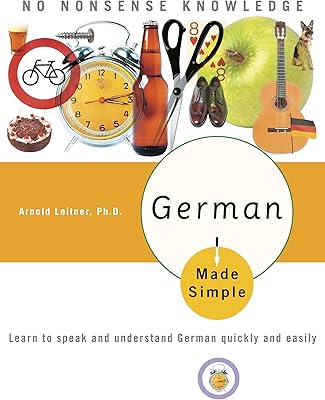
German Made Simple
Eugene Jackson
A complete beginner's guide covering grammar, vocabulary, and conversation essentials.
Check Price on Amazon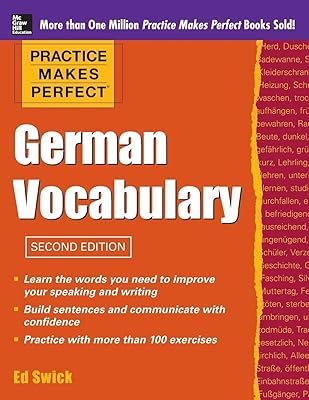
Practice Makes Perfect: German Vocabulary
Ed Swick
Targeted exercises and drills for mastering essential German words and phrases.
Check Price on AmazonAs an Amazon Associate, we earn from qualifying purchases.