How to Say Hello in German: Every Greeting You Need to Know
By LangPodTools Team, Language Learning Content Specialist

There is no single "hello" in German. Depending on where you are, who you are talking to, and what time of day it is, the right greeting changes completely. Use the wrong one and you'll sound like a textbook. Use the right one and you'll instantly feel more at home.
This guide covers every way to say hello in German — from the universal Hallo to the Bavarian Servus to the northern coast's beloved Moin. By the end, you'll know exactly which greeting fits every situation.
Hallo — The Universal Hello
Hallo (pronounced: HAH-loh) is the single safest, most understood greeting in German. It works everywhere in Germany, Austria, and Switzerland, with anyone from a close friend to a new acquaintance.
Think of Hallo as the German equivalent of a casual-but-friendly "hi" in English. It's not stiff or formal, but it's not so casual that it would raise eyebrows in a slightly professional setting either. It sits comfortably in the middle.
When in doubt, say Hallo. It never fails.
Study Tip: Hallo is one of the first words German podcast hosts say at the top of every episode. If you listen to our German episodes hub, you'll hear it dozens of times per session — the fastest way to make it feel natural.
Guten Tag — The Formal Daytime Hello
Guten Tag (pronounced: GOO-ten TAHK, meaning "Good Day") is the standard formal greeting used during the daytime — roughly between 10 a.m. and 6 p.m. It's the greeting for shops, offices, banks, government buildings, and professional introductions.
If you're using the formal Sie ("you") with someone, Guten Tag is almost always your opening. Once you know someone well and switch to du, Hallo takes over.
We have a full dedicated article covering Guten Tag in depth — its grammar, pronunciation nuances, regional substitutes, and exactly when to deploy it. Read the complete Guten Tag guide for everything you need to know about this one phrase.
Hi and Hey — The Modern Casual Hello
Yes, German speakers use Hi and Hey — and they use them a lot, especially younger speakers in cities.
Hi (HEE, exactly like English) is widely used among people in their teens, twenties, and thirties. You'll see it constantly in German texts, emails, and social media. It carries the same register as the English "Hi" — friendly, approachable, slightly informal.
Hey is used in the same way, though it skews slightly more toward very close friends or casual exchanges. Think of it as the equivalent of the English "Hey" among friends.
Neither Hi nor Hey is appropriate for formal situations. Reserve them for people you know or settings where du clearly applies.
Time-Based Greetings: Guten Morgen and Guten Abend
German has dedicated greetings for different parts of the day. The pattern is simple: Guten + the time of day.
| Greeting | Literal Meaning | When to Use |
|---|---|---|
| Guten Morgen | Good Morning | Until ~10 a.m. |
| Guten Tag | Good Day | ~10 a.m. – 6 p.m. |
| Guten Abend | Good Evening | After ~6 p.m. |
Guten Morgen (GOO-ten MOR-gen) is warm and friendly — it's used in the same informal-to-formal range as Hallo. You can say Guten Morgen to a neighbor, a coworker, a shop assistant, or anyone you meet in the morning.
Guten Abend (GOO-ten AH-bent) is the evening counterpart. It's slightly more formal in feel than Hallo, similar to saying "Good evening" in English. Use it when starting a conversation after around 6 p.m.
Note: Gute Nacht (good night) is not a hello — it's a bedtime farewell. For everything about nighttime farewells in German, check our goodnight in German guide.
Study Tip: The time-based greetings are a great early-learning win because the pattern repeats. Once you know Guten Morgen, you already understand the structure of Guten Tag and Guten Abend. Practice all three in one session.
Regional Greetings: Germany Isn't One-Size-Fits-All
One of the most surprising discoveries for German learners: the greeting you use depends heavily on where you are. German-speaking countries — and even different regions within Germany — have strong local greeting traditions. Using a regional greeting correctly is one of the fastest ways to make a good impression on locals.
Moin — Northern Germany
Moin (MOIN, rhymes with "coin") is the greeting of northern Germany — Hamburg, Bremen, Schleswig-Holstein, and the Baltic coast. It comes from a Low German word meaning "nice" or "fine," not "morning" despite how it sounds.
Here's the key thing beginners always get wrong: Moin is used all day. Morning, afternoon, evening — it doesn't matter. You walk into a Hamburg bakery at 3 p.m. and say Moin. Completely natural.
You'll also hear Moin Moin — the doubled version, used for a warmer or more emphatic greeting, especially around Hamburg.
Servus — Bavaria and Austria
Servus (ZAIR-voos) is the super-casual greeting in Bavaria (southern Germany) and Austria. It comes from the Latin word for "servant" and originally meant something like "at your service," but today it's simply a friendly, warm hello among people who know each other.
Servus has a notable quirk: it's also used as a goodbye. You might enter a room with Servus! and leave the same room later with Servus! — both mean the same thing contextually. Think of it like "ciao" in Italian.
Grüß Gott — Bavaria and Austria (Formal)
Grüß Gott (GREWS GOTT, meaning "May God greet you") is the standard formal greeting in Bavaria and Austria — the regional equivalent of Guten Tag. Despite its religious roots, it carries no strong religious connotation today. It's simply what you say when you walk into a shop, office, or formal setting in southern Germany or Austria.
If you visit Munich and say Guten Tag in every shop, you'll be understood — but you'll be marked as an outsider. Grüß Gott is what the locals say.
The informal version is Grüß dich (GREWS dikh) — used with people you know on a first-name basis.
Grüezi — Switzerland
Grüezi (GREW-tsee) is the standard greeting in Swiss German (German-speaking Switzerland). It's roughly equivalent to Guten Tag in formality — used in shops, with strangers, and in professional settings.
Switzerland's German is a dialect called Schweizerdeutsch, and it sounds noticeably different from the German spoken in Germany. Grüezi is one of the first things that will tip you off that you're in Switzerland. Among friends, Swiss German speakers often just say Hallo or Hoi (a Swiss-informal version of Hi).
Study Tip: If you're learning German for travel, look up which region you're visiting before you go. Greeting locals with Moin in Hamburg or Grüß Gott in Munich shows respect for local culture and generates instant goodwill. Listening to regional German podcasts is one of the best ways to absorb this naturally — browse the German episodes hub to find shows from different regions.
How Germans Answer the Phone
Here's something that trips up almost every foreign German learner: Germans do not say "Hallo" when they answer the phone.
The standard German phone greeting is to state your last name — often just that, nothing else.
For example, if a German named Thomas Müller answers his phone, he says:
"Müller?"
That's it. Just the surname, often with a slight upward inflection. In a business context, this might expand to:
"Müller, guten Tag."
Or for a company:
"Schmidt GmbH, Müller am Apparat." ("Schmidt GmbH, Müller speaking.")
This phone convention surprises most learners, but it's deeply ingrained in German phone culture. If you call a German number and hear just a surname, you haven't reached a wrong number — that's a perfectly normal greeting.
Among close friends, younger Germans increasingly answer with Hallo? or even just Ja? ("Yes?"), especially on mobile phones. But in any professional context, the surname answer remains the norm.
Formal vs. Informal: Sie vs. Du
Choosing the right greeting in German goes hand-in-hand with choosing the right form of "you." German has two versions:
- Sie (zee) — formal "you," used with strangers, people in authority, older people, and professional contacts
- du (doo) — informal "you," used with friends, family, children, and peers
Your greeting should match:
| Situation | Greeting | Form of You |
|---|---|---|
| Shop, office, bank, stranger | Guten Tag / Guten Morgen / Guten Abend | Sie |
| Friend, classmate, coworker you know well | Hallo / Hi / Hey | du |
| Bavaria / Austria (formal) | Grüß Gott | Sie |
| Bavaria / Austria (informal) | Servus / Grüß dich | du |
| Northern Germany | Moin (any formality) | either |
| Switzerland (formal) | Grüezi | Sie |
Switching from Sie to du is a social milestone in German culture. Typically, the older person or the person in the higher-status role makes the offer: "Wir können uns duzen" ("We can use du with each other"). Until that offer is made, stick with Sie and the formal greetings in professional contexts.
For a deeper look at how Sie and du affect sentence structure, our German cases explained guide covers the grammar behind both.
Complete German Greetings Reference Table
Here's your master cheat sheet — every greeting covered in this guide, organized from most formal to most casual:
| Greeting | Pronunciation | Meaning | Formality | Region | When to Use |
|---|---|---|---|---|---|
| Guten Morgen | GOO-ten MOR-gen | Good Morning | Formal/Neutral | All | Before ~10 a.m. |
| Guten Tag | GOO-ten TAHK | Good Day | Formal | All | ~10 a.m.–6 p.m., professional |
| Guten Abend | GOO-ten AH-bent | Good Evening | Formal/Neutral | All | After ~6 p.m. |
| Grüß Gott | GREWS GOTT | May God greet you | Formal | Bavaria, Austria | Standard formal in south |
| Grüezi | GREW-tsee | Hello (formal) | Formal | Switzerland | Standard formal in CH |
| Hallo | HAH-loh | Hello | Neutral/Casual | All | Universal safe choice |
| Grüß dich | GREWS dikh | Greet you | Informal | Bavaria, Austria | Casual version of Grüß Gott |
| Moin | MOIN | Hello | Informal | Northern Germany | Any time of day |
| Moin Moin | MOIN MOIN | Hello hello | Informal | Hamburg area | Warmer/emphatic Moin |
| Servus | ZAIR-voos | Hello / Bye | Very casual | Bavaria, Austria | Also used as goodbye |
| Hi | HEE | Hi | Casual | Urban, younger | Friends, texts, social |
| Hey | HEY | Hey | Very casual | Urban, younger | Close friends only |
| Na? | NAH | Well? | Very casual | All | "Hey, how's it going?" |
| Hoi | HOY | Hi | Very casual | Switzerland | Informal Swiss hello |
Common Mistakes to Avoid
Even prepared learners fall into these traps:
Using Guten Tag at night. Guten Tag is a daytime greeting. Using it at 8 p.m. sounds odd — switch to Guten Abend. And never use Gute Nacht as a greeting; it's only a bedtime farewell.
Being too formal with friends. Saying Guten Tag to a friend you know well sounds stiff — like saying "Good afternoon, sir" to your roommate. Among friends and peers, Hallo or a regional casual greeting is far more natural.
Ignoring regional greetings. Visiting Munich and never saying Grüß Gott marks you as an outsider. Visiting Hamburg and not knowing Moin means missing a big part of northern German culture. Pick up the regional greeting for wherever you're going.
Answering the phone with Hallo. In professional and formal contexts, Germans state their surname. Starting with Hallo on a business call can sound unprepared.
Forgetting to greet before asking for something. In German culture, launching straight into a request without greeting first ("Ich hätte gern..." without a preceding Hallo or Guten Tag) can come across as rude. Always greet first.
How to Practice Until Greetings Feel Natural
Knowing a list of greetings is not the same as reaching for the right one automatically. Here's what actually builds that automaticity:
Podcast immersion is the single most effective method. Native speakers open every episode with a greeting — you'll hear Hallo, Moin, Servus, and more dozens of times per listening session without any extra effort. Read our learn German with podcasts guide to find shows matched to your level, and browse the German episodes hub to start today.
Flashcard drilling locks in the formality distinctions and regional mapping. Our German flashcard tool lets you quiz yourself until the right greeting surfaces automatically for any scenario.
Free tools like DW Learn German and Anki make spaced repetition easy. See our best free tools to learn German guide for a curated list. For expanding beyond greetings into everyday phrases and practical vocabulary, check out our how to say no in German guide — another high-frequency phrase set every beginner needs.
Recommended German Learning Resources
If you want a structured reference to keep alongside your podcast listening:
- German Phrasebook & Dictionary for Beginners and Travelers — organized by situation, covers greetings, travel, shopping, and emergencies; perfect for keeping handy on a trip.
- German Made Simple: A Complete Course for Beginners — a self-study course that takes you from your first Hallo through complete conversations, with explanations designed for English speakers.
For authoritative audio and grammar reference, Deutsche Welle's free German course and the Goethe-Institut's online German exercises are both genuinely excellent and completely free.
Wrapping Up
Hallo is your foundation. Master it first — it works everywhere, for everyone, at any level of formality.
Once Hallo is automatic, layer on the time-based greetings (Guten Morgen, Guten Abend), then add the regional flavor for wherever you're headed: Moin in the north, Grüß Gott or Servus in the south, Grüezi in Switzerland.
For a deep dive into the single most important formal greeting — its grammar, pronunciation, and cultural weight — don't miss our complete Guten Tag guide. And when the day ends, our goodnight in German guide covers Gute Nacht and every bedtime phrase you need.
The fastest way to make all of this stick? Hear it in real conversation. Start with our German episodes hub — hosts open every episode with a greeting, so you'll absorb these phrases naturally in context.
Frequently Asked Questions
What is the most common way to say hello in German?▾
What does Moin mean in German and when do you use it?▾
What is the difference between Hallo and Guten Tag in German?▾
How do Germans greet each other on the phone?▾
What are the regional greetings in German-speaking countries?▾
Recommended Study Material
The Complete German Grammar Cheat Sheet
A1–B2 Reference PDF
27 pages of color-coded tables, mnemonics, and shortcuts — every rule you need from Cases to Subjunctive.
Recommended German Books

Short Stories in German for Beginners
Olly Richards
Learn German with 8 captivating stories. Perfect for A2-B1 learners who want to build vocabulary naturally.
Check Price on Amazon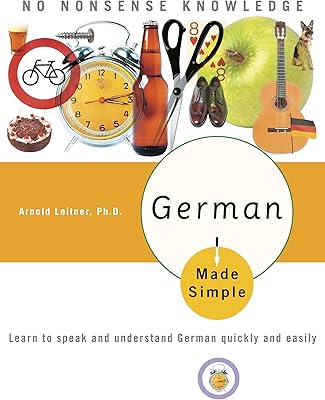
German Made Simple
Eugene Jackson
A complete beginner's guide covering grammar, vocabulary, and conversation essentials.
Check Price on Amazon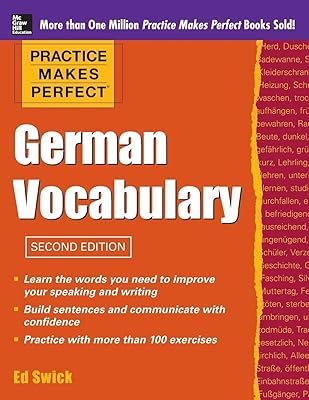
Practice Makes Perfect: German Vocabulary
Ed Swick
Targeted exercises and drills for mastering essential German words and phrases.
Check Price on AmazonAs an Amazon Associate, we earn from qualifying purchases.