Guten Tag: What It Means, How to Say It, and When to Use It
By LangPodTools Team, Language Learning Content Specialist

Walking into a German shop, office, or classroom? The first word out of your mouth will set the tone. Guten Tag is the classic, safe, universally understood German greeting — and mastering it (plus knowing when not to use it) will immediately make you sound more natural.
This guide covers everything: meaning, pronunciation, formality, regional twists, and a full table of German greetings so you always know what to say.
What Does Guten Tag Mean?
Guten Tag (pronounced: GOO-ten TAHK) translates literally to "Good Day" in English. It is the standard daytime greeting in German-speaking countries, used roughly between 10 a.m. and 6 p.m.
Breaking it down:
- Guten — the accusative form of gut (good)
- Tag — day
You might wonder why gut becomes Guten. That's German grammar cases in action — the greeting uses the accusative case because it's short for Ich wünsche Ihnen einen guten Tag ("I wish you a good day").
Study Tip: Don't stress the grammar here. Just memorize Guten Tag as one chunk. You'll naturally absorb the pattern as you hear it more in podcasts and real conversations.
How to Pronounce Guten Tag
German pronunciation is consistent — once you know the rules, you can read almost anything. Here's a simple phonetic breakdown:
| Word | Phonetic | Sounds Like |
|---|---|---|
| Guten | GOO-ten | "gooten" — the G is hard, like "go" |
| Tag | TAHK | the G at the end is pronounced like a hard K |
| Full phrase | GOO-ten TAHK | stress falls on both syllables equally |
The most common mistake English speakers make: they pronounce the final G in Tag as a soft English G (like in "bag"). In standard German (Hochdeutsch), it sounds like a K.
Want to hear it spoken by native speakers? The Deutsche Welle (DW) German pronunciation guide has free audio exercises to train your ear.
Study Tip: Practice Guten Tag along with German podcast episodes. Hearing the greeting in real context — not just isolated drills — wires it into your brain faster. Browse our German episodes hub to find beginner-friendly shows.
When to Use Guten Tag
Guten Tag is the go-to formal daytime greeting. Use it when:
- Meeting someone for the first time
- Entering a shop, office, bank, or government building
- Addressing someone older or in a professional setting
- Any situation where you'd use Sie (formal "you") rather than du (informal)
Think of it like "Good afternoon" or a formal "Hello" in English — polite, professional, appropriate for strangers.
If you're meeting friends, classmates, or anyone you call du, switch to Hallo (the universal casual hello) or one of the regional greetings below.
Time-Based German Greetings
German has a greeting for every part of the day. Once you know the pattern, they're easy to remember:
| Greeting | Literal Meaning | When to Use |
|---|---|---|
| Guten Morgen | Good Morning | Until ~10 a.m. |
| Guten Tag | Good Day | ~10 a.m. – 6 p.m. |
| Guten Abend | Good Evening | After ~6 p.m. |
| Gute Nacht | Good Night | Only as a farewell at bedtime |
Notice that Gute Nacht drops the -n ending — that's because Nacht is feminine, so it takes a different accusative article. Again, don't memorize the grammar rule — just memorize Gute Nacht as its own phrase.
Formal vs. Informal: Sie vs. Du
German has two words for "you" — Sie (formal) and du (informal) — and your choice of greeting should match.
Formal situations (use Sie):
- Guten Tag
- Guten Morgen / Guten Abend
- Auf Wiedersehen (formal goodbye)
Informal situations (use du):
- Hallo
- Hey
- Tschüss (casual goodbye)
- Regional greetings (see below)
The Goethe-Institut's online German course covers the Sie/du distinction in depth — it's a free, authoritative resource worth bookmarking.
Not sure which word order rules apply when you switch between formal and informal German? Our German word order guide breaks it down clearly.
Complete Table of German Greetings
Here's your cheat sheet for every German greeting, from most formal to most casual:
| Greeting | Meaning | Formality | Region | Notes |
|---|---|---|---|---|
| Guten Morgen | Good Morning | Formal | All | Before ~10 a.m. |
| Guten Tag | Good Day | Formal | All | Core daytime greeting |
| Guten Abend | Good Evening | Formal | All | After ~6 p.m. |
| Gute Nacht | Good Night | Neutral | All | Bedtime farewell only |
| Hallo | Hello | Informal | All | Safe universal casual |
| Hi | Hi | Very casual | Urban | Common among younger Germans |
| Hey | Hey | Very casual | Urban | Friends only |
| Grüß Gott | Greet God | Formal | Bavaria, Austria | Catholic tradition; very common |
| Grüß dich | Greet you | Informal | Bavaria, Austria | Casual version of Grüß Gott |
| Servus | At your service | Informal | Bavaria, Austria | Also used as goodbye |
| Moin | Morning | Informal | Northern Germany | Used all day, not just mornings |
| Moin Moin | Morning morning | Informal | Hamburg area | Emphasis version of Moin |
| Na? | Well? | Very casual | All | "Hey, how's it going?" — one syllable |
Regional Variations: Germany Isn't One-Size-Fits-All
One of the most surprising things for German learners: the greeting changes depending on where you are in the German-speaking world.
Bavaria and Austria: Grüß Gott
In Bavaria (southern Germany) and Austria, you'll hear Grüß Gott far more than Guten Tag. It literally means "May God greet you" and carries no strong religious connotation today — it's simply the standard formal greeting. Refusing to use it or looking confused will immediately mark you as an outsider.
The informal equivalent is Grüß dich (for du relationships) or the ultra-casual Servus, which doubles as both hello and goodbye.
Northern Germany: Moin
In Hamburg, Bremen, and the northern coast, everyone says Moin — at any hour of the day or night. Yes, at 3 p.m. Yes, at 10 p.m. Don't let the "morning" root confuse you; up north, Moin just means hello.
The Rest of Germany
Hallo is universally understood and accepted everywhere. When in doubt, Hallo never fails. For formal settings outside Bavaria, Guten Tag is always the right call.
Study Tip: If you're learning German to travel or connect with specific communities, find out your target region's greeting style. Listening to regional podcasts is one of the fastest ways to pick this up naturally. Check our German vocabulary page for region-specific resources.
Common Mistakes Learners Make
Even well-prepared learners fall into these traps:
1. Using Guten Tag with close friends It sounds stiff and overly formal between friends — like saying "Good day, sir" to your roommate. Switch to Hallo or the regional casual greeting once you know someone well.
2. Forgetting Guten Tag in formal settings Diving straight into Ich hätte gern... ("I'd like...") without greeting first comes across as rude in German culture. Always greet first — even briefly.
3. Pronouncing the final G softly Tag ends with a hard K sound in standard German. Soft G is a common English-speaker error that makes native speakers do a double-take.
4. Using Gute Nacht as a general evening greeting Gute Nacht is only a farewell when someone is going to bed. Using it at 8 p.m. when a conversation is just starting is a classic beginner mistake — use Guten Abend instead.
5. Applying Hochdeutsch everywhere If you're in Bavaria and you use Guten Tag when everyone around you says Grüß Gott, you'll get knowing smiles. Locals appreciate it when learners pick up regional flavor.
Practicing Greetings That Actually Stick
The fastest way to internalize German greetings isn't a grammar table — it's hearing them in real conversation, repeatedly, in context.
Here's what actually works:
- Podcast immersion — Listen to our German learning podcast guide to find shows where hosts greet naturally at the top of every episode.
- Flashcard drilling — Use our German flashcard tool to quiz yourself on greetings vs. formality level.
- Verb conjugation context — When you're ready to move beyond greetings to full sentences, our verb conjugation tool handles the heavy lifting.
- Free resources — Our best free tools to learn German guide lists top-rated apps and sites including DW, Duolingo, and Anki decks built around real German.
Recommended German Learning Books
If you want a structured reference to keep alongside your podcasts, these two are consistently recommended by learners:
- German Phrasebook & Dictionary for beginners and travelers — portable, practical, great for greetings and travel vocabulary
- Practice Makes Perfect: German Vocabulary — workbook-style exercises that go from greetings to full conversational topics
Quick Reference: What to Say and When
Still not sure which greeting to reach for? Use this decision tree:
-
Is it a formal/professional situation?
- Morning → Guten Morgen
- Daytime → Guten Tag (or Grüß Gott in Bavaria/Austria)
- Evening → Guten Abend
-
Is it a casual/friend situation?
- Everywhere → Hallo
- Northern Germany → Moin
- Bavaria/Austria → Servus or Grüß dich
-
Saying goodbye at bedtime?
- → Gute Nacht
That's really all you need. Keep it simple until context makes the regional flavors obvious.
Wrapping Up
Guten Tag is your foundation. It's formal, universally understood, and always appropriate in professional German contexts. Once you've got it wired in, layer on the time-based greetings (Guten Morgen, Guten Abend) and then explore the regional variations that make German feel alive and local.
The best way to make all of this stick? Listen to German being spoken naturally. Start with our German episodes collection — hosts greet at the top of every episode, so you'll hear these phrases dozens of times per hour without any extra effort.
Frequently Asked Questions
What does Guten Tag mean in English?▾
How do you pronounce Guten Tag?▾
When should I use Guten Tag instead of Hallo?▾
What do people say instead of Guten Tag in Bavaria?▾
What is the difference between Guten Abend and Gute Nacht?▾
Recommended Study Material
The Complete German Grammar Cheat Sheet
A1–B2 Reference PDF
27 pages of color-coded tables, mnemonics, and shortcuts — every rule you need from Cases to Subjunctive.
Recommended German Books

Short Stories in German for Beginners
Olly Richards
Learn German with 8 captivating stories. Perfect for A2-B1 learners who want to build vocabulary naturally.
Check Price on Amazon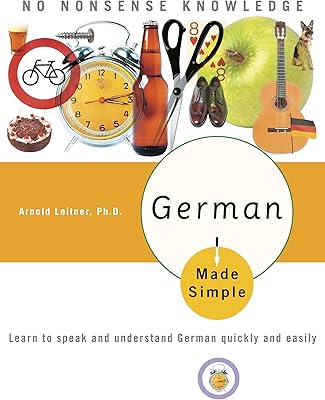
German Made Simple
Eugene Jackson
A complete beginner's guide covering grammar, vocabulary, and conversation essentials.
Check Price on Amazon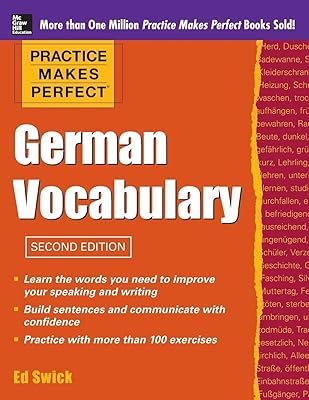
Practice Makes Perfect: German Vocabulary
Ed Swick
Targeted exercises and drills for mastering essential German words and phrases.
Check Price on AmazonAs an Amazon Associate, we earn from qualifying purchases.