German Swear Words: A Learner's Guide to Curse Words and Profanity
By LangPodTools Team, Language Learning Content Specialist

Every language has words your textbook skips. German is no exception. Whether you hear them in a Berlin bar or a Rammstein song, knowing German swear words helps you understand real conversations.
This guide covers common German curse words ranked by intensity. You will learn when Germans actually use them, polite alternatives, and cultural context that textbooks leave out.
Why Learn German Swear Words?
Profanity is part of everyday language. You will hear it in movies, podcasts, and casual speech. Understanding these words protects you from accidental offense.
Real-World Exposure
German TV shows, podcasts, and music use profanity constantly. If you watch Dark or listen to German rap, you need this vocabulary. Not to use it — but to understand it.
Avoiding Embarrassment
Some German words sound harmless but are not. Others sound offensive but are perfectly fine. Knowing the difference saves you from awkward situations. See our essential German words guide for the safe vocabulary foundation.
Study Tip: Learn these words for comprehension, not production. Understanding profanity is a language skill. Using it as a beginner almost always backfires.
Mild German Swear Words (Safe-ish in Casual Settings)
These are the German equivalents of "darn" or "crap." Most adults use them freely. You might hear them in offices, among friends, or on family TV.
Everyday Exclamations
| German | Pronunciation | English Equivalent | Intensity |
|---|---|---|---|
| Mist! | MIST | Darn! / Crap! | Low |
| Mensch! | MENSH | Man! / Geez! | Low |
| Meine Güte! | MY-nuh GOO-tuh | My goodness! | Low |
| Quatsch! | KVATCH | Nonsense! / Rubbish! | Low |
| Verdammt! | fair-DAHMT | Damn! | Low–Medium |
| So ein Mist! | zo ine MIST | What a pain! | Low |
Mist literally means "manure." It is the most common mild swear in German. Parents say it in front of children. Coworkers say it in meetings.
Mild Insults
These are low-level insults. They are rude but not fighting words.
- Blödmann (BLÖD-mahn) — stupid man / idiot
- Dummkopf (DOOM-kopf) — dumbhead / fool
- Spinner (SHPIN-ner) — weirdo / crazy person
- Depp (DEP) — fool / dimwit (very common in Bavaria)
- Trottel (TROT-tel) — doofus / bumbling fool
You can hear Dummkopf in old Hollywood movies. It crossed into English slang decades ago. In German, it is still used but sounds a bit old-fashioned.
Medium-Strength German Curse Words
These carry more weight. You would not say them in a job interview. Friends use them casually. Strangers might take offense.
Common Medium Swear Words
| German | Pronunciation | English Equivalent | Context |
|---|---|---|---|
| Scheiße | SHY-suh | Shit | By far the most common German swear word |
| Verdammte Scheiße | fair-DAHM-tuh SHY-suh | Damn shit | Emphatic version |
| Arsch | ARSH | Ass | Used in many compound words |
| Arschloch | ARSH-lokh | Asshole | Strong insult |
| Kacke | KAH-kuh | Crap (literal) | Slightly milder than Scheiße |
| Halt die Fresse! | HAHLT dee FRESS-uh | Shut your face! | Aggressive |
Scheiße deserves special attention. It is the single most versatile German swear word. Germans use it the way English speakers use "shit" — as a noun, adjective, prefix, and standalone exclamation.
Scheiße Compounds
German builds compound words. Profanity is no exception.
- Scheißegal (shyss-eh-GAHL) — "I don't give a damn" (literally: shit-equal)
- Scheißwetter (SHYSS-vet-ter) — crappy weather
- Scheißtag (SHYSS-tahk) — shitty day
- Scheißkerl (SHYSS-kerl) — bastard / jerk
The Duden dictionary lists Scheiße with full etymological and grammatical detail. It has been part of the German language since the 8th century.
Study Tip: Listen for Scheiße in German podcasts and movies. Once you hear it, you will notice it everywhere. It is often the first real swear word learners recognize in fast native speech. Try our German episodes for natural listening practice.
Strong German Profanity (Use With Extreme Caution)
These are the heavy hitters. They are genuinely offensive in most contexts. Know them for comprehension. Do not use them casually.
Sexual and Vulgar Terms
| German | Pronunciation | English Equivalent | Notes |
|---|---|---|---|
| Fick dich | FIK dish | Fuck you | Direct and very aggressive |
| Verpiss dich | fair-PIS dish | Piss off / Get lost | Harsh dismissal |
| Wichser | VIK-ser | Wanker | Common male insult |
| Fotze | FOT-tsuh | C-word | Extremely offensive |
| Hurensohn | HOO-ren-zohn | Son of a bitch (literal: son of a whore) | Very strong insult |
| Leck mich am Arsch | LEK mish am ARSH | Kiss my ass | Famous — attributed to Mozart |
Fick is the German equivalent of "fuck." Unlike English, Germans use it less frequently as a general-purpose intensifier. It is more targeted and more offensive in context.
The Mozart Connection
Leck mich am Arsch is a real Mozart composition (K. 231). He wrote it as a canon for six voices around 1782. This phrase has deep roots in German culture — it appears in Goethe's Götz von Berlichingen from 1773.
The expression is crude but iconic. Most Germans know its literary history.
German Insults That Sound Worse Than They Are
Some German words sound terrifying to English ears but are actually harmless.
False-Alarm Words
- Dickkopf (DIK-kopf) — stubborn person (literally: thick-head). Not about body size.
- Schweinehund (SHVY-nuh-hoont) — lazy/undisciplined person (literally: pig-dog). Often used as innerer Schweinehund (inner pig-dog) meaning your lazy inner voice.
- Klugscheißer (KLOOG-shy-ser) — know-it-all (literally: smart-shitter). Rude but common among friends.
- Warmduscher (VARM-doo-sher) — wimp (literally: warm-showerer). Humorous, not aggressive.
- Sitzpinkler (ZITS-pink-ler) — a man who sits to pee. Used to call someone unmanly. More funny than mean.
These creative compound insults are a beloved part of German culture. They showcase the language's ability to build vivid images from simple parts. For more on how German compounds work, check our longest German words guide.
Regional Differences in German Profanity
Germany, Austria, and Switzerland each have their own swearing traditions. What is harsh in Hamburg may be friendly in Vienna.
Northern Germany
- Swearing tends to be more reserved and direct
- Moin is a greeting, not a swear word (common mistake)
- Schiet (SHEET) — Low German dialect version of Scheiße
Bavaria and Austria
Bavarian and Austrian German have rich profanity traditions.
- Saupreiss (ZOW-pryss) — Prussian pig (Bavarian insult for northern Germans)
- Geh scheißen! (geh SHY-sen) — Go take a dump! (Austrian dismissal)
- Oaschloch (OH-ash-lokh) — Austrian dialect for Arschloch
- Depp is used far more frequently in the south
- Sakra! (ZAH-kra) — Bavarian exclamation (from "Sakrament")
Switzerland
Swiss German has its own system. Many standard German swears feel too harsh in Swiss culture.
- Gopfridstutz! (GOP-frid-shtuts) — Swiss exclamation (euphemism for "Gott" / God)
- Sieche (ZEE-khuh) — sick person / jerk (Swiss German insult)
- Swiss speakers often use French loanwords for swearing instead
Study Tip: If you are learning German for travel, knowing regional swear patterns helps you gauge social situations. A Bavarian Depp is much lighter than a northern Arschloch, even though both translate to insults. Our German travel phrases guide covers the polite essentials.
How to Express Frustration Politely in German
You do not need swear words to express strong feelings. Here are clean alternatives that work in any setting.
Polite Exclamations (Safe Everywhere)
| Instead of... | Say... | Meaning |
|---|---|---|
| Scheiße! | Mist! | Darn! |
| Verdammte Scheiße! | So ein Mist! | What a pain! |
| Fick dich! | Lass mich in Ruhe! | Leave me alone! |
| Halt die Fresse! | Sei still! | Be quiet! |
| Arschloch! | So ein Idiot! | What an idiot! |
| Scheiß drauf! | Egal! | Whatever! / I don't care! |
Expressing Strong Disagreement Without Swearing
Polite German has many ways to push back firmly.
- Das stimmt nicht. — That is not correct.
- Das sehe ich anders. — I see that differently.
- Das geht gar nicht. — That is absolutely not okay.
- Das ist doch Unsinn. — That is nonsense.
- Jetzt reicht's! — That's enough now!
For more ways to disagree and refuse in German, see our guide on how to say no in German.
German Swear Words in Pop Culture
German profanity appears constantly in movies, music, and internet culture. Recognizing it improves your media comprehension.
Music
German hip-hop artists like Sido, Bushido, and Capital Bra use heavy profanity in lyrics. Rammstein's songs contain milder language but play on taboo themes. Listening to German music is effective ear training — even the explicit parts.
Film and TV
German films like Der Untergang (Downfall) and shows like How to Sell Drugs Online (Fast) feature natural swearing. The internet-famous "Hitler reacts" meme scene from Der Untergang is packed with Scheiße, Idioten, and Versager (losers).
Internet Slang
Online, Germans often abbreviate:
- WTF — used directly from English
- OMG — also borrowed from English
- Alter! (AHL-ter) — Dude! / Man! (not a swear but very casual)
- Digga (DIG-gah) — Bro / Dude (Hamburg slang, now nationwide)
Practice and Comprehension Tips
The goal is recognition, not reproduction. Here is how to build passive knowledge of German profanity safely.
Listening Strategy
- Watch German shows with both German and English subtitles
- Note which swear words appear and how they map to the English translation
- Pay attention to context — the same word hits differently in different situations
- Use our German episodes to build general listening skills first
What NOT to Do
- Do not use strong swear words as a beginner. Tone and timing matter enormously.
- Do not assume German swear words carry the same weight as English equivalents.
- Do not use du (informal "you") with strangers when expressing frustration. Wrong register + profanity = conflict.
- Do not practice swear words with native speakers you just met.
The Goethe-Institut offers structured German courses that build the social awareness you need to navigate real conversations — including knowing when silence is better than any word.
Frequently Asked Questions
How do you say "fuck" in German?
The German word for "fuck" is ficken (FIK-en). The phrase "fuck you" translates to Fick dich. However, Germans use ficken less casually than English speakers use "fuck." For general frustration, Germans say Scheiße far more often. It functions as the all-purpose swear word in German.
What is the most common German swear word?
Scheiße (shit) is the most frequently used German swear word. It works as an exclamation, adjective prefix, and noun. You will hear it in casual conversation, on TV, and even from otherwise polite speakers. The milder version Mist (darn/crap) is the most common swear you can safely use in almost any context.
Are German swear words stronger than English ones?
It depends on context. German profanity tends to be more direct and literal. Words like Hurensohn (son of a whore) and Fotze carry extreme weight and can provoke real confrontation. English has normalized many swear words through overuse. German speakers are generally more selective — so when a German swears, it often carries more impact.
What German insults are actually funny, not offensive?
German has a tradition of creative compound insults that are more humorous than hurtful. Warmduscher (warm-showerer = wimp), Sitzpinkler (sit-down-pee-er = unmanly man), Schattenparker (shadow-parker = someone who parks in the shade), and Klugscheißer (smart-shitter = know-it-all) are all used playfully among friends.
Can I use "Scheiße" in casual conversation in Germany?
Scheiße is widely accepted in casual settings among adults. Friends, coworkers (in informal offices), and family members use it without causing offense. You would avoid it in formal situations like job interviews, presentations, or speaking with elderly strangers. Think of it as the German "shit" — common but still technically vulgar. When in doubt, use Mist instead.
Conclusion
German swear words are a real part of the language. Understanding them helps you follow native conversations, enjoy German media, and navigate social situations with confidence.
Start with passive recognition. Learn what words mean and when they appear. The mild ones like Mist and Mensch are safe to use. The strong ones are best left for comprehension only — at least until your German is advanced enough to read the room.
Ready to build your German beyond swear words? Explore our German vocabulary page for structured word lists, or jump into real German podcast episodes to hear how native speakers actually talk — profanity and all.
For structured practice, try our Flashcard tool to drill vocabulary with spaced repetition. And check dict.cc when you encounter unfamiliar slang — it covers colloquial usage that standard dictionaries skip.
Frequently Asked Questions
How do you say "fuck" in German?▾
What is the most common German swear word?▾
Are German swear words stronger than English ones?▾
What German insults are actually funny, not offensive?▾
Can I use Scheiße in casual conversation in Germany?▾
Recommended Study Material
The Complete German Grammar Cheat Sheet
A1–B2 Reference PDF
27 pages of color-coded tables, mnemonics, and shortcuts — every rule you need from Cases to Subjunctive.
Recommended German Books

Short Stories in German for Beginners
Olly Richards
Learn German with 8 captivating stories. Perfect for A2-B1 learners who want to build vocabulary naturally.
Check Price on Amazon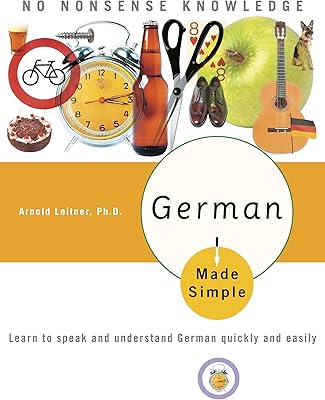
German Made Simple
Eugene Jackson
A complete beginner's guide covering grammar, vocabulary, and conversation essentials.
Check Price on Amazon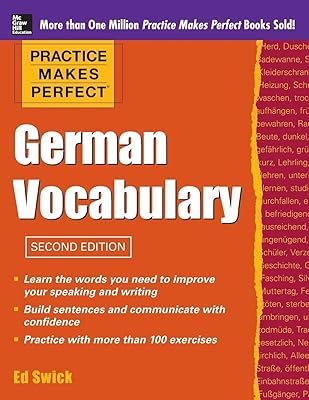
Practice Makes Perfect: German Vocabulary
Ed Swick
Targeted exercises and drills for mastering essential German words and phrases.
Check Price on AmazonAs an Amazon Associate, we earn from qualifying purchases.