15 German Tongue Twisters to Perfect Your Pronunciation
By LangPodTools Team, Language Learning Content Specialist

Tongue twisters are one of the best ways to improve your German pronunciation. They force your mouth to practice difficult sound combinations at speed. Even native German speakers stumble on these — so do not worry if you struggle at first.
Here are 15 German tongue twisters organized by difficulty. Start slow, speed up gradually, and repeat each one at least five times.
Beginner Tongue Twisters
These are shorter and use simpler sounds. Perfect for warming up.
1. Fischers Fritz
Fischers Fritz fischt frische Fische, frische Fische fischt Fischers Fritz.
Translation: Fischer's Fritz fishes fresh fish, fresh fish fishes Fischer's Fritz.
Why it helps: Trains the German F and SCH sounds, plus the tricky sch vs. s distinction. This is the most famous German tongue twister — every German knows it.
Sound focus: F, SCH, ISC
2. Blaukraut
Blaukraut bleibt Blaukraut und Brautkleid bleibt Brautkleid.
Translation: Red cabbage stays red cabbage and wedding dress stays wedding dress.
Why it helps: The BL/BR switch forces your lips and tongue to change position rapidly. Also trains the AU diphthong and the EI diphthong.
Sound focus: BL, BR, AU, EI
Study Tip: Record yourself saying each tongue twister on your phone. Play it back and compare to a native pronunciation. You will hear mistakes your ears miss in real time.
3. Am Zehnten Zehnten
Am zehnten zehnten zehn Uhr zehn zogen zehn zahme Ziegen zehn Zentner Zucker zum Zoo.
Translation: On the tenth of the tenth at ten past ten, ten tame goats pulled ten hundredweight of sugar to the zoo.
Why it helps: Drills the German Z sound (pronounced "ts"), which many English speakers find unnatural. For more on the German alphabet and its sounds, see the German alphabet.
Sound focus: Z (ts), ZE, ZI, ZU
4. Wenn Fliegen
Wenn Fliegen hinter Fliegen fliegen, fliegen Fliegen Fliegen nach.
Translation: When flies fly behind flies, flies fly after flies.
Why it helps: The word "Fliegen" means both "flies" (noun) and "to fly" (verb). This twists your brain as much as your tongue. It trains the FL cluster and the IE long vowel.
Sound focus: FL, IE, EN
5. Der Cottbuser Postkutscher
Der Cottbuser Postkutscher putzt den Cottbuser Postkutschkasten.
Translation: The Cottbus stagecoach driver cleans the Cottbus stagecoach box.
Why it helps: Practices consonant clusters — TSK, STK, TCH. These clusters do not exist in English, making this excellent training.
Sound focus: Consonant clusters
Intermediate Tongue Twisters
These are longer and require more breath control.
6. Schnecken
Schnecken erschrecken, wenn Schnecken an Schnecken schlecken, weil zum Schrecken vieler Schnecken, Schnecken nicht schmecken.
Translation: Snails get scared when snails lick snails, because to the horror of many snails, snails don't taste good.
Why it helps: The SCH + consonant combinations (schn, schr, schl, schm) are uniquely German. This one drills all of them in rapid succession.
Sound focus: SCH, SCHN, SCHR, SCHL, SCHM
7. Brautkleid
In einem Schokoladenladen laden Ladenmädchen Schokolade ein. Ladenmädchen laden in einem Schokoladenladen Schokolade ein.
Translation: In a chocolate shop, shop girls load chocolate. Shop girls in a chocolate shop load chocolate.
Why it helps: Trains the long compound words that German is famous for. Also drills the SCH and L combination. For more on German compound words, see longest German words.
Sound focus: SCH, Compound words
8. Der Whiskeymixer
Der Whiskeymixer mixt den Whiskey. Den Whiskey mixt der Whiskeymixer.
Translation: The whiskey mixer mixes the whiskey. The whiskey the whiskey mixer mixes.
Why it helps: Trains the W sound (German W = English V) and the X sound. Also practices German word order inversion.
Sound focus: W (V sound), X, IX
Study Tip: Start at half speed. Say each word separately, then connect them. Only speed up when you can say it slowly without mistakes. Speed without accuracy builds bad habits.
9. Zwischen zwei Zwetschgenzweigen
Zwischen zwei Zwetschgenzweigen zwitschern zwei Schwalben.
Translation: Between two plum tree branches, two swallows are chirping.
Why it helps: The ZW combination ("tsv" sound) followed by TSCHG is extremely challenging. This is a great workout for sounds that don't exist in English.
Sound focus: ZW, TSCH, SCH
10. Es klapperten die Klapperschlangen
Es klapperten die Klapperschlangen, bis ihre Klappern schlapper klangen.
Translation: The rattlesnakes rattled until their rattles sounded more feeble.
Why it helps: The KL/SCHL alternation and the rhyming pattern make this both fun and challenging. The comparative form "schlapper" adds a grammar twist.
Sound focus: KL, SCHL, PP
Advanced Tongue Twisters
These will challenge even native German speakers.
11. Ob er aber über Oberammergau
Ob er aber über Oberammergau oder aber über Unterammergau oder aber überhaupt nicht kommt, ist nicht gewiss.
Translation: Whether he comes via Oberammergau or via Unterammergau or not at all, is uncertain.
Why it helps: The rapid repetition of OBER, ÜBER, UNTER trains prefix recognition and vowel shifts. This is a pronunciation marathon.
Sound focus: Ü vs. U vs. O, OBER/UNTER/ÜBER
12. Allergischer Algebriker
Allergischer Algebriker, algebraischer Allergiker.
Translation: Allergic algebraist, algebraic allergy sufferer.
Why it helps: The R and L swap positions, which is surprisingly difficult even for native speakers. Short but brutal.
Sound focus: R/L alternation, GR/GL
13. Der Kaplan
Der Kaplan klebt klappbare Pappplakate. Klappbare Pappplakate klebt der Kaplan.
Translation: The chaplain glues foldable cardboard posters. Foldable cardboard posters the chaplain glues.
Why it helps: Triple P (Pappplakate) and the KL/PP clusters push your consonant articulation to the limit.
Sound focus: PP, KL, PL
Study Tip: Practice tongue twisters before German conversations or language exchanges. They work like vocal warm-ups for singers — loosening your mouth muscles and improving clarity.
14. Acht alte Ameisen
Acht alte Ameisen aßen am Abend Ananas.
Translation: Eight old ants ate pineapple in the evening.
Why it helps: Pure alliteration with the A vowel and the glottal stop. German separates words with a glottal stop before initial vowels — this drills that rhythm.
Sound focus: Glottal stops, A vowel
15. Wer gegen wen
Wer nichts weiß und weiß, dass er nichts weiß, weiß mehr als der, der nichts weiß und nicht weiß, dass er nichts weiß.
Translation: He who knows nothing and knows that he knows nothing, knows more than he who knows nothing and doesn't know that he knows nothing.
Why it helps: The repetition of weiß (knows/white) and nichts (nothing) creates a brain-twisting loop. This one is more about mental agility than tongue speed.
Sound focus: W, EI diphthong, CHTS
How to Practice With Tongue Twisters
Tongue twisters work best with a structured approach.
The 4-Step Method
- Read it slowly — Say each word individually. Understand every sound.
- Connect the words — Say the full sentence at 50% speed.
- Build speed — Gradually increase speed while maintaining clarity.
- Repeat 5-10 times — Repetition builds muscle memory.
Daily Practice Routine
- Pick 2-3 tongue twisters per day
- Spend 5 minutes total (not more)
- Rotate to new ones each week
- Revisit difficult ones regularly
Consistency matters more than duration. Five minutes daily beats thirty minutes once a week.
Combine With Other Pronunciation Practice
Tongue twisters train specific sounds, but full pronunciation improvement needs more. Combine them with:
- Listening to German podcasts for natural rhythm
- Studying German umlauts for the ä, ö, ü sounds
- Reading the German alphabet guide for systematic sound overview
- Shadowing German speakers — repeat sentences immediately after hearing them
Study Tip: Make it social. Challenge a friend to a tongue twister battle — who can say it fastest without mistakes? Competition adds motivation and fun.
Frequently Asked Questions
Conclusion
German tongue twisters are fun, effective, and free pronunciation practice. Start with Fischers Fritz and Blaukraut — the two most iconic ones. Then work your way through the intermediate and advanced levels.
Remember: the goal is not perfection. Even native speakers stumble. The goal is to train your mouth for sounds that do not exist in English — SCH, Z (ts), CH, Ü, and consonant clusters like TSCHG.
Five minutes a day, every day. That is all it takes. For more pronunciation help, explore German umlauts and the German alphabet.
Frequently Asked Questions
What is the most famous German tongue twister?▾
Are tongue twisters good for learning German pronunciation?▾
What German sounds are hardest for English speakers?▾
How should I practice German tongue twisters?▾
What does Blaukraut bleibt Blaukraut mean?▾
Recommended Study Material
The Complete German Grammar Cheat Sheet
A1–B2 Reference PDF
27 pages of color-coded tables, mnemonics, and shortcuts — every rule you need from Cases to Subjunctive.
Recommended German Books
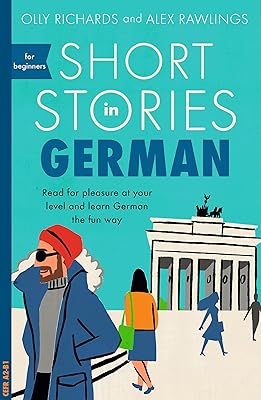
Short Stories in German for Beginners
Olly Richards
Learn German with 8 captivating stories. Perfect for A2-B1 learners who want to build vocabulary naturally.
Check Price on Amazon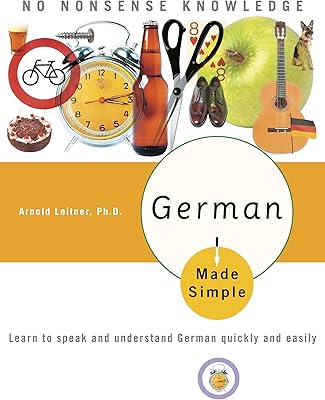
German Made Simple
Eugene Jackson
A complete beginner's guide covering grammar, vocabulary, and conversation essentials.
Check Price on Amazon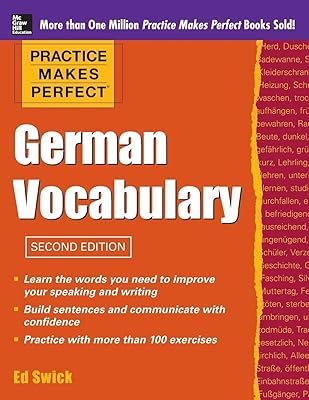
Practice Makes Perfect: German Vocabulary
Ed Swick
Targeted exercises and drills for mastering essential German words and phrases.
Check Price on AmazonAs an Amazon Associate, we earn from qualifying purchases.