50+ German Words We Use in English (Without Knowing It)
By LangPodTools Team, Language Learning Content Specialist

You already know more German than you think. Dozens of German words have been absorbed into English over the centuries, and you use them every day without realizing it. Kindergarten, wanderlust, angst — these are all German.
This guide lists 50+ German loanwords in English, organized by category. For each word, you will learn the original German meaning, how it differs from the English usage, and how knowing this connection accelerates your German learning.
Why So Many German Words in English?
English and German are both Germanic languages. They share a common ancestor — Proto-Germanic — spoken around 500 BC. This family connection means thousands of words in both languages come from the same roots.
Beyond this shared ancestry, German words entered English through three main channels:
- Immigration — Millions of German speakers emigrated to the US and UK in the 18th and 19th centuries, bringing their vocabulary with them
- Science and academia — German universities dominated European research for centuries, and scientific terminology often stayed in German
- Culture and food — German food, music, and philosophy exported words alongside their ideas
The result: English is full of German. Let's explore them.
Everyday German Words You Already Know
These German loanwords are so common in English that most people have no idea they are German.
| English Usage | German Original | Original Meaning |
|---|---|---|
| Kindergarten | der Kindergarten | "children's garden" — a school for young children |
| Rucksack | der Rucksack | "back sack" — a backpack |
| Wanderlust | die Wanderlust | "hiking desire" — the urge to travel or explore |
| Angst | die Angst | fear, anxiety, dread |
| Doppelganger | der Doppelgänger | "double walker" — a look-alike or twin |
| Poltergeist | der Poltergeist | "rumble ghost" — a noisy, mischievous spirit |
| Zeitgeist | der Zeitgeist | "time spirit" — the spirit of an era |
| Uber | über | above, over, super |
| Kaput | kaputt | broken, finished, destroyed |
| Kitsch | der Kitsch | cheap, tasteless art or decoration |
Study Tip: Every German loanword in English is a free vocabulary win. You already know the meaning — now learn the German pronunciation and article (der/die/das). Use our flashcard tool to create a deck of these words with their German articles.
Kindergarten — The Most Famous Example
Kindergarten was coined by German educator Friedrich Fröbel in 1840. He imagined children as plants that needed nurturing in a "garden." The word was adopted into English when German immigrants brought the concept to America in the 1850s.
In modern German, der Kindergarten still means a preschool or nursery school — exactly the same as in English. The pronunciation is slightly different: KIN-duh-gar-ten with a hard "g."
Food and Drink Words
German food culture has exported numerous words into English. Many of these remain unchanged.
| English Usage | German Original | What It Means |
|---|---|---|
| Pretzel | die Brezel | a twisted bread snack |
| Sauerkraut | das Sauerkraut | "sour cabbage" — fermented cabbage |
| Bratwurst | die Bratwurst | "roast sausage" — a grilled sausage |
| Lager | das Lager | "storage" — beer stored and aged in cold conditions |
| Strudel | der Strudel | "whirlpool" — layered pastry (apple strudel) |
| Pumpernickel | der Pumpernickel | a dense, dark rye bread |
| Spritzer | der Spritzer | "splash" — wine mixed with sparkling water |
| Delicatessen | die Delikatessen | "delicacies" — fine foods |
| Muesli | das Müsli | a cereal mix of oats, nuts, and fruit |
| Schnapps | der Schnaps | a strong spirit or liqueur |
Notice how Lager means "storage" in German. The beer style gets its name from the lagering process — storing beer in cold cellars for weeks. The word reveals the brewing technique in a single syllable.
Delicatessen is interesting because English shortened it to "deli." In German, Delikatessen (always plural) means fine foods or delicacies. The concept of a "deli shop" is an American invention.
For a deeper dive into German food vocabulary, see our complete guide on German food and drink.
Philosophy, Psychology, and Ideas
German thinkers — Freud, Nietzsche, Marx, Heidegger — shaped modern Western thought. Many of their concepts stayed in their original German because no English translation captured the full meaning.
| English Usage | German Original | What It Means |
|---|---|---|
| Angst | die Angst | existential anxiety or dread |
| Zeitgeist | der Zeitgeist | the defining spirit of a particular era |
| Weltanschauung | die Weltanschauung | "world view" — a comprehensive philosophy of life |
| Schadenfreude | die Schadenfreude | "damage joy" — pleasure from others' misfortune |
| Wanderlust | die Wanderlust | a strong desire to travel or explore |
| Gestalt | die Gestalt | form, shape — a unified whole greater than its parts |
| Realpolitik | die Realpolitik | pragmatic politics based on reality, not ideology |
| Kindergarten | der Kindergarten | (see above — Fröbel's educational philosophy) |
Schadenfreude — The Word English Needed
Schadenfreude (pronounced SHAH-den-froy-duh) is perhaps the most famous "untranslatable" German word. It means taking pleasure in someone else's misfortune — laughing when someone slips on ice, enjoying a rival's failure.
English had no single word for this feeling, so it borrowed the German one directly. The components are:
- Schaden — damage, harm
- Freude — joy, pleasure
This is a perfect example of how German compound words can express complex emotions in a single term. For more examples, see our guide on the longest German words.
Study Tip: When you encounter a German compound word, break it into parts. Welt (world) + Anschauung (view) = Weltanschauung. Zeit (time) + Geist (spirit) = Zeitgeist. This skill transfers directly to reading German — most long words are just shorter words glued together.
Science and Technology Words
German scientists and engineers contributed foundational terminology to multiple fields.
| English Usage | German Original | Field |
|---|---|---|
| Quartz | der Quarz | Geology |
| Feldspar | der Feldspat | Geology |
| Zinc | das Zink | Chemistry |
| Cobalt | das Kobalt | Chemistry (from Kobold — goblin) |
| Nickel | das Nickel | Chemistry (from Kupfernickel — devil's copper) |
| Eigenvalue | der Eigenwert | Mathematics |
| Gestalt | die Gestalt | Psychology |
| Kindergarten | der Kindergarten | Education |
| Alzheimer's | Alzheimer | Medicine (named after Alois Alzheimer) |
| Diesel | Diesel | Engineering (named after Rudolf Diesel) |
Several chemical elements have German names. Cobalt comes from Kobold (goblin) — miners blamed the troublesome ore on underground goblins. Nickel comes from Kupfernickel (devil's copper) because the ore looked like copper but was not.
These etymologies reveal how closely language, culture, and science are connected.
Music Words
German-speaking composers dominated European classical music for centuries. Many musical terms remain in German.
| English Usage | German Original | What It Means |
|---|---|---|
| Leitmotif | das Leitmotiv | "leading motif" — a recurring musical theme |
| Glockenspiel | das Glockenspiel | "play bells" — a percussion instrument |
| Waltz | der Walzer | a 3/4 time dance |
| Yodel | jodeln (verb) | to sing with rapid pitch changes |
| Fest | das Fest | festival, celebration (as in "songfest") |
Leitmotif was popularized by Richard Wagner's operas. Each character or idea had its own musical theme that recurred throughout the work. The concept has since spread to film — think of the Imperial March in Star Wars.
For more on German music culture, check our guide on German rock bands.
War and Politics Words
German military and political history introduced several terms into English.
| English Usage | German Original | What It Means |
|---|---|---|
| Blitz | der Blitz | lightning — from Blitzkrieg (lightning war) |
| Flak | die Flak | anti-aircraft fire (from Fliegerabwehrkanone) |
| Strafe | strafen (verb) | to punish — in English, to attack from the air |
| Realpolitik | die Realpolitik | pragmatic, power-based politics |
| Hinterland | das Hinterland | "behind land" — the area behind a coast or city |
| Kaput | kaputt | broken, destroyed, finished |
Flak is an abbreviation of Fliegerabwehrkanone — literally "flyer defense cannon." This 26-letter word was understandably shortened. In English, "flak" has expanded beyond military use to mean criticism or opposition ("catching flak").
Blitz comes from Blitzkrieg (lightning war) but has taken on its own life in English. Britons use "the Blitz" to refer to the WWII bombing of London. Americans use "blitz" in football for a rushing defensive play.
Words English Changed
Some German words entered English but shifted in meaning along the way.
| Word | German Meaning | English Meaning |
|---|---|---|
| Wanderlust | desire to hike or walk | desire to travel anywhere |
| Angst | any fear or anxiety | specifically existential or deep anxiety |
| Kitsch | cheap, sentimental art | tacky or gaudy (broader) |
| Uber | over, above | extreme, supreme (as prefix) |
| Doppelganger | spirit double (supernatural) | look-alike (no supernatural connotation) |
| Verboten | forbidden (standard word) | forbidden (exotic-sounding in English) |
In German, Angst is the everyday word for fear. You feel Angst before a test, about a spider, or in a dark alley. In English, "angst" specifically means deep, existential anxiety — a much narrower meaning influenced by Kierkegaard and Heidegger's philosophical use of the word.
Study Tip: Be careful with false friends. When you learn these words in German, remember their German meaning may be broader or different from the English usage. Context is everything. Practice with real German sentences in our German podcast episodes.
How German Loanwords Help You Learn German
Knowing that English already contains dozens of German words gives you a head start. Here is how to leverage this:
- Learn the articles — You know the word, now add der/die/das. This is the fastest way to build gendered vocabulary.
- Fix the pronunciation — English often mangles German pronunciation. Learn the correct German sounds for words you already know.
- Expand from the root — If you know Wander (to hike), you can understand Wanderweg (hiking path), Wanderer (hiker), and Wanderlust.
- Spot compound words — German loanwords teach you the compound word system. Apply this skill to decode any long German word you encounter.
For a strong vocabulary foundation, pair this knowledge with our guide on essential German words.
Frequently Asked Questions
Conclusion
German has shaped English far more than most people realize. From the kindergarten where you started school to the wanderlust that drives your travel plans, German words are woven into everyday English.
Every one of these loanwords is a bridge to the German language. You already know the meaning — now learn the pronunciation, the article, and the cultural context. That is 50+ words you can add to your German vocabulary starting today.
For your next step, explore our guides on essential German words and the longest German words, or practice these loanwords with their German articles using our flashcard tool.
Frequently Asked Questions
How many German words are used in English?▾
What is the most common German word used in English?▾
Why does English borrow so many words from German?▾
What does Schadenfreude mean?▾
Are German loanwords pronounced the same in English and German?▾
Recommended Study Material
The Complete German Grammar Cheat Sheet
A1–B2 Reference PDF
27 pages of color-coded tables, mnemonics, and shortcuts — every rule you need from Cases to Subjunctive.
Recommended German Books
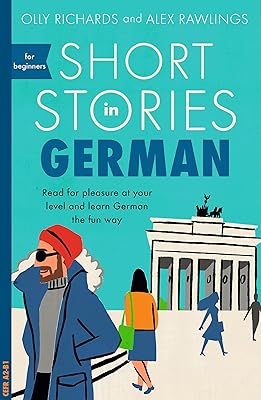
Short Stories in German for Beginners
Olly Richards
Learn German with 8 captivating stories. Perfect for A2-B1 learners who want to build vocabulary naturally.
Check Price on Amazon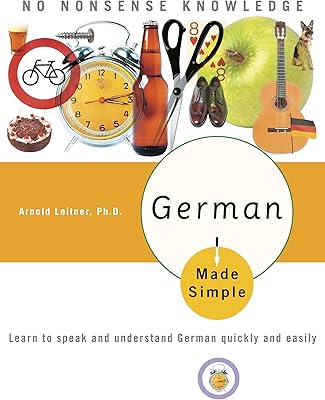
German Made Simple
Eugene Jackson
A complete beginner's guide covering grammar, vocabulary, and conversation essentials.
Check Price on Amazon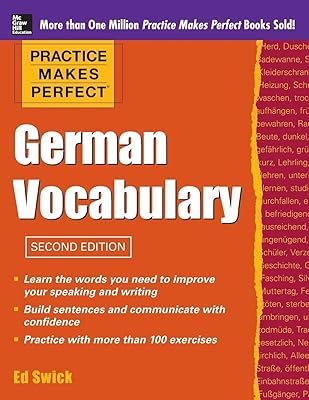
Practice Makes Perfect: German Vocabulary
Ed Swick
Targeted exercises and drills for mastering essential German words and phrases.
Check Price on AmazonAs an Amazon Associate, we earn from qualifying purchases.