#6 A1 French Podcast: Quantities, Shopping & "Il y a" 🗣️
Welcome to Episode 6 of our A1 French series! Today, Anna and Lukas are going to "Le Marché" (The Market). But to buy mo
📝 Transcript
Click any sentence to jump to that moment in the video. Use the 🔊 button to hear the pronunciation.
Hello everyone, and welcome to this new in-depth analysis. I am delighted to have you back for a quite fascinating exploration.
Today, we're going to dissect a French lesson. Hello everyone. Yes, a really interesting lesson, and not just any lesson. It's a lesson designed for absolute beginners, A1 level. And the setting is super concrete. It's a visit to the market.
Exactly, the market. Our mission today is to understand the learning mechanism of the plural in French. We're going to analyze how we approach these famous silent letters and how a practical little story helps consolidate all of this.
It's a vast program, and I'm delighted that we're diving into it because there's a striking paradox in the French language.
Oh yes, the famous paradox? Yeah, especially when we observe how the language is taught. It's a system where visual information, meaning spelling, often contradicts the phonetic reality.
📚 Recommended for this lesson
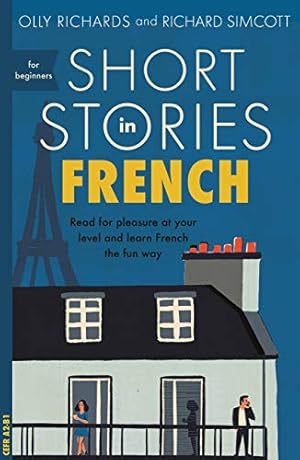
Short Stories in French for Beginners
Enjoyed this episode? Continue reading with short stories designed for your level.
Check Price on AmazonEnjoying this lesson? Get free episodes every week!
📖 Vocabulary
Key vocabulary from this episode with part of speech, meaning, and example sentences. Practice along with the video above.
| Word | Type | Meaning | Example |
|---|---|---|---|
| le marché | nom (m.) | the market | J'achète des fruits au marché. |
| une leçon | nom (f.) | a lesson | C'est une leçon de français. |
| le pluriel | nom (m.) | the plural | En français, 'les chats' est le pluriel de 'le chat'. |
| le singulier | nom (m.) | the singular | 'Une pomme' est au singulier. |
| un panier | nom (m.) | a basket | Je mets les légumes dans mon panier. |
| C'est combien ? | expression | How much is it? | Je demande : 'C'est combien, les pommes ?' |
| Je prends | expression | I'll take (it) | Pour acheter, je dis : 'Je prends une banane'. |
| un fruit | nom (m.) | a fruit | La pomme est un fruit. |
| un légume | nom (m.) | a vegetable | La tomate est un légume. |
| une pomme | nom (f.) | an apple | J'aime manger une pomme. |
✏️ Exercises
Test your understanding with fill-in-the-blank and multiple choice questions. Click "Check" to see the answer.
J'achète ___ pomme au marché.
Au marché, il y a beaucoup ___ fruits.
Pour demander le prix d'un article, on dit : '___ ?'
Pour faire son choix et acheter, on dit : '___'.
Le singulier 'le chat' devient '___ chats' au pluriel.
Le singulier 'une banane' devient '___ bananes' au pluriel.
Je voudrais acheter ___ légumes.
Vous êtes au marché. Que dites-vous pour acheter une tomate ?
Quel est le pluriel de 'une leçon' ?
Où va-t-on pour acheter des fruits et des légumes ?
📚 Recommended Study Materials
Short Stories in French for Beginners
Olly Richards
Learn French with 8 captivating stories. Perfect for A2-B1 learners who want to build vocabulary naturally through reading.
Check Price on Amazon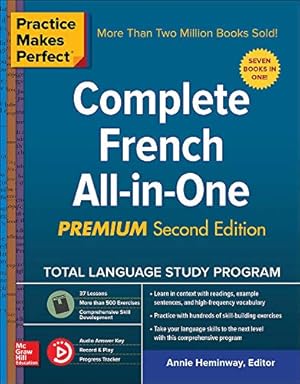
Practice Makes Perfect: Complete French All-in-One
Annie Heminway
Comprehensive grammar, vocabulary, and practice exercises in one volume. Covers all levels from beginner to advanced.
Check Price on Amazon
Bescherelle Complete Guide to Conjugating
Bescherelle
The definitive French verb conjugation reference. 12,000 verbs with all tenses and moods — indispensable for serious learners.
Check Price on Amazon
Comments