#9 Getting LOST in Paris! 🗺️ | Asking for Directions in French (A1)
Welcome to Leçon 9 of our A1 French Podcast! Today is a survival lesson: Asking for Directions (Demander son chemin).
📝 Transcript
Click any sentence to jump to that moment in the video. Use the 🔊 button to hear the pronunciation.
And imagine the scene. Tickets to Europe are booked. Yeah, the dream. The itinerary is meticulously prepared. Everything is perfect. But suddenly, when trying to plan an activity with a French speaker, it's the
absolute panic. The brain freezes, you know. Exactly. Should you use the -ai or -as ending for the verb 'dormir' in the future tense? The anxiety of conjugation hits hard. And that famous fluency we dreamed of,
well, it crashes against a wall of super complex rules. It's so true. Language learning often gives this impression. We feel like we have to lay one brick after another.
Yeah. Of remembering hundreds of exceptions. And the slightest little ending error makes it feel like the whole edifice is collapsing.
But what if we said it's possible to completely hack this system? A grammatical hack. That's it, we can talk about any future event without ever, let's say, having to memorize a single future tense ending.
📚 Recommended for this lesson
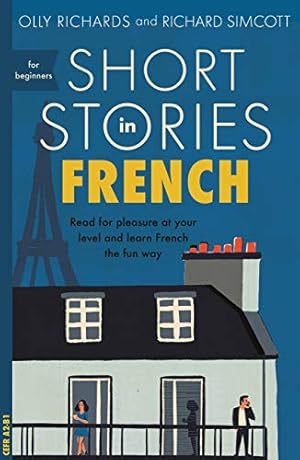
Short Stories in French for Beginners
Enjoyed this episode? Continue reading with short stories designed for your level.
Check Price on AmazonEnjoying this lesson? Get free episodes every week!
📖 Vocabulary
Key vocabulary from this episode with part of speech, meaning, and example sentences. Practice along with the video above.
| Word | Type | Meaning | Example |
|---|---|---|---|
| le rêve | nom (m.) | dream | J'ai fait un beau rêve cette nuit. |
| réserver | verbe | to book, to reserve | Nous allons réserver les billets d'avion. |
| l'itinéraire | nom (m.) | itinerary | L'itinéraire de notre voyage est prêt. |
| la panique | nom (f.) | panic | Il y a de la panique avant l'examen. |
| la conjugaison | nom (f.) | conjugation | La conjugaison des verbes est parfois difficile. |
| les vacances | nom (f. pl.) | vacation, holiday | Nous partons en vacances en juillet. |
| le futur proche | expression | near future (grammatical tense) | Le futur proche est facile à utiliser. |
| un marqueur temporel | nom (m.) | time marker | "Demain" est un marqueur temporel. |
| s'exprimer | verbe pronominal | to express oneself | J'aime m'exprimer en français. |
| le repos | nom (m.) | rest | J'ai besoin de repos après le travail. |
✏️ Exercises
Test your understanding with fill-in-the-blank and multiple choice questions. Click "Check" to see the answer.
Pour les francophones, on dit toujours "les _______" (vacation) au pluriel.
Nous allons _______ (book) un hôtel pour notre séjour.
_______ (Tomorrow), je vais aller à la plage.
Elle _______ (is going to eat) une pizza ce soir. (utiliser le futur proche)
C'est important de bien _______ (express oneself) dans une nouvelle langue.
Que signifie "le rêve" ?
Quelle est la forme correcte pour parler d'un congé en français ?
À quoi servent les "marqueurs temporels" comme "demain" ou "ce soir" ?
Le "futur proche" est utilisé pour parler de :
Si on dit "C'est la panique absolue", cela signifie :
📚 Recommended Study Materials
Short Stories in French for Beginners
Olly Richards
Learn French with 8 captivating stories. Perfect for A2-B1 learners who want to build vocabulary naturally through reading.
Check Price on Amazon
Practice Makes Perfect: Complete French All-in-One
Annie Heminway
Comprehensive grammar, vocabulary, and practice exercises in one volume. Covers all levels from beginner to advanced.
Check Price on Amazon
Bescherelle Complete Guide to Conjugating
Bescherelle
The definitive French verb conjugation reference. 12,000 verbs with all tenses and moods — indispensable for serious learners.
Check Price on Amazon
Comments