#48 Learn German with a Story: Die guten alten Zeiten (The Good Old Days) 📖
Welcome to Episode 48 of our B1 German series! Today, Anna and Lukas are feeling nostalgic and talking about their child
📝 Transcript
Click any sentence to jump to that moment in the video. Use the 🔊 button to hear the pronunciation.
Let's dive right into a topic today that, at first glance, might seem like a mere formality.
Mhm. But upon closer inspection, it has incredible psychological and emotional depth.
Absolutely. Yes, today we're doing a really deep analysis of the German language. More precisely, it's about how language shapes our perception of time and our memories. That's a very central point. Exactly. And the starting point for our journey today through
the sources is essentially a single everyday English word. The good old. Right. Um, anyone who speaks English knows that this word is an absolute all-rounder.
You use it constantly in almost every context. Yes, you just throw it out there. But as soon as you, our listener, try to translate this seemingly simple idea into German, a considerable linguistic labyrinth opens up, a huge labyrinth. And then
📚 Recommended for this lesson
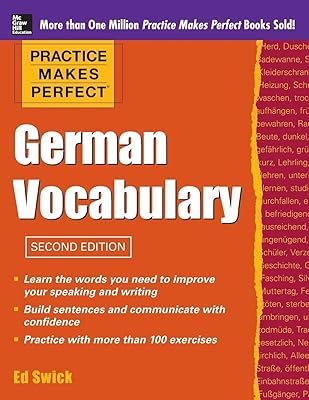
Practice Makes Perfect: German Vocabulary
Ready to drill the words from this episode? Practice with targeted vocabulary exercises.
Check Price on AmazonEnjoying this lesson? Get free episodes every week!
📖 Vocabulary
Key vocabulary from this episode with part of speech, meaning, and example sentences. Practice along with the video above.
to remember something
Ich erinnere mich an meinen ersten Schultag.
| Word | Type | Meaning | Example |
|---|---|---|---|
| einsteigen | Verb | to get in, to start (a topic) | Lass uns heute in ein neues Thema einsteigen. |
| die Wahrnehmung | Nomen (f.) | perception | Unsere Wahrnehmung von Zeit ist sehr persönlich. |
| die Erinnerung | Nomen (f.) | memory | Ich habe viele schöne Erinnerungen an meine Kindheit. |
| auswendig lernen | Verb (trennbar) | to memorize by heart | Ich muss diese Regeln auswendig lernen. |
| die Realität | Nomen (f.) | reality | Manchmal ist die Realität kompliziert. |
| ausdrücken | Verb | to express | Wie kann ich meine Gefühle ausdrücken? |
| vermissen | Verb | to miss (a person, a thing, a time) | Ich vermisse meine Familie sehr. |
| aufwachsen | Verb (trennbar) | to grow up | Wo bist du aufgewachsen? |
| sich erinnern an (+ Akk.) | Verb (reflexiv) | to remember something | Ich erinnere mich an meinen ersten Schultag. |
| die Vergangenheit | Nomen (f.) | the past | Die Vergangenheit ist wichtig für die Zukunft. |
✏️ Exercises
Test your understanding with fill-in-the-blank and multiple choice questions. Click "Check" to see the answer.
Lass uns heute direkt in ein neues Thema ______.
Unsere ______ von Zeit ist sehr persönlich.
Ich muss viele Vokabeln ______ ______.
Wie kann man Gefühle gut ______?
Ich ______ meine Kindheit sehr.
Meine Oma ______ ______ noch gut an ihre Jugend.
Die ______ ist wichtig für unsere Geschichten.
Wähle das richtige Wort: ______ ich klein war, habe ich viel gespielt.
Welche Präposition passt? Ich erinnere mich ______ den Urlaub.
Was ist das Hauptthema des Podcast-Ausschnitts?
📚 Recommended Study Materials
Practice Makes Perfect: German Vocabulary
Ed Swick
Targeted exercises and drills for mastering essential German words and phrases.
Check Price on Amazon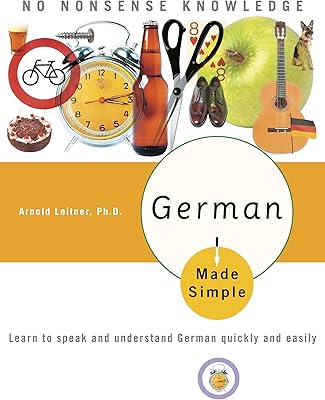
German Made Simple
Eugene Jackson
A complete beginner's guide covering grammar, vocabulary, and conversation essentials.
Check Price on Amazon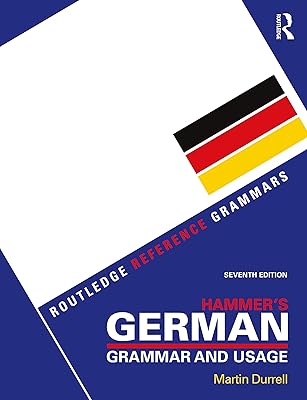
Hammer's German Grammar and Usage
Martin Durrell
The definitive reference grammar for serious learners. Covers all levels from A2 to C2.
Check Price on Amazon
Comments