#57 " Don't memorise tables! 🛑 The ONLY Adjective Ending System you need."
Welcome to Episode 57 of our B1 German series! Today, we are tackling the most feared topic in German grammar: Adjective
📝 Transcript
Click any sentence to jump to that moment in the video. Use the 🔊 button to hear the pronunciation.
Hello and welcome to our today's in-depth analysis.
It's great that you're here again. Yes, hello from me too. Today we're venturing into a territory that causes many people to break out in a cold sweat.
Oh yes, the absolute favorite topic. Exactly. It's about the fascinating, sometimes notorious, and often feared world of German grammar.
Mhm. More precisely, today we're tackling the so-called weak declension. A terrible term, actually.
Totally academic. That sounds terrible, but it basically just means, how do adjectives, these descriptive words, change when they come after definite articles like 'der', 'die', or 'das'?
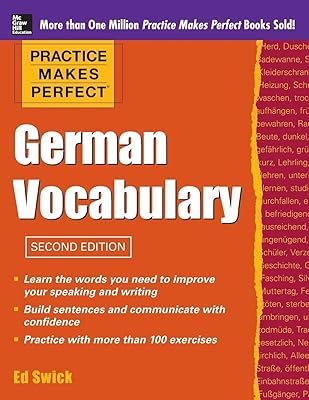
📚 Recommended for this lesson
Practice Makes Perfect: German Vocabulary
Ready to drill the words from this episode? Practice with targeted vocabulary exercises.
Check Price on AmazonEnjoying this lesson? Get free episodes every week!
📖 Vocabulary
Key vocabulary from this episode with part of speech, meaning, and example sentences. Practice along with the video above.
| Word | Type | Meaning | Example |
|---|---|---|---|
| die Grammatik | Nomen (f.) | grammar | Die deutsche Grammatik ist manchmal kompliziert. |
| die Kleidung | Nomen (f.) | clothing | Ich kaufe gerne neue Kleidung. |
| das Hemd | Nomen (n.) | shirt | Das blaue Hemd ist sehr schön. |
| die Schuhe | Nomen (Plural) | shoes | Meine neuen Schuhe sind bequem. |
| anprobieren | Verb (trennbar) | to try on | Ich probiere die Hose an. |
| stehen | Verb | to suit, to look good on someone | Das rote Kleid steht dir gut. |
| eitel | Adjektiv | vain | Er ist sehr eitel und schaut oft in den Spiegel. |
| auswendig lernen | Verb | to memorize | Man muss Vokabeln nicht nur auswendig lernen. |
| der Begriff | Nomen (m.) | term, concept | Das ist ein wichtiger Begriff in der Grammatik. |
| die Regel | Nomen (f.) | rule | Wir lernen heute die Regeln für Adjektivendungen. |
✏️ Exercises
Test your understanding with fill-in-the-blank and multiple choice questions. Click "Check" to see the answer.
Ich probiere das neue Hemd ___.
What does the phrase 'Das steht dir gut' mean?
Wir wollen die wichtigsten ___ extrahieren.
Which clothing item is explicitly mentioned in plural in the text?
Eine Person, die zu oft in den Spiegel schaut, ist ___.
What is the main topic of the 'schwache Deklination' discussed in the podcast?
Man muss Vokabeln nicht nur blind ___ lernen.
What kind of verb is 'anprobieren'?
Das ist das ultimative ___ beim Shoppen.
Which of these is NOT a piece of clothing mentioned in the transcript?
📚 Recommended Study Materials
Practice Makes Perfect: German Vocabulary
Ed Swick
Targeted exercises and drills for mastering essential German words and phrases.
Check Price on Amazon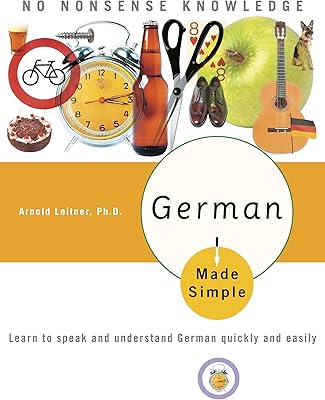
German Made Simple
Eugene Jackson
A complete beginner's guide covering grammar, vocabulary, and conversation essentials.
Check Price on Amazon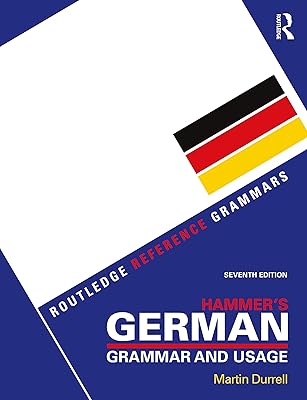
Hammer's German Grammar and Usage
Martin Durrell
The definitive reference grammar for serious learners. Covers all levels from A2 to C2.
Check Price on Amazon
Comments