#66"Ich stehe AUF!" 🛏️ | The Crazy German Separable Verbs Explained (A1)#podcast #learning #german
Welcome to Lektion 66 of our Beginner German series! Today, we are learning a very important and crazy grammar topic: Se
📝 Transcript
Click any sentence to jump to that moment in the video. Use the 🔊 button to hear the pronunciation.
Hello everyone, welcome to Lesson 66. Today we are doing grammar karate. But first, subscribe to our channel.
Hello people. Yes, subscribe. Grammar karate. Oh no, I don't want to break anything. Too late. Look, us Germans, we love breaking words. Grab your notebooks, warm up your hands.
Pause, write, repeat. Well, um, I have to honestly say, I always thought that when you learn something completely new, it all has a certain, well, logical basic structure, like in mathematics, you know?
Yes, exactly. 1 + 1 = 2. Right. You learn a new vocabulary word, um, store its meaning, and then simply insert this finished, clean building block into a sentence.
Predictable and efficient. That's the wishful thinking. Absolutely. The brain also desperately searches for these patterns, simply to save energy.

📚 Recommended for this lesson
Short Stories in German for Beginners
Enjoyed this episode? Continue reading with short stories designed for your level.
Check Price on AmazonEnjoying this lesson? Get free episodes every week!
📖 Vocabulary
Key vocabulary from this episode with part of speech, meaning, and example sentences. Practice along with the video above.
| Word | Type | Meaning | Example |
|---|---|---|---|
| abonnieren | Verb | to subscribe | Bitte abonniert unseren Kanal! |
| der Kanal | Nomen (m.) | channel | Ich schaue einen interessanten Kanal auf YouTube. |
| der Alltag | Nomen (m.) | daily life | Mein Alltag ist oft sehr beschäftigt. |
| der Tagesablauf | Nomen (m.) | daily routine | Mein Tagesablauf beginnt um 7 Uhr. |
| aufstehen | Verb (trennbar) | to get up | Ich stehe jeden Morgen um 7 Uhr auf. |
| einkaufen | Verb (trennbar) | to shop | Am Samstag kaufe ich im Supermarkt ein. |
| fernsehen | Verb (trennbar) | to watch TV | Am Abend sehe ich gerne fern. |
| anrufen | Verb (trennbar) | to call (on the phone) | Ich rufe meine Freundin später an. |
| trennbare Verben | Nomen (pl.) | separable verbs | Trennbare Verben sind ein wichtiges Thema in A1. |
| kaputt machen | Verb | to break (something) | Du musst das Wort kaputt machen. |
✏️ Exercises
Test your understanding with fill-in-the-blank and multiple choice questions. Click "Check" to see the answer.
Wir ____ unseren Kanal, um keine neue Lektion zu verpassen.
Mein ____ beginnt früh am Morgen.
Ich _ um 8 Uhr _.
Am Samstag _ ich im Supermarkt _.
Anna sagt: 'Du musst das Wort ____ ____.'
Was ist das Hauptthema dieser Lektion?
Wo steht das Präfix bei trennbaren Verben in einem einfachen Satz?
Welches dieser Verben ist ein trennbares Verb?
Wähle die korrekte Satzstruktur: 'Ich ____ meine Oma am Sonntag ____.' (anrufen)
Wähle die korrekte Satzstruktur: 'Am Abend ____ ich gerne ____.' (fernsehen)
📚 Recommended Study Materials
Short Stories in German for Beginners
Olly Richards
Learn German with 8 captivating stories. Perfect for A2-B1 learners who want to build vocabulary naturally.
Check Price on Amazon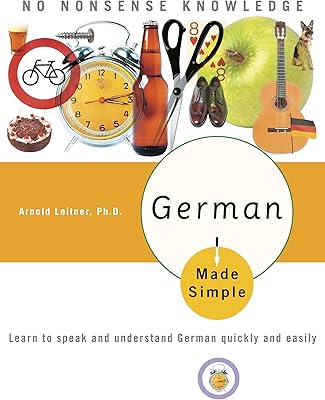
German Made Simple
Eugene Jackson
A complete beginner's guide covering grammar, vocabulary, and conversation essentials.
Check Price on Amazon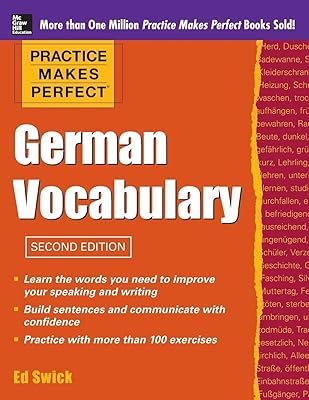
Practice Makes Perfect: German Vocabulary
Ed Swick
Targeted exercises and drills for mastering essential German words and phrases.
Check Price on Amazon
Comments