German Family Words: Complete Vocabulary for Every Relative (with Articles & Plurals)
By LangPodTools Team, Language Learning Content Specialist

Family vocabulary is some of the first German you will ever need. Introducing relatives, talking about your home life, understanding someone's family story — these words come up in every real conversation. German family words carry grammatical gender (der, die, das) and specific plural forms, so learning them correctly from the start saves you from fixing mistakes later.
This guide covers every major family relationship in German, organized by category. Each word includes its article and plural form. You will also find grammar tips, cultural context, and the diminutives Germans actually use at home.
Immediate Family (Die Kernfamilie)
These are the family members you will mention most often. Start here.
| German | Article | Plural | English |
|---|---|---|---|
| Mutter | die | die Mütter | mother |
| Vater | der | die Väter | father |
| Eltern | die (pl.) | — | parents |
| Schwester | die | die Schwestern | sister |
| Bruder | der | die Brüder | brother |
| Geschwister | die (pl.) | — | siblings |
| Tochter | die | die Töchter | daughter |
| Sohn | der | die Söhne | son |
| Kind | das | die Kinder | child |
| Baby | das | die Babys | baby |
Die Eltern (parents) and die Geschwister (siblings) are always plural in German — there is no singular form. You cannot say ein Eltern or ein Geschwister. For a single parent, use ein Elternteil (one parent).
Notice the umlaut pattern: Mutter → Mütter, Vater → Väter, Bruder → Brüder, Tochter → Töchter. Many German family words add an umlaut in the plural. This is consistent and worth internalizing early.
Study Tip: Draw your own family tree in German. Label every person with their German title including the article. Seeing real faces next to die Mutter, der Bruder, die Schwester creates an emotional anchor that flashcards alone cannot match.
Grandparents and Grandchildren (Großeltern & Enkel)
German has both formal and informal versions for grandparents. The informal ones are what you will actually hear in most families.
| German | Article | Plural | English |
|---|---|---|---|
| Großmutter | die | die Großmütter | grandmother |
| Großvater | der | die Großväter | grandfather |
| Großeltern | die (pl.) | — | grandparents |
| Oma | die | die Omas | grandma |
| Opa | der | die Opas | grandpa |
| Enkel | der | die Enkel | grandson |
| Enkelin | die | die Enkelinnen | granddaughter |
| Enkelkind | das | die Enkelkinder | grandchild |
| Uroma | die | die Uromas | great-grandma |
| Uropa | der | die Uropas | great-grandpa |
Oma and Opa are universal across all German-speaking regions. You will hear them far more often than the formal Großmutter and Großvater, which sound stiff in casual conversation. Children and adults alike say Oma and Opa.
The prefix Ur- means "great" in the generational sense. Urgroßmutter is great-grandmother, Urgroßvater is great-grandfather. Stack it twice for great-great: Ururoma.
Extended Family (Die Erweiterte Familie)
Uncles, aunts, cousins, nieces, and nephews — the words you need for family gatherings and holiday conversations.
| German | Article | Plural | English |
|---|---|---|---|
| Tante | die | die Tanten | aunt |
| Onkel | der | die Onkel | uncle |
| Cousine | die | die Cousinen | female cousin |
| Cousin | der | die Cousins | male cousin |
| Nichte | die | die Nichten | niece |
| Neffe | der | die Neffen | nephew |
A common beginner mistake: Cousin and Cousine are borrowed from French and pronounced the French way — not like the English word "cousin." Cousin sounds like koo-ZAN, and Cousine sounds like koo-ZEE-nuh.
Note that Neffe is a weak noun (n-Deklination). In accusative and dative cases, it becomes den Neffen and dem Neffen. If German cases are new to you, our German cases guide explains the full system.
In-Laws (Die Schwiegereltern)
German builds in-law terms with the prefix Schwieger- attached to the base family word. Once you know the prefix, you know them all.
| German | Article | Plural | English |
|---|---|---|---|
| Schwiegermutter | die | die Schwiegermütter | mother-in-law |
| Schwiegervater | der | die Schwiegerväter | father-in-law |
| Schwiegereltern | die (pl.) | — | parents-in-law |
| Schwiegertochter | die | die Schwiegertöchter | daughter-in-law |
| Schwiegersohn | der | die Schwiegersöhne | son-in-law |
| Schwägerin | die | die Schwägerinnen | sister-in-law |
| Schwager | der | die Schwäger | brother-in-law |
The pattern is predictable: Schwieger- + family member = in-law version. Schwiegermutter = mother-in-law, Schwiegervater = father-in-law, and so on. The only exceptions are Schwager and Schwägerin (brother/sister-in-law), which use their own root rather than Schwiegerbruder or Schwiegerschwester.
Relationships and Partners (Beziehungen)
From marriage to dating — the words Germans use to describe romantic relationships.
| German | Article | Plural | English |
|---|---|---|---|
| Ehemann | der | die Ehemänner | husband |
| Ehefrau | die | die Ehefrauen | wife |
| Ehepaar | das | die Ehepaare | married couple |
| Verlobte | der/die | die Verlobten | fiance/fiancee |
| Freund | der | die Freunde | boyfriend / male friend |
| Freundin | die | die Freundinnen | girlfriend / female friend |
| Partner | der | die Partner | partner (male) |
| Partnerin | die | die Partnerinnen | partner (female) |
| Lebensgefährte | der | die Lebensgefährten | life companion (male) |
| Lebensgefährtin | die | die Lebensgefährtinnen | life companion (female) |
Freund and Freundin are famously ambiguous. Mein Freund can mean "my boyfriend" or "my (male) friend" — context decides. To clarify, Germans often say ein Freund von mir (a friend of mine) versus mein Freund (my boyfriend). The possessive article is the signal.
Der/die Verlobte is one of the few German nouns where the article changes based on the person's gender while the noun itself stays the same. Mein Verlobter (my fiance, male) and meine Verlobte (my fiancee, female) — the adjective ending changes, not the root word.
Modern Family Terms (Die Moderne Familie)
German has specific vocabulary for blended families, step-relatives, and modern household structures.
| German | Article | Plural | English |
|---|---|---|---|
| Stiefmutter | die | die Stiefmütter | stepmother |
| Stiefvater | der | die Stiefväter | stepfather |
| Stieftochter | die | die Stieftöchter | stepdaughter |
| Stiefsohn | der | die Stiefsöhne | stepson |
| Stiefgeschwister | die (pl.) | — | stepsiblings |
| Halbbruder | der | die Halbbrüder | half-brother |
| Halbschwester | die | die Halbschwestern | half-sister |
| Einzelkind | das | die Einzelkinder | only child |
| Patchworkfamilie | die | die Patchworkfamilien | blended family |
| Pflegeeltern | die (pl.) | — | foster parents |
| Adoptivkind | das | die Adoptivkinder | adopted child |
The prefix Stief- means "step-" and works exactly like the English prefix. Stief- + any family member = step-relative. Halb- means "half" and marks half-siblings who share one biological parent.
Die Patchworkfamilie is a direct English loanword that Germans adopted to describe blended families. It is widely used in everyday conversation and media.
Diminutives and Nicknames (Kosenamen)
Every German family has its own affectionate terms. These are the most common diminutives you will encounter.
| Formal | Diminutive | English |
|---|---|---|
| Mutter | Mutti, Mama | Mom, Mommy |
| Vater | Vati, Papa | Dad, Daddy |
| Großmutter | Omi, Oma | Grandma |
| Großvater | Opi, Opa | Grandpa |
| Bruder | Brüderchen | Little brother |
| Schwester | Schwesterchen | Little sister |
Mama and Papa are universal across German-speaking countries. Mutti and Vati are more traditional and slightly old-fashioned — you hear them more in northern and eastern Germany. Younger generations increasingly use Mama and Papa.
The suffix -chen is a diminutive marker that makes any noun smaller and cuter — and always shifts the gender to neuter (das). Der Bruder becomes das Brüderchen. This rule is absolute in German grammar.
Study Tip: Pay attention to diminutives when listening to German podcasts. They reveal family dynamics and regional flavor. Browse the German episodes hub for episodes about family topics — hearing these words in natural conversation beats drilling vocabulary lists.
Grammar Tips for Family Words
Gender Does Not Always Match Biology
This is the single most important grammar rule for family vocabulary: grammatical gender and biological gender do not always align.
The most famous example: das Mädchen (the girl) is grammatically neuter, not feminine. Why? Because -chen is a diminutive suffix, and all diminutives are neuter in German. The word literally means "little maid" — and the diminutive suffix overrides the natural gender.
Similarly, das Baby and das Kind are both neuter. You refer to a baby girl as es (it) in grammar, even though she is obviously female. This is purely grammatical — no German speaker thinks of children as objects.
Possessive Articles with Family
When talking about your own family, use possessive articles: mein (my, masc./neut.), meine (my, fem./pl.).
- mein Vater — my father (der Vater → masculine → mein)
- meine Mutter — my mother (die Mutter → feminine → meine)
- mein Kind — my child (das Kind → neuter → mein)
- meine Eltern — my parents (die Eltern → plural → meine)
- meine Geschwister — my siblings (die Geschwister → plural → meine)
The possessive changes based on the noun's gender and case. For the full system, see our German cases guide.
Plural Patterns to Notice
Family words follow several common plural patterns. Recognizing them helps you predict plurals for new words.
- Umlaut + no ending: Mutter → Mütter, Vater → Väter, Bruder → Brüder, Tochter → Töchter
- -n or -en ending: Schwester → Schwestern, Tante → Tanten, Cousine → Cousinen, Nichte → Nichten
- -s ending (loanwords): Oma → Omas, Opa → Opas, Baby → Babys, Cousin → Cousins
- No change: Enkel → Enkel, Onkel → Onkel, Schwager → Schwäger
Cultural Context: Family in Germany
Kindergeld (Child Benefit)
Kindergeld is a monthly payment from the German government to families with children. As of 2025, families receive 250 euros per child per month, regardless of income. It continues until the child turns 18 — or up to 25 if they are still in education or training. This is one of the most discussed family-related topics in German politics and daily life.
Family Structures
Germany has seen significant shifts in family structures over recent decades. While the traditional nuclear family (die Kleinfamilie) remains common, single-parent households (Alleinerziehende), unmarried partnerships (Lebensgemeinschaften), and blended families (Patchworkfamilien) are all part of everyday German life. The vocabulary reflects this — modern German has specific, commonly used terms for every family structure.
Formality and Names
Germans distinguish sharply between du (informal you) and Sie (formal you). Family members always use du with each other. In-laws almost always switch to du once the relationship is established, though the first invitation to use du is culturally significant — the older or higher-status person typically offers it.
Study Tip: When learning family vocabulary, group words by prefix pattern. All Schwieger- words are in-laws, all Stief- words are step-relatives, all Ur- words are great-grandparents. The prefix is the key — learn it once and you unlock the entire group.
Common Phrases About Family
These are the sentences you will actually use when talking about family in German.
| German | English |
|---|---|
| Ich habe zwei Geschwister. | I have two siblings. |
| Mein Bruder ist älter als ich. | My brother is older than me. |
| Meine Schwester wohnt in Berlin. | My sister lives in Berlin. |
| Hast du Kinder? | Do you have children? |
| Ich bin Einzelkind. | I am an only child. |
| Meine Großeltern kommen aus Bayern. | My grandparents come from Bavaria. |
| Wir sind eine große Familie. | We are a big family. |
| Er sieht seinem Vater ähnlich. | He looks like his father. |
| Sie ist nach ihrer Mutter benannt. | She is named after her mother. |
| Meine Eltern sind geschieden. | My parents are divorced. |
Learn these as complete chunks. When someone asks about your family, you want these phrases to come out automatically — without constructing them word by word. For more essential sentence patterns, see our common German phrases guide.
How to Practice Family Vocabulary
Describe your own family. Write a short paragraph introducing your family in German. Use every word that applies. Example: Ich habe eine Schwester und einen Bruder. Meine Mutter heißt... Mein Vater arbeitet als... This personal connection dramatically improves retention.
Label family photos. Take a family photo and write each person's German title underneath — die Oma, der Onkel, die Cousine. Put it somewhere visible. Passive daily exposure reinforces memory.
Use flashcards with articles. Never learn a family word without its article. Use the Flashcard Tool to build a deck where every card shows the article + noun + plural: die Mutter, die Mütter. Drilling articles together with nouns prevents the most common mistake German learners make.
Listen for family words in podcasts. Family topics come up constantly in conversational German. The German episodes hub has episodes where hosts discuss their families, holidays, and daily life — ideal for hearing this vocabulary in natural context.
Recommended Resources
- German Vocabulary Builder for Beginners — Covers family, relationships, and everyday topics with exercises and pronunciation guides. Great for A1-A2 learners building foundational vocabulary.
- German Grammar in Practice – Beginner to Intermediate — Includes possessive articles, cases with family vocabulary, and noun gender rules. Pairs well with this vocabulary guide.
- German-English Visual Dictionary — Visual reference with illustrated family trees, household vocabulary, and relationship terms. Helpful for learners who remember images better than word lists.
Wrapping Up
German family vocabulary is large but highly patterned. Prefixes like Schwieger-, Stief-, Halb-, and Ur- let you build dozens of words from a small set of roots. Articles and plurals follow recognizable patterns — umlaut shifts, -n endings, and borrowed -s plurals.
Start with the immediate family table, label your own family tree, and expand outward. For the broader vocabulary foundation these words sit within, see our essential German words guide. And when you are ready to hear family vocabulary in real conversation, explore the German episodes hub — family is one of the most common podcast topics at every level.
Frequently Asked Questions
How do you say family members in German?▾
How do you say parents in German?▾
How do you say brother and sister in German?▾
Why is das Mädchen neuter and not feminine in German?▾
What are the German words for in-laws?▾
Recommended Study Material
The Complete German Grammar Cheat Sheet
A1–B2 Reference PDF
27 pages of color-coded tables, mnemonics, and shortcuts — every rule you need from Cases to Subjunctive.
Recommended German Books

Short Stories in German for Beginners
Olly Richards
Learn German with 8 captivating stories. Perfect for A2-B1 learners who want to build vocabulary naturally.
Check Price on Amazon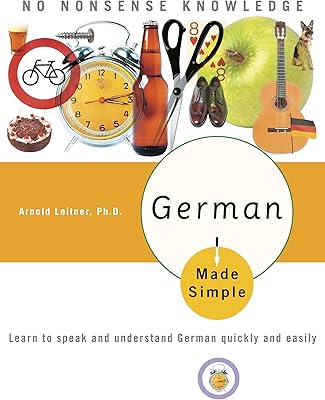
German Made Simple
Eugene Jackson
A complete beginner's guide covering grammar, vocabulary, and conversation essentials.
Check Price on Amazon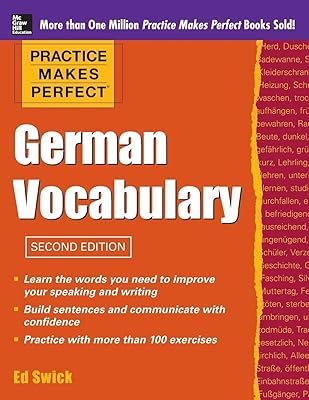
Practice Makes Perfect: German Vocabulary
Ed Swick
Targeted exercises and drills for mastering essential German words and phrases.
Check Price on AmazonAs an Amazon Associate, we earn from qualifying purchases.