40 Famous German Sayings, Proverbs, and Quotes (With English Translations)
By LangPodTools Team, Language Learning Content Specialist

German is packed with sayings that are vivid, bizarre, and surprisingly wise. Where English might say "that's none of my business," Germans say "Das ist nicht mein Bier" — that's not my beer. Where you might call someone oblivious, a German says they have tomatoes on their eyes.
These sayings are everywhere: in conversations, podcasts, news, and literature. Learning them does more than expand your vocabulary. It gives you a window into how Germans think, joke, and make sense of the world.
This guide covers 40 of the most common and famous German sayings, proverbs, and quotes. Each entry includes the German original, a literal translation, the actual meaning, and how to use it. They are organized by theme so you can find what you need quickly.
Everyday Wisdom: Proverbs for Daily Life
These are the sayings every German grows up hearing. Parents say them. Teachers say them. Coworkers say them. If you learn ten German proverbs, start here.
| German | Literal Translation | Actual Meaning |
|---|---|---|
| Übung macht den Meister | Practice makes the master | Practice makes perfect |
| Morgenstund hat Gold im Mund | The morning hour has gold in its mouth | The early bird catches the worm |
| Aller Anfang ist schwer | Every beginning is hard | The hardest part is getting started |
| Wer rastet, der rostet | Who rests, rusts | Use it or lose it |
| Ohne Fleiß kein Preis | Without diligence, no prize | No pain, no gain |
| Kleinvieh macht auch Mist | Small livestock also makes manure | Every little bit adds up |
| Wer zuletzt lacht, lacht am besten | Who laughs last, laughs best | He who laughs last, laughs longest |
| Lügen haben kurze Beine | Lies have short legs | The truth always comes out |
Übung macht den Meister is probably the single most-used German proverb. You will hear it in language classes, music lessons, sports training, and office small talk. It works in any situation where someone needs encouragement to keep practicing.
Morgenstund hat Gold im Mund is what early risers say to justify their 5 AM alarm. The imagery is wonderful — the morning hour literally has gold in its mouth, meaning the best opportunities come to those who start early.
Kleinvieh macht auch Mist is one of those sayings that sounds absurd in English but makes perfect sense in German. Even small farm animals produce manure (which is valuable as fertilizer). The message: don't ignore small contributions or small amounts of money. They add up.
Example usage:
Du willst Deutsch lernen? Fang einfach an — aller Anfang ist schwer, aber Übung macht den Meister! (You want to learn German? Just start — every beginning is hard, but practice makes perfect!)
Study Tip: Pick one proverb per day and try to use it in a sentence. Write it on a sticky note and put it where you will see it. By the end of a week, you will have seven proverbs that feel natural. Use our flashcard tool to drill them with spaced repetition.
Food and Drink Sayings
Germans love their food, their beer, and their sausages — and their language proves it. Some of the most colorful German sayings revolve around what is on the plate.
| German | Literal Translation | Actual Meaning |
|---|---|---|
| Das ist nicht mein Bier | That is not my beer | That's not my problem / concern |
| Alles hat ein Ende, nur die Wurst hat zwei | Everything has an end, only the sausage has two | All good things must come to an end |
| Jetzt geht's um die Wurst | Now it's about the sausage | Now it's do or die / crunch time |
| Da haben wir den Salat | There we have the salad | Now we're in a mess |
| Das ist mir Wurst | That is sausage to me | I don't care |
| Seinen Senf dazugeben | To add one's mustard | To give unsolicited opinions |
| Du gehst mir auf den Keks | You're stepping on my cookie | You're getting on my nerves |
Notice how many of these involve Wurst (sausage). Sausage is so central to German culture that it has become a metaphor for life itself. When something is Wurst to you, you are indifferent. When it is about the Wurst, everything is at stake. When you remind someone that even the Wurst has two ends, you are philosophizing about mortality. Over sausage.
"Alles hat ein Ende, nur die Wurst hat zwei" is also the title of a famous 1987 German pop song by Stephan Remmler. It became a cultural touchstone — Germans of a certain age will start singing the melody the moment you quote it.
"Seinen Senf dazugeben" works exactly like the English "to put in one's two cents," except it is mustard instead of coins. Use it when someone keeps offering opinions nobody asked for.
Example usage:
Warum regst du dich auf? Das ist doch nicht dein Bier. (Why are you getting worked up? That's not your problem.)
Morgen ist die Prüfung — jetzt geht's um die Wurst! (The exam is tomorrow — now it's crunch time!)
Animal Sayings
German idioms are crawling with animals. Dogs, pigs, cats, and chickens all play starring roles in the language's most vivid expressions.
| German | Literal Translation | Actual Meaning |
|---|---|---|
| Da liegt der Hund begraben | That's where the dog is buried | That's the crux of the matter |
| Schwein haben | To have pig | To be lucky |
| Ich verstehe nur Bahnhof | I only understand train station | I don't understand anything |
| Die Katze im Sack kaufen | To buy the cat in the sack | To buy something without checking |
| Krokodilstränen weinen | To cry crocodile tears | To fake sadness |
| Mit jemandem ein Hühnchen rupfen | To pluck a chicken with someone | To have a bone to pick with someone |
| Einen Kater haben | To have a tomcat | To have a hangover |
"Da liegt der Hund begraben" is used when you finally identify the real problem or the real point of a discussion. Imagine digging and digging until you find where the dog is buried — that is the core issue.
"Schwein haben" sounds insulting but is actually positive. Having pig means being lucky. The origin likely traces back to medieval card games and tournaments where the last-place finisher received a pig as a consolation prize — still a valuable thing to walk away with.
"Ich verstehe nur Bahnhof" is possibly the most famous German idiom internationally. When you understand only train station, you understand nothing at all. The origin is debated, but one theory ties it to WWI soldiers who were so desperate to go home that the only word they could process was Bahnhof — the train station that would take them there.
"Einen Kater haben" is one every student of German discovers on their first morning after Oktoberfest. The word Kater (tomcat) is likely a pun on Katarrh (an old medical term for inflammation). Either way, it stuck: a hangover is a tomcat.
Example usage:
Ich glaube, da liegt der Hund begraben — das Problem ist nicht die Software, sondern die Daten. (I think that's the crux of it — the problem isn't the software, it's the data.)
Funny and Untranslatable Sayings
These are the sayings that make German learners laugh out loud. They are bizarre, imaginative, and often impossible to translate without losing the magic.
| German | Literal Translation | Actual Meaning |
|---|---|---|
| Tomaten auf den Augen haben | To have tomatoes on your eyes | To be oblivious / not see the obvious |
| Die beleidigte Leberwurst spielen | To play the offended liver sausage | To sulk or act offended |
| Ich drücke dir die Daumen | I press my thumbs for you | I'm keeping my fingers crossed for you |
| Hummeln im Hintern haben | To have bumblebees in your behind | To be restless / unable to sit still |
| Den inneren Schweinehund überwinden | To overcome the inner pig-dog | To overcome your laziness |
| Alles in Butter | Everything in butter | Everything is fine |
| Das Leben ist kein Ponyhof | Life is not a pony farm | Life isn't all fun and games |
| Nur Bahnhof verstehen | To only understand train station | To not understand anything at all |
"Tomaten auf den Augen haben" is used when someone fails to notice something obvious. Your friend walks past you without saying hello? They had tomatoes on their eyes. A colleague overlooks a glaring error in a report? Tomatoes. On their eyes.
"Den inneren Schweinehund überwinden" is a uniquely German concept. The inner Schweinehund (pig-dog) is the lazy, comfort-seeking voice in your head that tells you to skip the gym, eat the cake, and stay on the couch. Every German knows this creature. Overcoming it is a national pastime.
"Ich drücke dir die Daumen" is the German equivalent of crossing your fingers. Germans press their thumbs instead. You will hear this before exams, job interviews, and football matches. It is one of the most useful phrases you can learn for showing support.
"Das Leben ist kein Ponyhof" is used to remind someone — often a child, sometimes an adult — that life requires effort and involves disappointment. No, you cannot just ride ponies all day. Reality awaits.
Example usage:
Du hast das Schild nicht gesehen? Hast du Tomaten auf den Augen? (You didn't see the sign? Do you have tomatoes on your eyes?)
Ich will nicht joggen gehen, aber ich muss meinen inneren Schweinehund überwinden. (I don't want to go jogging, but I have to overcome my inner pig-dog.)
Study Tip: These untranslatable sayings are perfect for impressing native speakers. When you drop a perfectly timed "Da liegt der Hund begraben" in conversation, Germans light up. It shows you understand the culture, not just the grammar.
Famous German Quotes
Germany has produced some of history's most quotable thinkers. These quotes are still widely cited in everyday German — in speeches, essays, and conversation.
Johann Wolfgang von Goethe (1749–1832)
Goethe is Germany's Shakespeare — the most quoted writer in the language.
| German | English Translation |
|---|---|
| Man sieht nur, was man weiß | You only see what you know |
| Es irrt der Mensch, solang er strebt | Man errs as long as he strives |
| Auch aus Steinen, die einem in den Weg gelegt werden, kann man Schönes bauen | Even from stones placed in your path, you can build something beautiful |
"Man sieht nur, was man weiß" is Goethe's observation that knowledge shapes perception. The more you know about a subject, the more details you notice. A botanist sees a hundred different species where a casual walker sees "some trees." This quote appears in German education, journalism, and business writing constantly.
"Es irrt der Mensch, solang er strebt" comes from Faust, Goethe's masterwork. It means making mistakes is inseparable from striving for something. As long as you are trying, you will err — and that is acceptable.
Albert Einstein (1879–1955)
| German | English Translation |
|---|---|
| Fantasie ist wichtiger als Wissen | Imagination is more important than knowledge |
| Das Leben ist wie Fahrrad fahren. Um die Balance zu halten, musst du in Bewegung bleiben | Life is like riding a bicycle. To keep your balance, you must keep moving |
Einstein wrote and spoke in German throughout his early career. "Fantasie ist wichtiger als Wissen" is one of the most-cited quotes in the German language. It appears on classroom walls, startup pitch decks, and motivational posters across the German-speaking world.
Franz Kafka (1883–1924)
| German | English Translation |
|---|---|
| Wege entstehen dadurch, dass man sie geht | Paths are made by walking them |
| Ein Buch muss die Axt sein für das gefrorene Meer in uns | A book must be the axe for the frozen sea within us |
Kafka wrote in German despite living in Prague. "Wege entstehen dadurch, dass man sie geht" is used as encouragement — the path forward does not exist until you start walking it. Perfect for language learners staring at an intimidating textbook.
Friedrich Nietzsche (1844–1900)
| German | English Translation |
|---|---|
| Was mich nicht umbringt, macht mich stärker | What does not kill me makes me stronger |
| Wer ein Warum zu leben hat, erträgt fast jedes Wie | He who has a why to live can bear almost any how |
"Was mich nicht umbringt, macht mich stärker" has become so universal that people forget it is originally German. Nietzsche wrote it in Twilight of the Idols (1888). In German, it has a rhythmic punch that the English translation cannot quite match.
Study Tip: Memorizing famous quotes is an excellent vocabulary strategy. Each quote contains high-frequency words (wissen, sehen, leben, bauen, gehen) embedded in a memorable sentence. The context makes them stick far better than isolated flashcards. For the core vocabulary these quotes build on, see our essential German words guide.
Sayings About People and Relationships
Germans have sharp observations about human behavior, and their proverbs prove it.
| German | Literal Translation | Actual Meaning |
|---|---|---|
| Gleich und gleich gesellt sich gern | Like and like gladly join together | Birds of a feather flock together |
| Stille Wasser sind tief | Still waters are deep | Quiet people often have hidden depths |
| Wer den Pfennig nicht ehrt, ist des Talers nicht wert | Who doesn't honor the penny isn't worth the dollar | Take care of the pennies and the pounds will take care of themselves |
| Reden ist Silber, Schweigen ist Gold | Speaking is silver, silence is gold | Silence is golden |
"Stille Wasser sind tief" is used exactly like its English equivalent. That quiet colleague who rarely speaks up in meetings? Still waters run deep. They might surprise you.
"Reden ist Silber, Schweigen ist Gold" is classic German pragmatism. Talking has value (silver), but knowing when to stay quiet is worth even more (gold). Germans appreciate directness, but they also deeply respect the person who says nothing when nothing needs to be said.
How to Use German Sayings Naturally
Knowing sayings is one thing. Dropping them into conversation without sounding like a textbook is another.
Three Rules for Natural Usage
1. Match the register. Food and animal sayings (Das ist nicht mein Bier, Schwein haben) are casual. Use them with friends and in informal settings. Goethe and Nietzsche quotes work in formal writing, presentations, and serious discussions.
2. Don't force it. Wait for a moment where the saying fits the situation naturally. If someone complains about getting up early, Morgenstund hat Gold im Mund lands perfectly. If nobody is talking about mornings, it will feel random.
3. Learn the pronunciation. A perfectly chosen proverb loses its impact if you stumble over the words. Practice saying the full phrase at natural speed. Record yourself and compare to native speakers.
Where to Hear These Sayings in Context
The best way to internalize German sayings is to hear native speakers use them naturally. Browse our German episodes hub to find beginner-friendly podcast content where these phrases appear in real conversations.
For building the vocabulary foundation that makes proverbs click, our common German phrases guide covers the 50 most useful everyday expressions.
Summary Table: All 40 Sayings at a Glance
| # | German | English Equivalent |
|---|---|---|
| 1 | Übung macht den Meister | Practice makes perfect |
| 2 | Morgenstund hat Gold im Mund | The early bird catches the worm |
| 3 | Aller Anfang ist schwer | Every beginning is hard |
| 4 | Wer rastet, der rostet | Use it or lose it |
| 5 | Ohne Fleiß kein Preis | No pain, no gain |
| 6 | Kleinvieh macht auch Mist | Every little bit adds up |
| 7 | Wer zuletzt lacht, lacht am besten | He who laughs last, laughs longest |
| 8 | Lügen haben kurze Beine | The truth always comes out |
| 9 | Das ist nicht mein Bier | Not my problem |
| 10 | Alles hat ein Ende, nur die Wurst hat zwei | All good things must come to an end |
| 11 | Jetzt geht's um die Wurst | It's now or never |
| 12 | Da haben wir den Salat | Now we're in a mess |
| 13 | Das ist mir Wurst | I don't care |
| 14 | Seinen Senf dazugeben | To put in one's two cents |
| 15 | Du gehst mir auf den Keks | You're getting on my nerves |
| 16 | Da liegt der Hund begraben | That's the crux of the matter |
| 17 | Schwein haben | To be lucky |
| 18 | Ich verstehe nur Bahnhof | I don't understand anything |
| 19 | Die Katze im Sack kaufen | To buy a pig in a poke |
| 20 | Krokodilstränen weinen | To cry crocodile tears |
| 21 | Mit jemandem ein Hühnchen rupfen | To have a bone to pick |
| 22 | Einen Kater haben | To have a hangover |
| 23 | Tomaten auf den Augen haben | To be oblivious |
| 24 | Die beleidigte Leberwurst spielen | To sulk |
| 25 | Ich drücke dir die Daumen | I'm crossing my fingers |
| 26 | Hummeln im Hintern haben | To be restless |
| 27 | Den inneren Schweinehund überwinden | To overcome laziness |
| 28 | Alles in Butter | Everything is fine |
| 29 | Das Leben ist kein Ponyhof | Life isn't a bed of roses |
| 30 | Nur Bahnhof verstehen | To not understand anything |
| 31 | Gleich und gleich gesellt sich gern | Birds of a feather flock together |
| 32 | Stille Wasser sind tief | Still waters run deep |
| 33 | Wer den Pfennig nicht ehrt, ist des Talers nicht wert | Look after the pennies |
| 34 | Reden ist Silber, Schweigen ist Gold | Silence is golden |
| 35 | Man sieht nur, was man weiß | You only see what you know |
| 36 | Es irrt der Mensch, solang er strebt | To err is human (while striving) |
| 37 | Fantasie ist wichtiger als Wissen | Imagination beats knowledge |
| 38 | Wege entstehen dadurch, dass man sie geht | Paths are made by walking |
| 39 | Was mich nicht umbringt, macht mich stärker | What doesn't kill me makes me stronger |
| 40 | Wer ein Warum zu leben hat, erträgt fast jedes Wie | He who has a why can bear any how |
Next Steps
German sayings connect you to the culture in a way that textbook grammar never can. Start with the everyday proverbs, work your way through the food and animal idioms, and save the famous quotes for when you want to impress.
Practice one new saying each day. Write it down. Say it out loud. Try to use it in conversation or in a journal entry. Within a month, you will have a repertoire of 30 sayings that make your German sound natural and confident.
For more vocabulary building, explore our essential German words guide. If you want to see how these sayings sound in real German speech, browse our German episodes. And for a fun deep dive into German's creative side, check out the longest German words — because a language that invented the inner pig-dog clearly has no limits.
To dive deeper into German culture through music, our Rammstein "Sonne" lyrics translation breaks down one of the most famous German songs word by word.
Recommended Resources
- German Idioms and Proverbs Book — A dedicated collection of German sayings with cultural context and usage examples, perfect for learners who want to sound like a native
- German Short Stories for Beginners — Reading German stories exposes you to proverbs and idioms in natural context, which is far more effective than memorizing lists
- German Culture and Customs Guide — Understanding the cultural context behind sayings helps them stick and helps you use them at the right moment
Frequently Asked Questions
What is the most famous German saying?▾
What are some funny German sayings that don't translate to English?▾
Why do so many German sayings involve sausage?▾
How can I learn to use German proverbs naturally in conversation?▾
What are some famous quotes by German authors and thinkers?▾
Recommended Study Material
The Complete German Grammar Cheat Sheet
A1–B2 Reference PDF
27 pages of color-coded tables, mnemonics, and shortcuts — every rule you need from Cases to Subjunctive.
Recommended German Books
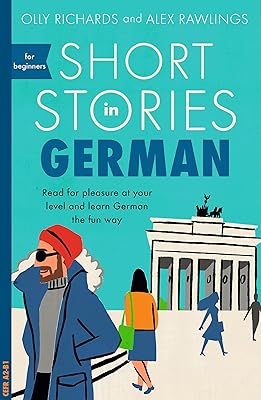
Short Stories in German for Beginners
Olly Richards
Learn German with 8 captivating stories. Perfect for A2-B1 learners who want to build vocabulary naturally.
Check Price on Amazon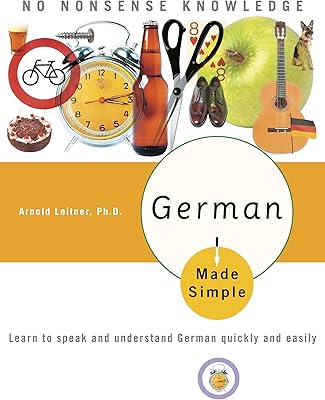
German Made Simple
Eugene Jackson
A complete beginner's guide covering grammar, vocabulary, and conversation essentials.
Check Price on Amazon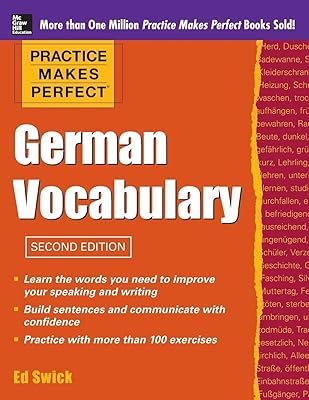
Practice Makes Perfect: German Vocabulary
Ed Swick
Targeted exercises and drills for mastering essential German words and phrases.
Check Price on AmazonAs an Amazon Associate, we earn from qualifying purchases.