Japanese for Beginners: A Step-by-Step Study Plan That Works
By LangPodTools Editorial Team, Language Learning Content Specialist

You open a Japanese podcast, hear five quick syllables, and understand nothing. Then the transcript shows three writing systems at once. That rough first minute makes many capable learners quit too soon.
Quick Answer: Learn hiragana first, then study basic grammar and 10–15 words daily. Use short podcasts with transcripts from week one. A focused 30-minute daily routine can build a useful foundation within 12 weeks.
Updated July 31, 2026: This plan combines script practice, clear audio, spaced review, and early speaking. It suits independent A1–B2 learners who already use podcasts or apps for German, English, or French.
How Should a Beginner Start Learning Japanese?
Start with hiragana, useful sentence patterns, and short daily listening sessions. Don't wait until you know hundreds of words before hearing real Japanese. Sound and script should grow together.
Follow a 12-week roadmap
A clear order prevents tool hopping. Japanese uses hiragana, katakana, and kanji, but you don't need to master them together.
| Study phase | Main goal | Daily work | Target result |
|---|---|---|---|
| Weeks 1–2 | Hiragana and sounds | 10 minutes writing, 10 minutes audio | Read basic kana slowly |
| Weeks 3–4 | Core phrases and katakana | 15 words, one grammar pattern | Handle greetings and introductions |
| Weeks 5–8 | Basic grammar and kanji | One short lesson, 3–5 kanji | Build simple sentences |
| Weeks 9–12 | Listening and speaking | Podcast loop plus shadowing | Follow slow beginner dialogues |
The Japanese language overview explains how its scripts and grammar developed [1]. Use that page for context, not as a course.
Build one repeatable routine
A 30-minute session is enough when each part has a job:
- Review words for 8 minutes.
- Study one grammar pattern for 7 minutes.
- Listen with a transcript for 10 minutes.
- Speak or write for 5 minutes.
GENKI I, Third Edition gives beginners an ordered course with dialogues and exercises. It works best for learners who like textbook structure.
Pro Tip: Stop each session while one task still feels easy. That makes tomorrow's restart less painful.
Get started with a 12-week calendar instead of collecting more apps. Learners who want a familiar comparison can review German for Beginners.
How to Read and Type Japanese as a Beginner
Learn hiragana first, add katakana after two weeks, and treat kanji as a gradual vocabulary system. Roman letters help briefly, but long-term use slows reading.
Master hiragana through sound
Hiragana represents basic sound units called morae. Learn each symbol with audio and a real word, not an English letter alone.
Focus on these points:
- Japanese has five stable vowel sounds: a, i, u, e, o.
- A doubled consonant creates a small pause.
- A long vowel lasts about twice as long.
- Japanese rhythm gives each mora similar timing.
Japanese Hiragana and Katakana Flash Cards support quick recall without another screen. Say every sound before turning each card.
Add katakana for borrowed words
Katakana often marks foreign names, loanwords, and sound effects. It uses the same sound system as hiragana, so the second script comes faster.
Study confusing pairs together. Examples include シ and ツ, plus ソ and ン. Write each pair at a large size first.
| Task | Handwriting | Typing | Best choice |
|---|---|---|---|
| Memorizing kana | Builds shape recall | Faster repetition | Handwriting first |
| Writing messages | Slow but useful | Practical every day | Typing |
| Learning kanji | Shows components | Confirms readings | Use both |
| Taking notes | Helps memory | Saves time | Mix both methods |
Start typing from day one
Install a Japanese keyboard on your phone or computer. Type romanized sounds, then select the correct kana or kanji conversion.
Typing か as “ka” does not make romaji your study system. It simply lets the keyboard produce Japanese text. Write kana by hand for five minutes, then type one short message.
Pro Tip: Labeling every household object creates clutter. Type one useful sentence about each object instead.
How to Use Podcasts Without Getting Lost
Use beginner podcasts with transcripts, slow audio, and episodes under 10 minutes. Passive listening alone rarely teaches new forms. Each replay needs a clear purpose.
Use the three-pass podcast loop
Choose one short dialogue. Then follow this sequence:
- Listen once without stopping.
- Read the transcript and mark unknown phrases.
- Listen again while following the text.
- Replay one sentence and copy its rhythm.
- Retell the main idea in simple Japanese.
The archive for Easy Japanese describes a long-running beginner learning format [2]. Its short situational lessons show why guided audio works well.
Shadow short, useful lines
Shadowing means speaking just behind the recording. Start with five-second clips, not whole episodes. Accuracy matters more than speed.
Pimsleur Japanese Level 1 uses timed spoken responses and repeated audio prompts. It suits commuters who need hands-free speaking practice.
Pause after each line when the pace feels too fast. Copy pitch movement and timing before worrying about a perfect accent.
Match audio to your level
A useful episode should feel challenging but traceable. After transcript study, aim to understand about 70–80% of the message.
Advanced native shows can wait. The same progression appears in podcasts for advanced language learners, but beginner audio needs more support.
Pro Tip: Keep one episode for a full week. Deep replay teaches more than seven half-understood episodes.
How to Learn Japanese Vocabulary and Grammar
Learn whole sentence patterns and review them with spaced repetition. Single-word lists hide particles, word order, and natural usage.
Build sentence cards
Japanese often places the verb near the sentence's end. Particles mark each word's role, so English word order offers weak guidance.
Create cards with one missing piece:
- わたしは学生です。 means “I am a student.”
- コーヒーを飲みます。 means “I drink coffee.”
- 東京に行きます。 means “I go to Tokyo.”
Each card should include audio, a short translation, and one target form. Review about 20–40 cards daily, but add only 10–15 new words.
Choose a grammar path
Japanese From Zero! 1 introduces grammar in small steps. It feels less dense than many classroom books.
Study one pattern, notice it in audio, and make three personal examples. That cause-and-effect loop turns an abstract rule into usable language.
Learn kanji inside words
Don't memorize large lists of isolated English meanings. Learn kanji through common words, readings, and short sentences.
Start with 3–5 characters daily. Useful early examples include 日, 人, 大, 小, and 学. Review their parts, but avoid inventing a story for every stroke.
Kodansha's Furigana Japanese Dictionary shows readings beside kanji. It helps beginners check words without depending on romaji.
For another view of structured self-study, see How to Learn German. The language differs, but the review cycle transfers well.
Japanese Numbers and First Words to Learn
Learn numbers one through ten, then practice them with age, time, and prices. Reciting a list builds recognition. Real questions turn those sounds into useful speech.
Count from one to ten
| Number | Japanese | Reading |
|---|---|---|
| 1 | 一 | ichi |
| 2 | 二 | ni |
| 3 | 三 | san |
| 4 | 四 | yon or shi |
| 5 | 五 | go |
| 6 | 六 | roku |
| 7 | 七 | nana or shichi |
| 8 | 八 | hachi |
| 9 | 九 | kyuu or ku |
| 10 | 十 | juu |
Japanese uses counters for different object types. Beginners can first learn ひとつ and ふたつ for general counting. Add special counters after basic numbers feel automatic.
Learn ten survival words
Start with words that unlock real exchanges:
- こんにちは — hello
- ありがとう — thank you
- はい — yes
- いいえ — no
- すみません — excuse me or sorry
- お願いします — please
- わかります — understand
- わかりません — don't understand
- もう一度 — one more time
- ゆっくり — slowly
Combine them at once. “もう一度、お願いします” asks someone to repeat something. “ゆっくり、お願いします” asks for slower speech.
Practice flexible readings
Numbers 4, 7, and 9 have common alternate readings. Learn the version used in each phrase instead of forcing one universal answer.
A phrasebook can show practical contexts. The Japanese phrasebook offers grouped travel expressions and pronunciation notes [3].
Best Books, Apps, and Free Japanese Resources
Choose one main course, one review tool, and one audio source. More resources create more decisions, not faster progress.
Compare a book-first and app-first setup
| Feature | Book-first plan | App-first plan | Best for |
|---|---|---|---|
| Lesson order | Clear and fixed | Often flexible | Book-first |
| Audio access | May require downloads | Usually instant | App-first |
| Writing practice | Stronger | Often recognition-based | Book-first |
| Portability | Moderate | Excellent | App-first |
| Feedback | Answer key only | Instant scoring | App-first |
| Distraction risk | Low | Higher | Book-first |
Recommendation: Choose a book-first plan when grammar feels confusing. Choose an app-first plan when consistency remains the main problem.
Build a small study stack
A balanced starter stack needs only four parts:
- One course: GENKI or Japanese From Zero!
- One flashcard tool: Anki or a similar spaced-review app
- One dictionary: Takoboto, Jisho, or a print dictionary
- One transcript-based podcast or video series
Anki-compatible Japanese Core 2000 materials can guide vocabulary selection. Digital cards remain better for daily scheduling.
Use free resources with a plan
Free lessons work when they follow a clear sequence. Random videos often repeat greetings while skipping grammar links.
The television course Let's Learn Japanese used skits and structured lessons for overseas learners [4]. Modern videos can copy that useful mix of context and explanation.
As of 2026, no single free app covers every skill equally well. Pair guided lessons with handwriting, transcript listening, and real speaking.
Common Japanese Beginner Mistakes
The biggest mistakes are delaying kana, changing resources often, and treating recognition as speaking ability. These habits feel productive because they reduce discomfort. They also weaken long-term recall.
Staying with romaji too long
Romaji helps during the first few days. After that, it hides Japanese sound timing and blocks direct reading.
Remove romaji from flashcards after week two. Keep audio and a small English meaning instead.
Studying kanji without words
A character can have several readings. Memorizing one English keyword doesn't teach which reading a sentence needs.
Learn 学 through 学生 and 学校. The shared character then carries meaning inside real vocabulary.
Watching without active recall
Subtitled anime can improve motivation, but English subtitles train English reading. They don't guarantee Japanese listening practice.
Use a clip under 30 seconds. Watch once, inspect Japanese captions, and repeat one line from memory.
Avoiding speech until ready
Nobody feels fully ready. Start with self-talk, voice notes, and tutor drills during the first month.
Japanese Conversation Made Natural provides short dialogues for imitation. Use one exchange repeatedly instead of reading the book straight through.
Pro Tip: Record the same introduction every Sunday. Monthly recordings reveal gains that daily study can hide.
Can You Learn Japanese Alone or Need a Tutor?
You can teach yourself beginner Japanese, but a tutor speeds up feedback on speech and sentence formation. The best choice depends on your budget, habits, and goals.
Choose self-study for structure and control
Self-study works well when you can follow a weekly plan. It also lets you replay audio without pressure.
Use measurable targets:
- Finish five lessons each month.
- Review cards on six days each week.
- Record one minute of speech every Sunday.
- Complete one transcript loop each week.
A self-study learner still needs outside examples. Courses, dictionaries, graded audio, and corrected sentences provide that input.
Add a tutor for focused feedback
Book a tutor after learning hiragana and several basic patterns. That timing gives each session useful material.
Ask for corrections on pronunciation, particles, and natural word choice. Avoid spending the whole lesson reading textbook instructions together.
A 30-minute lesson every two weeks can expose repeat errors. Frequent learners may prefer one weekly session.
Use a hybrid plan
Combine daily self-study with occasional tutoring. Bring three prepared questions and one short voice recording to each meeting.
Ready to upgrade your setup? Check price on Amazon for the linked books after comparing sample pages and audio access.
Final Thoughts
Japanese becomes manageable when each study tool has one clear purpose. Kana builds direct reading. Grammar gives structure, while podcasts train real-time understanding.
Your next seven days
Spend the first week learning 15 hiragana symbols daily. Listen to one beginner dialogue each day, and repeat three lines aloud.
Add only 10 new words daily. Write each word in a useful sentence, then review it the next morning.
Keep the system simple
Use one course for direction, one app for review, and one podcast for listening. Add a tutor only when feedback would solve a clear problem.
Progress will feel uneven. Reading may improve before listening, while speaking can lag behind both. That pattern is normal.
The next useful action takes 30 minutes, not a perfect plan. Open the first lesson, learn five sounds, and say them aloud.
Sources
These references support the language background, media history, and practical phrases used in this guide. They offer context rather than a complete beginner curriculum.
Primary references
- Japanese Language — Overview of Japanese grammar, sound, vocabulary, and writing systems.
- Easy Japanese — Background on a long-running audio course built for non-native learners.
- Japanese Phrasebook — Practical expressions, pronunciation guidance, numbers, and travel vocabulary.
- Let's Learn Japanese — History and format of a structured video course for beginners.
Further background
- Shoshin — Explains the idea of approaching practice with an open beginner's mind [5].
- Shoshinsha Mark — Describes Japan's official symbol for newly licensed drivers.
Source pages can change over time. Check their cited references when researching formal linguistics or course history.
Frequently Asked Questions
How should a beginner learn Japanese?▾
How long does beginner Japanese take?▾
Can you teach yourself Japanese for free?▾
Should beginners learn kanji right away?▾
Recommended Japanese Books
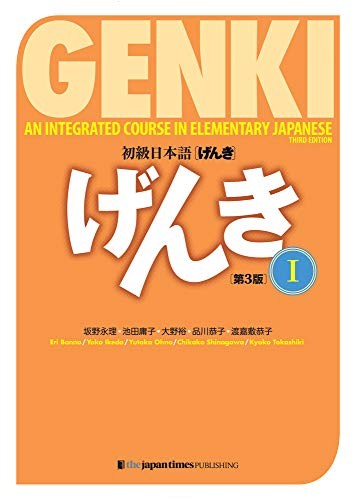
Genki I: An Integrated Course in Elementary Japanese
Eri Banno et al.
The gold standard textbook for beginner Japanese learners. Covers hiragana, katakana, basic kanji, grammar, and conversation skills.
Check Price on Amazon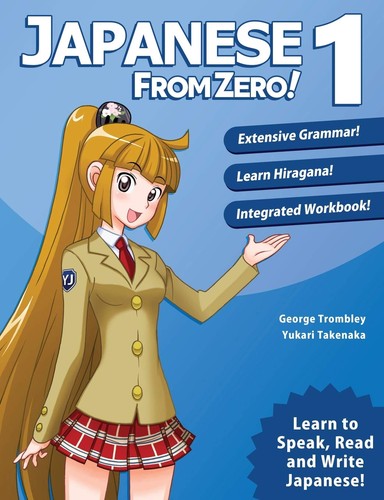
Japanese from Zero! 1
George Trombley
A fun and innovative approach to learning Japanese. Progressively introduces hiragana while teaching practical conversation skills.
Check Price on Amazon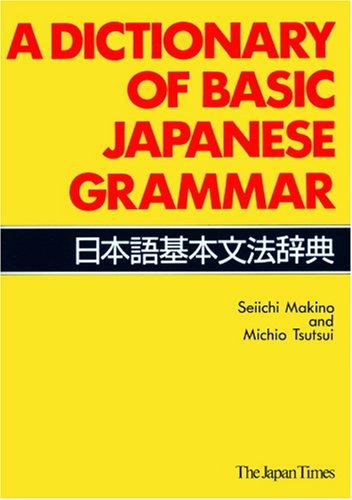
A Dictionary of Basic Japanese Grammar
Seiichi Makino & Michio Tsutsui
The essential reference for Japanese grammar. Clear explanations with abundant examples for every grammar point.
Check Price on AmazonAs an Amazon Associate, we earn from qualifying purchases.