How to Say "My Name Is" in German: Introduce Yourself Like a Native
By LangPodTools Team, Language Learning Content Specialist

Introducing yourself is the very first real conversation you will have in German. Get it right and you immediately feel like you belong. Get it wrong — or freeze because you never practiced it — and the conversation stalls before it starts.
This guide covers the three main ways to say it, how to ask someone else's name, a complete self-introduction template, and how to spell your name using the German alphabet.
Three Ways to Say "My Name Is" in German
German has three standard phrases for giving your name. They are not interchangeable — each one fits a different situation.
Ich heiße [Name] — The Most Natural Way
Ich heiße (ikh HY-seh) literally means "I am called" and is the single most common way to give your name in German. It works in nearly every setting — meeting someone at a party, introducing yourself in a language class, or greeting a new coworker.
The verb heißen (to be called) is one of the first verbs every German learner encounters:
| Pronoun | Conjugation |
|---|---|
| ich | heiße |
| du | heißt |
| er/sie/es | heißt |
| wir | heißen |
| ihr | heißt |
| sie/Sie | heißen |
Example: Hallo, ich heiße Sarah. Ich komme aus Kanada. (Hello, I'm called Sarah. I come from Canada.)
If you learn only one phrase from this article, make it Ich heiße. It sounds natural and works everywhere.
Mein Name ist [Name] — The Formal Option
Mein Name ist (mine NAH-meh ist) means "My name is" — a direct word-for-word translation of the English phrase. It is perfectly correct but sounds more formal and deliberate.
Use Mein Name ist in situations that call for extra formality: a business meeting, a phone call with a company, a doctor's appointment, or any context where you would say Sie (the formal "you") rather than du.
Example: Guten Tag, mein Name ist Thomas Müller. Ich habe einen Termin um 14 Uhr. (Good day, my name is Thomas Müller. I have an appointment at 2 p.m.)
You will also hear this on the phone, where Germans often state their full name clearly for the listener.
Ich bin [Name] — The Casual Short Form
Ich bin (ikh bin) simply means "I am." It is the most casual, shortest way to state your name. You will hear it constantly among friends, at informal gatherings, and in relaxed social settings.
Example: Hey, ich bin Max! (Hey, I'm Max!)
Ich bin is especially common when the setting is already casual — a party, a group activity, a hostel common room. It is not wrong to use in professional settings, but Ich heiße or Mein Name ist sounds more polished.
Study Tip: Record yourself saying all three versions with your actual name. Play them back. The one that flows off your tongue most easily is your default — then drill the other two so you can switch registers instantly.
How to Ask Someone's Name in German
The question must match the formality level. For a full explanation of du vs. Sie, read our du vs. Sie guide.
| Situation | Question | Pronunciation | Literal Meaning |
|---|---|---|---|
| Formal (Sie) | Wie heißen Sie? | vee HY-sen zee | How are you called? |
| Informal (du) | Wie heißt du? | vee hyst doo | How are you called? |
| Formal alternative | Wie ist Ihr Name? | vee ist eer NAH-meh | What is your name? |
| Informal alternative | Und du? / Und du bist...? | oont doo | And you? / And you are...? |
The Wie heißen Sie? / Wie heißt du? pair is the standard. A common real-life pattern: someone says Ich heiße Anna, then immediately follows with Und du? — a simple back-and-forth that flows naturally.
The Full Introduction Template
Giving just your name is enough for a quick exchange — but in many real-life situations, you need to say more. Job interviews, language courses, dinner parties, and meet-and-greet events all call for a fuller self-introduction.
Here is a template that covers the four most common elements: name, origin, occupation, and language abilities.
1. Name
Start with any of the three forms: Ich heiße [Name], Mein Name ist [Name], or Ich bin [Name].
2. Origin — Where You Are From
Two equally natural options:
- Ich komme aus [Land/Stadt] — "I come from [country/city]" (most common)
- Ich bin aus [Land/Stadt] — "I'm from [country/city]" (slightly more casual)
Examples: Ich komme aus den USA. / Ich bin aus London.
3. Occupation — What You Do
Two standard patterns:
- Ich bin [Beruf] von Beruf. — "I am a [profession] by profession."
- Ich arbeite als [Beruf]. — "I work as a [profession]."
Examples: Ich bin Ingenieur von Beruf. / Ich arbeite als Lehrerin.
If you are a student: Ich bin Student/Studentin. (university) or Ich bin Schüler/Schülerin. (school).
4. Language Abilities
As a language learner, this is often the most relevant part:
- Ich lerne Deutsch seit [Zeitraum]. — "I've been learning German for [time period]."
- Ich spreche ein bisschen Deutsch. — "I speak a little German."
- Mein Deutsch ist noch nicht so gut. — "My German isn't that good yet."
Examples: Ich lerne Deutsch seit drei Monaten. / Ich spreche ein bisschen Deutsch und fließend Englisch.
Study Tip: Write your own personal introduction using the template above and practice it until it becomes automatic. This is the single most-used "speech" in your entire German learning journey — every class, every language exchange, every trip starts with it.
Putting It All Together
Here is a complete example:
Hallo, ich heiße Maria. Ich komme aus Brasilien und wohne jetzt in Berlin. Ich arbeite als Designerin. Ich lerne Deutsch seit sechs Monaten — es ist schwer, aber es macht Spaß!
(Hello, I'm called Maria. I come from Brazil and live in Berlin now. I work as a designer. I've been learning German for six months — it's hard, but it's fun!)
How to Spell Your Name: The German Spelling Alphabet
Foreign names often confuse German speakers — and German speakers' names sometimes confuse foreigners. The solution is the German spelling alphabet (Buchstabiertafel), where each letter is associated with a name or word.
When someone asks Wie schreibt man das? ("How do you write/spell that?"), you spell letter by letter using the alphabet.
The current official German spelling alphabet (updated in 2022) uses city names. Here are the most commonly needed letters:
| Letter | Spelling Word | Letter | Spelling Word |
|---|---|---|---|
| A | Aachen | M | München |
| B | Berlin | N | Nürnberg |
| C | Cottbus | R | Rostock |
| D | Düsseldorf | S | Salzburg |
| E | Essen | T | Tübingen |
| F | Frankfurt | U | Unna |
| H | Hamburg | W | Wuppertal |
| K | Köln | Z | Zwickau |
| L | Leipzig |
Special characters: Ä = Umlaut-Aachen, Ö = Umlaut-Offenbach, Ü = Umlaut-Unna, ß = Eszett. For more on umlauts, see our German umlauts guide.
Example: To spell Schäfer, say: Salzburg-Cottbus-Hamburg-Umlaut Aachen-Frankfurt-Essen-Rostock.
You do not need to memorize every entry — just learn how to spell your own name using this system.
Cultural Tips for Introductions in Germany
German culture has specific expectations around introductions that differ from what many English speakers are used to.
Handshake, always. Germans shake hands when meeting someone for the first time — firm, brief, one or two pumps. This applies in both professional and many social settings. Hugs and cheek-kisses are reserved for people you already know well.
Eye contact matters. During the handshake and introduction, maintaining direct eye contact is considered a sign of confidence and honesty. Looking away can be interpreted as disinterest or untrustworthiness.
Herr/Frau + last name at first meeting. In formal situations, address someone as Herr [Nachname] (Mr.) or Frau [Nachname] (Ms./Mrs.) until invited to use first names. The switch from Sie to du — called Duzen — is a deliberate social step, usually initiated by the older or higher-status person.
Titles matter. If someone has a doctoral title, use Herr/Frau Doktor [Nachname]. Germans take academic titles seriously.
Punctuality is respect. Being on time signals respect. Arrive late and your introduction starts on the wrong foot no matter how good your German is.
Three Example Dialogues
Dialogue 1: Formal Business Meeting
A: Guten Tag, mein Name ist Müller, Thomas Müller. Ich bin der Projektleiter. B: Guten Tag, Herr Müller. Ich heiße Sarah Chen. Freut mich, Sie kennenzulernen. A: Freut mich auch. Woher kommen Sie, Frau Chen? B: Ich komme aus Singapur, aber ich wohne seit zwei Jahren in Frankfurt.
Key phrases: Mein Name ist (formal), Freut mich, Sie kennenzulernen (Pleased to meet you), Woher kommen Sie? (Where are you from? — formal)
Dialogue 2: Casual Party
A: Hey! Ich bin Lena. Und du? B: Hi, ich bin James. Woher kommst du? A: Aus München. Du bist nicht von hier, oder? B: Nein, ich komme aus England. Ich lerne gerade Deutsch. A: Cool! Dein Deutsch ist schon ganz gut!
Key phrases: Ich bin (casual), Und du? (And you?), Woher kommst du? (Where are you from? — informal)
Dialogue 3: Language Class
Lehrer: So, bitte stellen Sie sich vor. Name, Herkunft, und warum Sie Deutsch lernen. Student: Hallo, ich heiße Yuki. Ich komme aus Japan und wohne jetzt in Berlin. Ich arbeite als Softwareentwicklerin und lerne Deutsch seit vier Monaten. Lehrer: Sehr gut, Yuki! Willkommen im Kurs.
Key phrases: Stellen Sie sich vor (Introduce yourself), Ich heiße (standard), full template in action
Common German Names
Popular first names: Lukas, Leon, Paul, Felix, Jonas (male); Mia, Emma, Hannah, Sophia, Emilia, Lena (female).
Common last names: Müller (miller), Schmidt (smith), Schneider (tailor), Fischer (fisher), Weber (weaver), Meyer (farmer), Wagner (wagon maker), Becker (baker). Most German surnames are occupational — just like English names such as Smith or Baker.
How to Practice Introductions
Listen to podcast intros. German podcast hosts introduce themselves at the start of every episode — hearing Ich bin [Name] dozens of times builds natural pacing. Browse the German episodes hub and focus on the opening thirty seconds.
Use flashcards. Drill name, origin, occupation, and language level until each fires automatically. Our flashcard tool lets you create custom cards for your personal introduction.
Practice with a partner. Run through the three dialogues above with a language exchange partner. Switch roles each time. Live repetition is what moves phrases from "I know this" to "I can say this without thinking."
For more essential phrases to pair with your introduction, explore our common German phrases guide and learn how to keep the conversation going with our how are you in German guide. Starting a conversation also means knowing how to greet people properly — our hello in German guide has every greeting you need.
Recommended German Learning Resources
- German Short Stories for Beginners — contextual reading practice with everyday dialogues, introductions, and vocabulary glossaries that reinforce what you learn in this guide.
- German Phrasebook & Dictionary — organized by real-life situations including introductions, travel, and professional meetings; compact enough to carry anywhere.
For free structured learning, Deutsche Welle's free German course and the Goethe-Institut's online exercises both cover introductions thoroughly.
Wrapping Up
Start with Ich heiße [your name] — it is natural, correct, and works everywhere. Once that feels automatic, add Mein Name ist for formal situations and Ich bin for casual ones.
Then build out your full introduction: name, origin, occupation, language level. This one script will carry you through language classes, job interviews, travel encounters, and every first meeting in German.
The fastest way to make it stick? Listen to real German conversations. Start with our German episodes hub — every episode opens with an introduction, so you absorb the rhythm naturally.
Frequently Asked Questions
What is the most common way to say "my name is" in German?▾
How do you ask "what is your name?" in German?▾
What is the difference between Ich heiße, Mein Name ist, and Ich bin?▾
How do you spell your name in German?▾
How do you give a full self-introduction in German?▾
Recommended Study Material
The Complete German Grammar Cheat Sheet
A1–B2 Reference PDF
27 pages of color-coded tables, mnemonics, and shortcuts — every rule you need from Cases to Subjunctive.
Recommended German Books

Short Stories in German for Beginners
Olly Richards
Learn German with 8 captivating stories. Perfect for A2-B1 learners who want to build vocabulary naturally.
Check Price on Amazon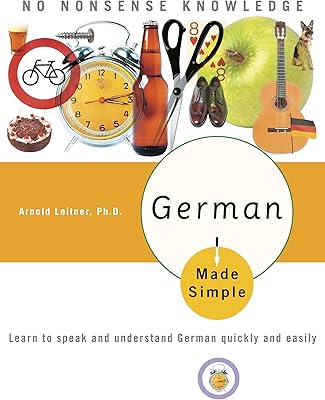
German Made Simple
Eugene Jackson
A complete beginner's guide covering grammar, vocabulary, and conversation essentials.
Check Price on Amazon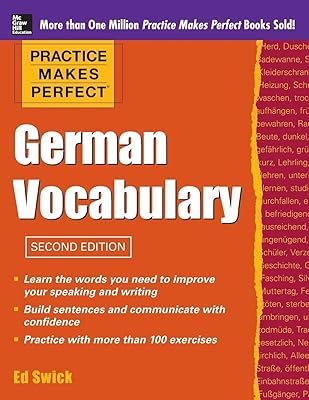
Practice Makes Perfect: German Vocabulary
Ed Swick
Targeted exercises and drills for mastering essential German words and phrases.
Check Price on AmazonAs an Amazon Associate, we earn from qualifying purchases.