Feelings and Emotions in German: 60+ Words to Express Yourself
By LangPodTools Team, Language Learning Content Specialist

Knowing how to express feelings in German is essential for real conversations. Without emotion words, you can order food and ask for directions — but you cannot connect with people.
This guide teaches you over 60 German words for feelings and emotions, organized by category. Each word includes pronunciation help and example sentences so you can start using them right away.
Positive Emotions (Positive Gefühle)
Let's start with the good feelings. These are the words you will use most often in everyday German.
| German | Pronunciation | English |
|---|---|---|
| glücklich | GLOOK-likh | happy |
| froh | froh | glad / pleased |
| zufrieden | tsoo-FREE-den | satisfied / content |
| begeistert | be-GUY-stert | excited / enthusiastic |
| verliebt | fer-LEEPT | in love |
| dankbar | DANK-bar | grateful |
| stolz | shtolts | proud |
| erleichtert | er-LYKH-tert | relieved |
| hoffnungsvoll | HOFF-nungs-foll | hopeful |
| überrascht | oo-ber-RASHT | surprised |
| entspannt | ent-SHPANT | relaxed |
| fröhlich | FROH-likh | cheerful / merry |
How to Use Positive Emotions in Sentences
German emotions work as adjectives with sein (to be). The pattern is simple: Ich bin + emotion.
- Ich bin glücklich. — I am happy.
- Sie ist verliebt. — She is in love.
- Wir sind zufrieden. — We are satisfied.
Study Tip: Learn emotions in opposites — glücklich/traurig (happy/sad), entspannt/gestresst (relaxed/stressed). Opposite pairs create stronger memory connections than random lists.
Froh vs. Glücklich
Both mean "happy," but they are not interchangeable.
- Glücklich = deep, lasting happiness. "Ich bin glücklich" means your life feels good.
- Froh = glad about something specific. "Ich bin froh, dass du da bist" means "I'm glad you're here."
Think of glücklich as a state of being and froh as a reaction to something.
Negative Emotions (Negative Gefühle)
Negative emotions are just as important to learn. Being able to say "I'm frustrated" or "I'm worried" prevents misunderstandings.
| German | Pronunciation | English |
|---|---|---|
| traurig | TROU-rikh | sad |
| wütend | VOO-tent | angry / furious |
| verärgert | fer-ER-gert | annoyed / irritated |
| frustriert | frus-TREERT | frustrated |
| enttäuscht | ent-TOYSHT | disappointed |
| eifersüchtig | EYE-fer-zookh-tikh | jealous |
| ängstlich | ENGST-likh | anxious / fearful |
| nervös | ner-VOHS | nervous |
| gelangweilt | ge-LANG-vylt | bored |
| einsam | EYN-zahm | lonely |
| gestresst | ge-STREST | stressed |
| verzweifelt | fer-TSVYE-felt | desperate / in despair |
| neidisch | NYE-dish | envious |
| schuldig | SHOOL-dikh | guilty |
Angry in German: Three Levels
German has several words for anger, each at a different intensity:
- verärgert — mildly annoyed. "Der Lärm verärgert mich." (The noise annoys me.)
- sauer — colloquially angry. "Ich bin sauer auf dich." (I'm mad at you.) Literally means "sour."
- wütend — furious. "Er ist wütend." (He is furious.)
Sauer is the most commonly used in everyday conversation. You will hear it far more often than wütend.
Study Tip: When learning negative emotions, practice them with weil (because) clauses: "Ich bin traurig, weil es regnet" (I'm sad because it's raining). This builds sentence structure while expanding vocabulary. For more on German sentence structure, see German word order rules.
Physical and Mental States
These are not exactly emotions, but they describe how you feel physically or mentally. Germans use them constantly.
| German | Pronunciation | English |
|---|---|---|
| müde | MOO-duh | tired |
| hungrig | HUNG-rikh | hungry |
| durstig | DOOR-stikh | thirsty |
| krank | krank | sick / ill |
| gesund | ge-ZOONT | healthy |
| erschöpft | er-SHOPFT | exhausted |
| energiegeladen | ener-GEE-ge-lah-den | energized |
| verwirrt | fer-VEERT | confused |
| überfordert | OO-ber-for-dert | overwhelmed |
| gelassen | ge-LASS-en | calm / composed |
Müde vs. Erschöpft
Müde is normal tiredness — you need sleep. Erschöpft is total exhaustion — you have nothing left. "Ich bin müde" after a long day is normal. "Ich bin erschöpft" after running a marathon is more accurate.
These physical states come up naturally in conversation. When someone asks how are you in German, you might answer with these words.
Expressing Emotions in German Sentences
Now that you know the vocabulary, here is how to use emotion words in different sentence patterns.
Pattern 1: Ich bin + Adjective
The simplest pattern. Works for all emotions.
- Ich bin nervös. — I am nervous.
- Er ist eifersüchtig. — He is jealous.
- Wir sind begeistert. — We are excited.
Pattern 2: Ich fühle mich + Adjective
"Ich fühle mich" means "I feel" — slightly more expressive than "Ich bin."
- Ich fühle mich einsam. — I feel lonely.
- Sie fühlt sich überfordert. — She feels overwhelmed.
- Wir fühlen uns wohl. — We feel comfortable.
Pattern 3: Mir ist + Adjective
For physical states, German often uses "mir ist" (literally "to me is").
- Mir ist kalt. — I am cold.
- Mir ist schlecht. — I feel sick / nauseous.
- Mir ist langweilig. — I am bored.
This pattern confuses beginners because it uses the dative case. For a full explanation, check our guide on German cases explained.
Pattern 4: Emotion Verbs
Some emotions work better as verbs than adjectives.
- Ich freue mich. — I am happy / delighted. (reflexive verb)
- Ich ärgere mich. — I am annoyed. (reflexive verb)
- Ich schäme mich. — I am ashamed. (reflexive verb)
- Das überrascht mich. — That surprises me.
- Das macht mir Angst. — That scares me.
Study Tip: Practice conjugating emotion verbs with our conjugation tool. Reflexive verbs like "sich freuen" and "sich ärgern" are among the most useful in everyday German.
German Idioms About Feelings
Germans love expressive idioms for emotions. These will make your German sound more natural.
| German | Literal Translation | Meaning |
|---|---|---|
| Ich habe die Nase voll | I have the nose full | I've had enough / I'm fed up |
| auf Wolke sieben schweben | to float on cloud seven | to be on cloud nine |
| Schmetterlinge im Bauch haben | to have butterflies in the stomach | to have butterflies (in love) |
| aus der Haut fahren | to drive out of one's skin | to lose one's temper |
| ein Herz aus Stein haben | to have a heart of stone | to be cold / heartless |
| jemanden auf die Palme bringen | to bring someone onto the palm tree | to drive someone crazy |
Notice that German uses "Wolke sieben" (cloud seven) while English says cloud nine. These small cultural differences make idioms fun to learn. For more German expressions, see German sayings and proverbs.
Asking About Feelings
To have real conversations about emotions, you need to ask questions too.
- Wie fühlst du dich? — How do you feel? (informal)
- Wie fühlen Sie sich? — How do you feel? (formal)
- Was ist los? — What's wrong? / What's going on?
- Bist du okay? — Are you okay?
- Warum bist du traurig? — Why are you sad?
- Geht es dir gut? — Are you alright?
"Was ist los?" is the most versatile phrase. It works for concern, curiosity, or casual check-ins. Practice these questions alongside common German phrases.
Study Tip: Create emotion flashcards with full sentences, not just single words. "Ich bin enttäuscht" sticks better than "enttäuscht = disappointed." Build your deck with our flashcard tool.
Frequently Asked Questions
Conclusion
Expressing feelings in German starts with a small set of core words. Learn the 10 most common first — glücklich, traurig, müde, wütend, nervös, zufrieden, überrascht, enttäuscht, gestresst, and verliebt. These cover most daily conversations.
Then expand with the sentence patterns: "Ich bin...", "Ich fühle mich...", and the reflexive verbs "sich freuen" and "sich ärgern." With these tools, you can express how you feel in any situation.
For more vocabulary building, explore essential German words or our guides on German terms of endearment for romantic expressions.
Frequently Asked Questions
How do you say happy in German?▾
How do you say sad in German?▾
What is the difference between wütend and sauer?▾
How do you say I feel in German?▾
What are the most useful German emotion words to learn first?▾
Recommended Study Material
The Complete German Grammar Cheat Sheet
A1–B2 Reference PDF
27 pages of color-coded tables, mnemonics, and shortcuts — every rule you need from Cases to Subjunctive.
Recommended German Books
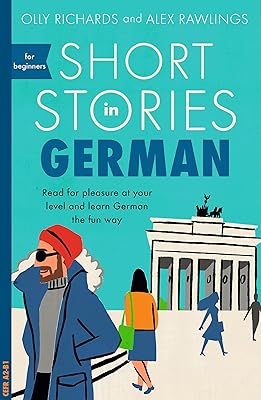
Short Stories in German for Beginners
Olly Richards
Learn German with 8 captivating stories. Perfect for A2-B1 learners who want to build vocabulary naturally.
Check Price on Amazon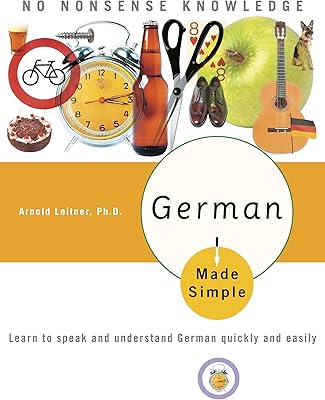
German Made Simple
Eugene Jackson
A complete beginner's guide covering grammar, vocabulary, and conversation essentials.
Check Price on Amazon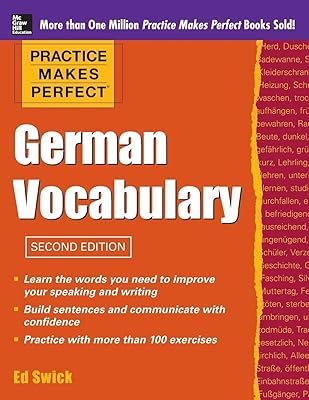
Practice Makes Perfect: German Vocabulary
Ed Swick
Targeted exercises and drills for mastering essential German words and phrases.
Check Price on AmazonAs an Amazon Associate, we earn from qualifying purchases.